Triangle Lullaby Chopper 43 212 14 02 Chopper Review
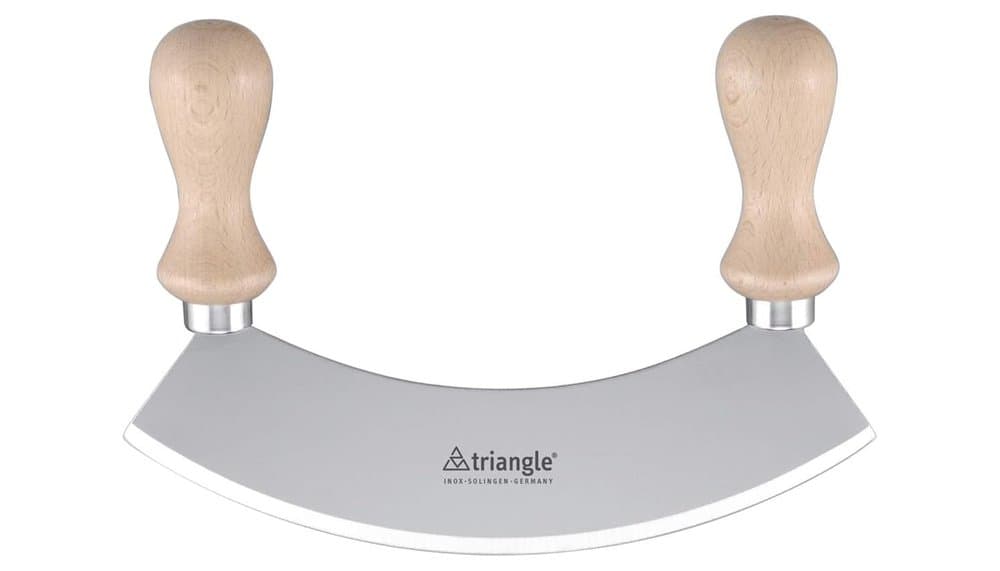
Analysis: The Triangle Lullaby Chopper 43 212 14 02 Hachoir, a Professional Tool for Life?
In a culinary world where food processors and electric gadgets dominate displays, well-designed manual tools are survivors. They embody a different philosophy: total control, a connection with the ingredient, and above all, uncompromising durability. The Triangle Lullaby Chopper 43 212 14 02 Hachoir presents itself as such an object. Manufactured in Solingen, the historic epicenter of German cutlery, this manual chopper in the shape of a cradle claims to combine artisanal tradition and raw performance. But can it truly fit into a "buy-it-for-life" approach and deserve a place next to the Japanese knives and cast iron pans of serious cooks? This is the subject of this comprehensive analysis, based on its technical specifications and feedback from a broad user community.
Strengths
A forged and artisanal construction. The first argument in favor of durability is its origin. The chopper is forged and assembled by hand in Solingen, Germany. This city is not just a marketing label, but a historical guarantee of metallurgical craftsmanship. The Triangle brand, active since 1946, highlights more than 15 manual manufacturing steps, a sign of attention that contrasts with fully automated production.
Ergonomics designed for volume work. The design with two vertical wooden handles is not trivial. According to user feedback, it allows for optimal force transmission and significantly reduces fatigue in the wrist and forearm during long chopping sessions. It is a tool designed for intensive use, as evidenced by the professionals who make up its target audience.
A remarkable and durable factory edge. Reviews converge on one point: this chopper arrives extremely sharp. The blades are hand-sharpened in the Solingen factory. This final step, often reserved for high-end knives, ensures an optimal start. Users note that this edge lasts over time, confirming the quality of the steel used.
Simplicity and mechanical reliability. Unlike an electric chopper, there is no motor, button, or fragile joint here. The mechanism is of a robust simplicity: two curved blades fixed on an axis. This drastically limits potential points of failure. Maintenance is extremely simple: a quick manual cleaning.
Weaknesses
A "special" steel with vague specifications. This is the most critical point for "buy-it-for-life" purists. The technical sheet mentions "high-quality stainless steel" or "special steel," but does not specify the exact steel composition (such as VG-10, AUS-10, or a carbon grade), nor its Rockwell hardness (HRC). In our view, this is a crucial lack of transparency. Hardness conditions edge retention and ease of sharpening. On paper, one can expect good-quality German stainless steel, but without precise data, it is impossible to rank it at the level of the best chef's knives.
The wood of the handle: necessary maintenance. The handles are made of beech. It is a classic wood, pleasant to the touch, but it requires minimal care to last for decades. It must not soak in water and will appreciate occasional light oiling to avoid drying out or cracking. This is a constraint compared to an indestructible polymer handle, but it is also what makes it a "living" object that develops a patina over time.
A technique to acquire. A few users mention that the results can be uneven (chopping too fine in some places, not enough in others) if the rocking motion is not mastered. This is not a defect of the tool, but a characteristic of manual precision instruments: they require a bit of practice. Its efficiency is also linked to use on a suitable board, ideally wooden.
One size, limited quantities. The 23 cm format (the best-selling) is considered perfect for most domestic tasks. However, for chopping truly large quantities (several kilos of vegetables), the cutting area may seem limited. It is a tool for daily preparation, not for mass catering.
Detailed "Buy-It-For-Life" Criteria Analysis
Materials and Manufacturing
The heart of the tool is its blade. Although the exact composition remains secret, the manufacturing context (Solingen, forged steel, hand sharpening) and feedback on its longevity suggest a high-carbon stainless steel, probably comparable to X50CrMoV15, a robust and corrosion-resistant German standard. It is not the ultimate scalpel of a blue steel (Shirogami) knife, but it is a reliable, resilient, and easy-to-maintain material. The solid beech handle is riveted, a mechanical fixation that, unlike glue, will not give way over years of washing and humidity variations. The construction is full tang, with the blade extending the full width of the tool, which is a guarantee of solidity and balance.
See priceLong-Term Performance: Edge and Sharpening
This is the central question. Without HRC data, we rely on reported performance. The community and testers emphasize excellent edge retention. The steel seems to offer a good balance: it remains hard enough to hold an edge for a long time, but not so hard that it becomes difficult to resharpen. Sharpening this type of curved blade is a job for a professional or an experienced user with suitable sharpening stones (a curved stone). It is not as simple as a straight chef's knife, but that is the trade-off for its efficiency. The good news is that the quality of the steel makes it perfectly capable of receiving and retaining a new edge indefinitely.
Ergonomics and Long-Term Comfort
Ergonomics is its major asset. The two handles allow for a powerful and controlled grip, protecting the fingers from the blade. The rocking motion is natural and engages the muscles of the arm and shoulder more than the more fragile wrist muscles. For someone who regularly prepares herbs, onions, nuts, or sausage meat, this difference is crucial and avoids fatigue, even musculoskeletal disorders. The weight of 267g is well-balanced: heavy enough for the tool to work by inertia, not so much that it becomes exhausting.
Comparison with Competition and Target Audience
Compared to low-end manual choppers made of soft steel and plastic, the Triangle Lullaby Chopper is in another category. It compares more to professional tools like those from the Gerlach brand. Its proposition is clear: a solid German construction, a professional edge, and proven ergonomics, without the frills or the price of some collector's pieces. It is perfectly suited for the serious home cook who values manual efficiency, hates taking out and cleaning a food processor for a small bunch of parsley, and is looking for a tool that will become a kitchen companion for the next 20 years. It is not a decorative object, but a working tool whose value is proven through use.
Technical Specifications
| Criterion | Detail |
|---|---|
| Product Name | Triangle Lullaby Chopper 43 212 14 02 Hachoir |
| Type | Manual rocking (mezzaluna) chopper |
| Blade Length | 23 cm (also available in 14, 17.5, 18 cm) |
| Blade Material | High-quality stainless steel (forged) |
| Blade Treatment | Hand-sharpened in Solingen |
| Handle Material | Solid beech wood |
| Construction Type | Hand-forged, full tang, rivets |
| Weight | 267 grams |
| Manufacture | Solingen, Germany |
| Dishwasher Safe | No (manual cleaning recommended) |
| Warranty | Legal conformity warranty of 2 years |
What Users and Experts Say
The synthesis of 933 reviews (with an average rating of 4.6/5) and web expert analyses paints a very clear consensus.
Recurring praise focuses on:
- Efficiency and speed: "Perfect for chopping parsley", "fast and fine chopping", "indispensable". Users praise its ability to quickly process herbs, onions, nuts, and even meat.
- Perceived manufacturing quality: "Solid", "beautiful piece of equipment", "German quality" are frequent mentions. The feeling of robustness and finish is immediate.
- The edge: "Very sharp", "good edge that lasts" confirm the manufacturer's promises.
- Comfort: The two-handle design is consistently cited as a major asset for prolonged use.
Reservations or criticisms concern:
- The learning curve: One user notes that without a mastered technique, the result can be uneven. This is not a defect, but a characteristic of manual precision tools.
- Wood maintenance: This is implicitly criticized by those looking for a dishwasher-safe object. For our "buy-it-for-life" audience, this is a normal characteristic of a quality wood tool.
- Size: The recommendation "Take at least the 23 cm otherwise it will be too small!" comes up often, validating this choice as the ideal format for versatile use.
Web experts confirm this analysis, describing it as a serious and performant alternative to high-end models, stressing the importance of using it with a wooden board to preserve the blade's edge.
Conclusion
Is the Triangle Lullaby Chopper 43 212 14 02 Hachoir a purchase for life? The answer is a nuanced yes, but powerfully leaning towards affirmative.
If one overlooks the opacity regarding the exact steel composition – a real black mark for purists – everything else argues for exceptional longevity. Its hand-forged and hand-assembled construction in Solingen, its mechanical riveted fixations, its timeless ergonomic design, and the positive feedback on its durability make it a tool much closer to an heirloom than a gadget.
It does not claim to compete with the finesse of a Japanese nakiri on a vegetable, nor the versatility of a Western chef's knife. It excels in its niche: chopping efficiently, comfortably, and durably. For the serious cook who wants total control over the texture of their herbs, garnishes, or stuffings, and who appreciates the robust reliability of a well-thought-out mechanical tool, this chopper is a sensible investment. It is a work companion that, with minimal care (manual cleaning and drying, occasional light oiling of the handle), will provide constant service for decades, without ever breaking down. In this, it fully deserves its place in a kitchen arsenal dedicated to performance and longevity.