Choosing your natural cast iron pan
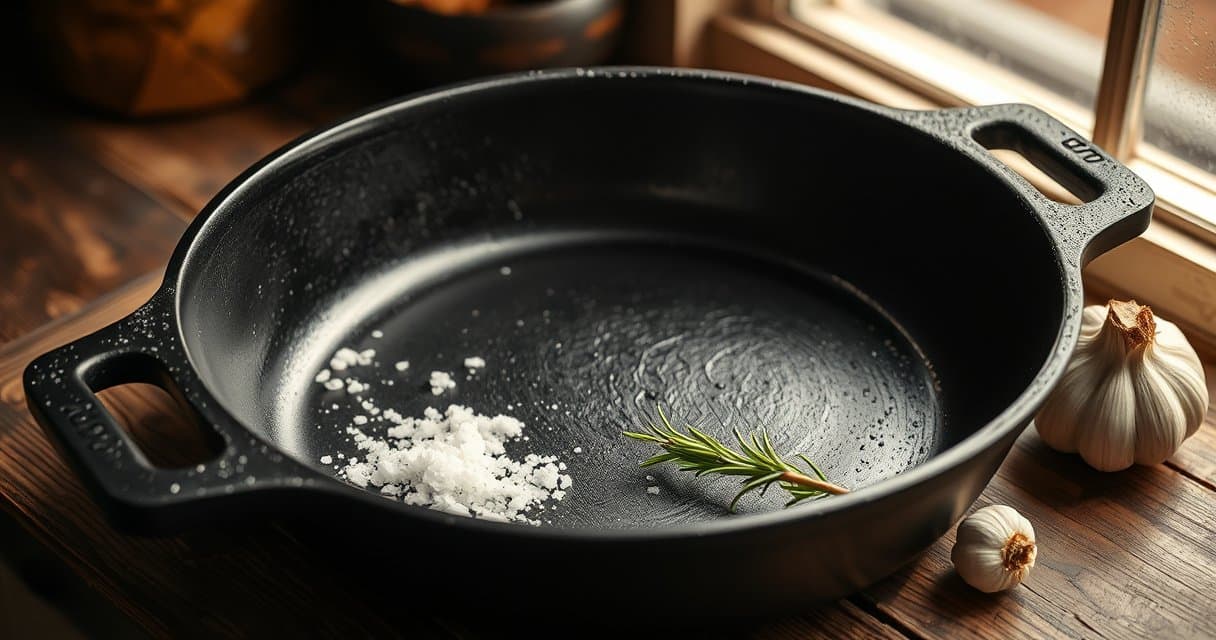
Ah, that blackened cast iron skillet presiding over your grandmother's kitchen... it's not just a utensil, it's a legacy. Choosing your own natural cast iron is opting for a lifelong kitchen companion, but the process deserves careful attention to avoid disappointment. I'll explain everything.
Key Points to Remember
- Natural cast iron offers exceptional thermal inertia for perfect searing and lifelong durability, but it is heavy and requires specific maintenance.
- Choosing the best skillet depends on quality criteria: smooth casting, a thick bottom (min. 3.5 mm), and good flatness.
- Choose a diameter suited to your needs (24 cm for 1-2 people, 28 cm for a family) and your ability to handle its weight.
- A careful initial seasoning (several thin layers of polymerized oil in the oven) is crucial to creating a natural and long-lasting non-stick surface.
- Daily maintenance relies on cleaning without soaking, immediate and absolute drying over heat, and occasional light oiling.
Why Choose Natural Cast Iron: Advantages and Trade-offs
It is often idealized, that beautiful dark one. But frankly, one must face facts: natural cast iron is not a magic pan that solves all problems. It is a specialized tool, with phenomenal qualities, but one that demands a certain commitment from you. Understanding this pact is the first step to making an informed choice.
The Strengths That Justify the Investment
Its main superpower? Thermal inertia. Once hot, it retains heat like no other. Place a steak on it: the temperature does not drop drastically upon contact with the cold meat. The result is a stunning, caramelized, perfect crust, without the interior overcooking. It is this same inertia that makes it excellent for stews or for finishing a roast in the oven – it distributes constant, even heat.
Then there's the question of non-stick properties. Forget Teflon. Here, the non-stick surface is something you create and maintain through seasoning. A well-blackened and oiled patina becomes more and more effective over the years. You can even make omelets or flip delicate fish in it, provided the technique and temperature are mastered.
And then, there's the argument of absolute durability. A quality cast iron piece is literally for life. It won't warp, won't scratch with metal utensils, and withstands extreme temperatures (oven, embers, live fire) that would make other materials cry. It is a heritage object, simple and robust.
The Trade-offs to Accept (Without Blinking)
Let's move on to the less glamorous realities. The weight, first. Expect easily 2.5 kg for a 26 cm skillet, and up to 4 kg for large models. The quick, light wrist flick, that's not for it. If you have wrist problems or enjoy stir-frying vegetables, this can be a real drawback.
Maintenance, next, is non-negotiable. You will never let it soak in the sink. After use, a simple rinse with hot water and immediate drying over heat are mandatory. Forget once, and rust shows its face. It's a relationship that demands attention, but one that quickly becomes a rewarding ritual.
Finally, its responsiveness is limited. Need to raise the temperature very quickly for a final deglazing? Or to lower the heat immediately to save a sauce? That's not its role. It excels in cooking with constant heat, not in last-second adjustments.
To help you see clearly, here is how it compares to other durable materials:
| Material | Strength | Weakness | Best Use |
|---|---|---|---|
| Natural Cast Iron | Heat retention, extreme durability | Heavy, specific maintenance | Searing, slow cooking, oven |
| Carbon Steel | Lightweight, responsive, natural non-stick | Rusts easily, seasoning necessary | Quick searing, high-heat cooking |
| 18/10 Stainless Steel | Indestructible, neutral (no seasoning), responsive | Food sticking, temperature technique required | Deglazing, sauces, precise cooking |
So, the best natural cast iron skillet for you? First and foremost, it's the one whose rules you accept. If you want a hassle-free utensil you can throw in the dishwasher, run away. If you're looking for a partner for powerful cooking and are ready to care for it, you will love it for the next 50 years.
Evaluating Casting Quality and Craftsmanship Details
Not all cast iron is created equal, far from it. Between a low-end model at 20€ and an artisanal piece at 200€, the differences are not limited to price. They directly impact performance, user experience, and longevity. To find the best natural cast iron skillet for you, you need to learn to look beyond just appearance.
The Fineness of the Casting and the Interior Surface
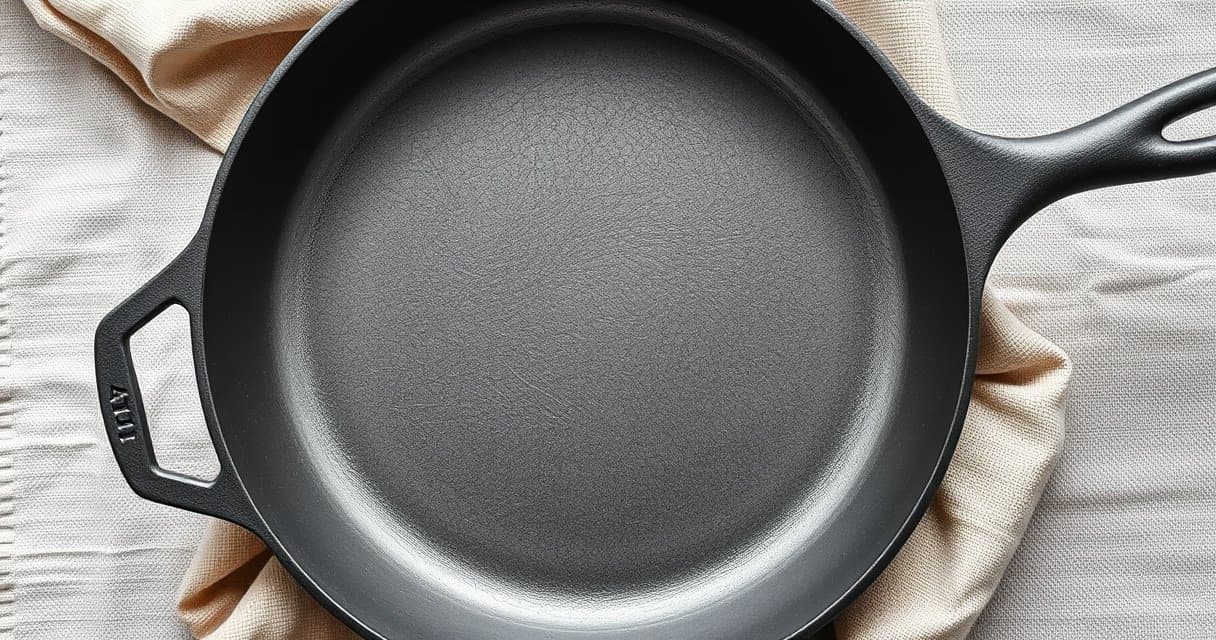
This is the first point to check, and the most revealing. Take the skillet in your hand and gently run your finger over the inside. Good cast iron has a relatively smooth surface, perhaps with very slight irregularities that will disappear with seasoning. Poor quality cast iron, on the other hand, will have a rough, grainy, almost porous surface. This poses two problems: food will tend to stick more, and this roughness makes initial seasoning much more difficult to achieve and maintain. On the outside, inspect the edges of the casting. They should be clean, without burrs or sharp metal fragments. A careful finish is a sign of rigorous quality control.
Thickness and Overall Balance
Thickness is crucial for even heat distribution. For a 24-26 cm skillet, aim for a base thickness of at least 3.5 to 4 mm. A base that is too thin (2-3 mm) will tend to create hot spots and not retain heat well, betraying the main advantage of cast iron. But be careful, the thickness must also be well distributed. A good skillet will often have walls slightly thinner than the base, which makes handling a bit easier without sacrificing performance. Lift it, feel its balance. The center of gravity should not be excessively forward, which would make it unstable on a support.
The Details That Make the Difference
Now look at the small extras. Is the handle one piece with the body of the skillet (cast)? This is ideal for strength and oven use. If it is riveted, make sure the rivets are perfectly smooth and flush to avoid grease buildup.
Another technical but essential detail: flatness. Place the skillet flat on a level surface like a cold glass-ceramic cooktop. Press gently in the center. It should not wobble or vibrate (a "spinning" phenomenon). A slight convexity (bulging outward) is sometimes intentional to compensate for thermal expansion, but a dip in the center is a deal-breaker: oil will pool there and cooking will be completely uneven.
Frankly, at this price, one can be demanding. A poorly finished skillet will cause you daily frustrations. Don't be seduced by a shiny factory seasoning that masks poor quality raw cast iron. Invest in a good material base: it is this, once properly seasoned by you, that will become your best ally.
Our Selection
This selection highlights three cast iron skillets that share the same promise: the versatility and durability of a timeless material. But between the historic American icon, the classic large format model, and the version with a practical accessory, which one best suits your needs? We analyzed the technical specifications and community feedback to help you make an informed choice.
| Product | Diameter & Weight | Finish & Handles | Max Temp. (skillet only) | Strengths & Community |
|---|---|---|---|---|
| Lodge 26 cm | 26 cm / 2.27 kg | Pre-seasoned (factory) | Single cast iron handle | 400°C |
| Navaris 30 cm | 30 cm / 3.5 kg | Pre-seasoned (soybean oil) | Cast iron handle + small helper handle | 240°C to 260°C |
| Navaris 30 cm + Mitts | 30 cm / 3.5 kg | Pre-seasoned (soybean oil) | Cast iron handle + included silicone mitts | 260°C (skillet only) |
Lodge Cast Iron Frying Pan 26 cm
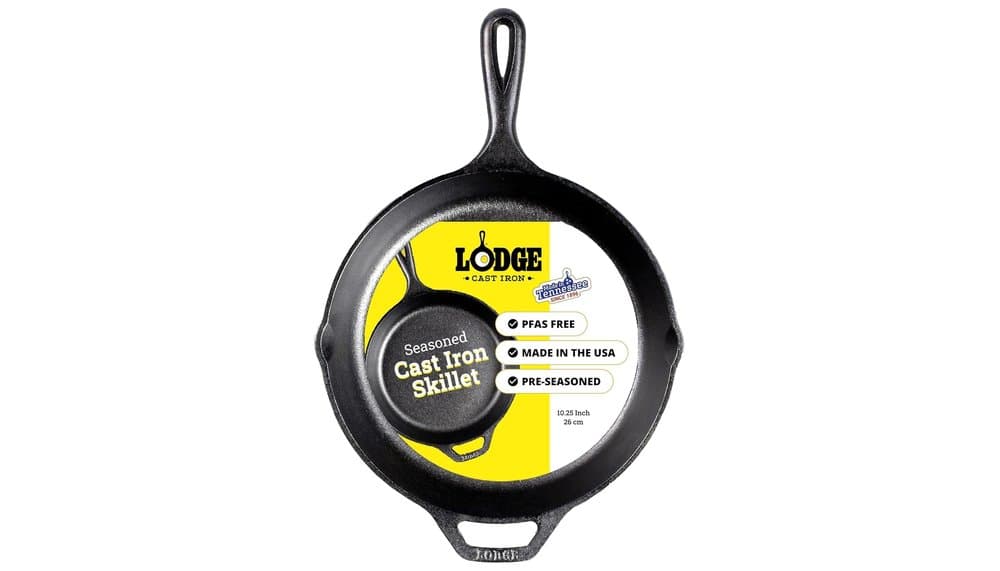
The Lodge skillet is often presented as the must-have reference in the cast iron world. On paper, its specifications promise a solid product: USA-made, factory pre-seasoned, compatible with all heat sources (including induction, oven up to 400°C, and barbecue), and backed by a 20-year guarantee. This technical pitch inspires confidence.
Based on user feedback, this confidence is generally well-placed. The community notes excellent heat distribution and remarkable heat retention (thermal mass), ideal for searing meat or finishing a dish in the oven. The pre-seasoned finish is often considered effective, although many reviews highlight that you need to refine this seasoning yourself over several uses to achieve perfect non-stick properties. The "made in USA" status and the brand's historical heritage are frequently cited positive factors.
However, analysis of reviews also reveals some concrete limitations. Its weight of 2.27 kg for a 26 cm diameter makes it quite heavy to handle, especially for flipping or pouring. Some users note that the single cast iron handle gets extremely hot and consistently requires a thick potholder. Finally, while durable, the specific maintenance of cast iron (careful drying after washing with water, occasional oiling) is a point to be prepared for; it's not a skillet you can simply throw in the dishwasher.
Navaris Cast Iron Frying Pan 30 cm
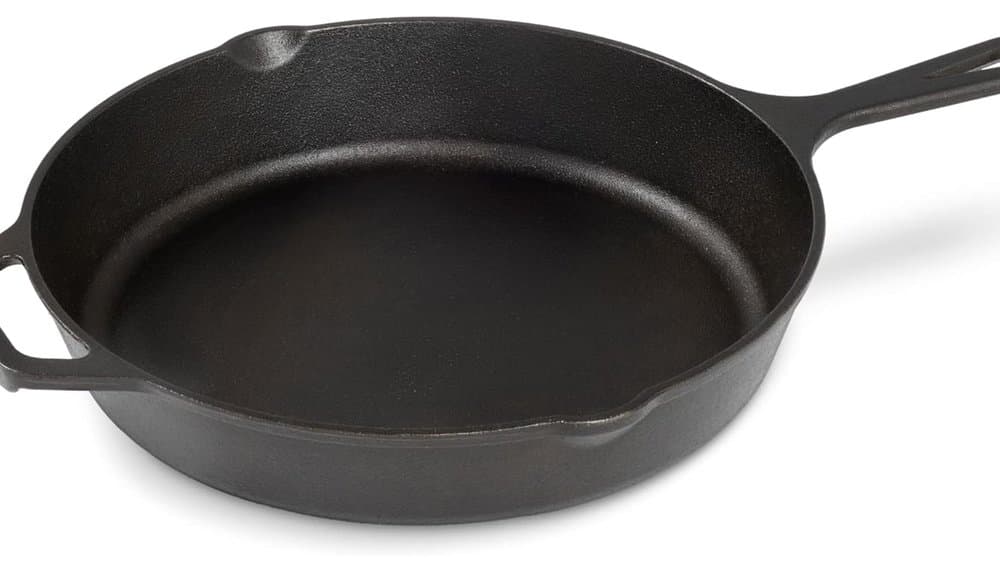
The standard Navaris model focuses on a generous size (30 cm diameter) for an audience seeking a large cooking surface. Its technical specifications indicate induction compatibility and a resistance to temperatures up to 240-260°C, with a factory soybean oil seasoning.
Community reviews agree on its main strength: its size. It allows cooking for several people or searing large pieces without crowding. Its value for money is often praised for those entering the world of cast iron. The presence of a small helper handle opposite the main handle is an ergonomic plus noted by users for carrying, despite its weight.
But that weight is precisely the first point of attention. At 3.5 kg empty, it is described as very heavy and not very maneuverable, especially when loaded with food. The pre-seasoned finish receives more mixed reviews than the Lodge's; several comments indicate that an immediate home re-seasoning is almost necessary to prevent food from sticking during the first uses. Finally, the indicated maximum temperature (lower than the Lodge's) and the lack of information on a long-term guarantee position it, based on available data, as a more "basic" but functional option.
Navaris Natural Cast Iron Frying Pan with Silicone Mitts
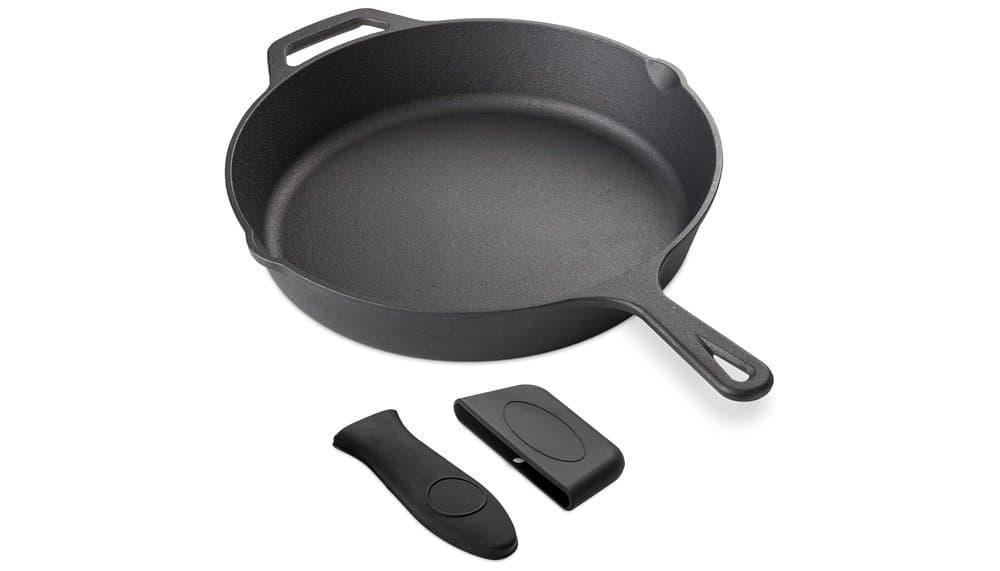
This third product is technically identical to the previous Navaris 30 cm in its core features (diameter, weight, material, pre-seasoning). The major difference lies in the inclusion of two protective silicone mitts that fit over the handles.
According to feedback, this simple addition notably changes the user experience. The mitts are consistently cited as a decisive advantage by those who have used them. They effectively insulate against heat, allowing for more comfortable and safer handling of the skillet without needing to search for a dedicated potholder. This mitigates one of the main drawbacks of bare cast iron. It seems like a product designed for those who want the benefits of cast iron without the sometimes "spartan" aspect of handling it.
The limitations, however, are the same as for the standard Navaris model: a very high weight and a factory seasoning that may need to be supplemented. It should also be noted, as the specifications state, that the silicone mitts are not oven-safe: they must be removed for any oven use, which then brings back the same handling precautions as any other cast iron skillet.
Diameter, Weight, and Ergonomics: Finding the Pan That Suits You
The best natural cast iron skillet is first and foremost the one that fits perfectly in your kitchen, on your cooktop, and matches your physical strength. A wrong choice on these points will relegate it to the back of the cupboard.
The Ideal Diameter: A Question of Daily Logic
Forget the magical thinking of "bigger is better." Think about real use. For one to two people, a 24 cm skillet is often sufficient and more manageable. It is perfect for a steak, two fish fillets, or vegetables for a side dish. The 28 cm is the Swiss Army knife, the most versatile size for a family: it allows you to sear two whole chickens, a large quantity of vegetables, or make a skillet meal for four without overcrowding the food (which makes it steam instead of sear). Beyond 30 cm, think carefully. It becomes very heavy, bulky, and your domestic cooktop might struggle to heat the surface evenly. Ask yourself this simple question: do my current largest pots overhang my induction hob or my main burner? If yes, be cautious.
See priceThe Weight: The Great Compromise
Cast iron is heavy. That's a fact. But the weight varies enormously. A well-made small 24 cm skillet will weigh around 2.5 kg. The same in 28 cm can easily approach 3.5 kg empty. Add 1 kg of food, and you find yourself having to lift and maneuver nearly 5 kg with one arm. Test this movement mentally: pouring sautéed potatoes onto a platter while lifting the skillet with one hand. If the image seems perilous, favor a more modest diameter or look for models with slightly lighter walls. Weight is a true asset for heat retention, but it can become an enemy if you have weak wrists or a built-in induction hob placed high up.
Handles, Balance, and Small Ergonomic Extras
Ergonomics come into play here. A long main handle in cast iron is essential to keep your hand away from the heat. But also examine its profile. Is it round? It can become difficult to hold with a greasy towel. Some have an oval cross-section or even a flattened part, offering a much better grip. For skillets 28 cm and larger, a second handle (or "helper handle") on the opposite side is a significant plus. It allows for a secure two-handed grip to carry the full pan to the oven or to the table. Also check the balance when you hold it by the main handle. It should not tip forward like a diving board but remain relatively horizontal. Finally, think about storage. Do you have room to store it within easy reach, or will it have to be stacked? A pierced handle (with a hole) can be an asset for hanging it, but pay attention to the edges of that hole, which must be perfectly polished so as not to cut your fingers.
Frankly, a pan that's too heavy or too big gets used less. And the goal is precisely the opposite: for it to become the workhorse of your kitchen. Therefore, prioritize the size you'll pick up with pleasure, not with apprehension.
Initial Seasoning and Long-Term Maintenance
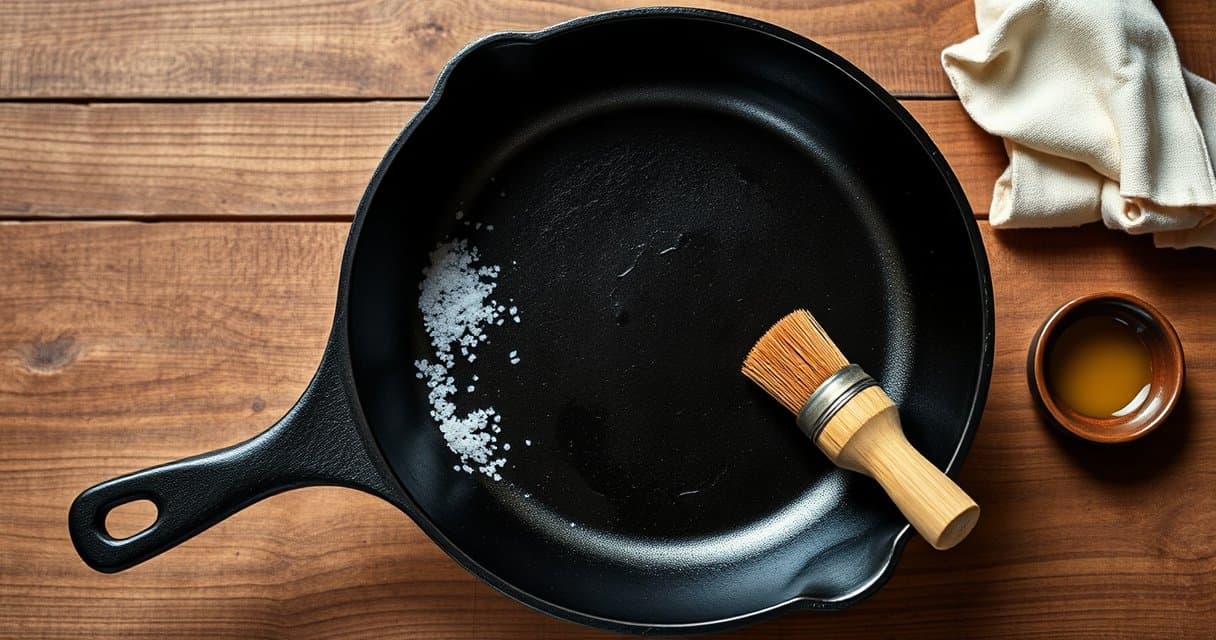
This is where the entire difference lies between a pan that rusts and discourages you, and a real blackened treasure that will last for decades. Seasoning is not a mystical chore, it's a simple science: creating a layer of polymerization by heating oil until it hardens. This patina is your natural non-stick coating.
The Initial Seasoning: The Essential Foundation
Even if your pan is sold as "pre-seasoned", a serious initial seasoning at home is non-negotiable. This factory treatment is often light. For yours, choose an oil with a high smoke point and a strong tendency to polymerize. Flaxseed oil is the undisputed champion for creating a solid and deep layer, but it smells strongly during the process. Grape seed oil is an excellent, more neutral alternative.
The method is uncompromising: clean the new pan with hot water and dish soap to remove any manufacturing residue. Dry it perfectly over heat. Apply an infinitesimal amount of oil with a paper towel, then remove even more with a clean paper towel, as if you had made a mistake. Only a microscopic film should remain. Bake at 200°C (approximately 400°F), upside down on a rack with a baking sheet underneath to catch drips, for 1 hour. Let it cool in the oven. Repeat this operation three times. It's long, but it's the guarantee of a perfect base.
Daily Maintenance: The Preserving Gestures
After each use, let the pan cool down a bit. Clean it with hot water using a nylon brush or, for tough spots, a small specialized cast iron metal chain brush. Forget the myth of "no soap" if you use a modern mild soap; it won't attack a good seasoning, only rancid grease. The real key is absolute drying. Wipe it, then heat it over low heat for two minutes to evaporate any trace of moisture. This is crucial.
Then, an optional but beneficial small gesture: with a paper towel, apply a tiny drop of neutral oil to nourish the surface before storing it. It's not necessary every time, but let's say every other time, especially if you scrubbed it a lot.
Reviving a Neglected Pan
It's rusty? Don't panic. Cast iron is almost immortal. If the rust is superficial, scrub vigorously with white vinegar and steel wool or coarse abrasive salt. Rinse, dry immediately over heat, and proceed with a complete new seasoning (the three layers). If the old seasoning is greasy, sticky, and uneven, it was done poorly, often with too much oil. It must all be removed. The radical but effective method is a cycle in a self-cleaning (pyrolysis) oven if yours has one, or using a chemical stripper like caustic soda, with extreme caution. You start from zero, on a new cast iron surface.
Frankly, maintenance is much simpler than people say. Once good habits are formed – clean, dry over heat – it becomes a 90-second reflex. And it is this little ritual that transforms an object into a faithful kitchen companion.
Conclusion
Choosing your natural cast iron skillet is ultimately choosing a partner. Not a simple utensil.
It requires some initial know-how and daily respect. In return, it offers unmatched performance and longevity measured in generations.
Take the time to choose it well. Adopt the right practices. It will repay you a hundredfold, with every meal.
Frequently Asked Questions
What is the best brand of natural cast iron skillet?
The "best" brand depends on your budget and expectations, but a quality skillet is recognized by its thick base (at least 3.5 mm), smooth cooking surface, and clean casting edges, signs of good craftsmanship. Brands like Le Creuset, Staub, or Lodge are references, but the essential is to inspect these manufacturing criteria.
How to properly season a new cast iron skillet?
First clean it with hot water and soap, dry it completely, then apply a microscopic film of oil (like flaxseed oil) before baking it at 200°C for one hour. Repeat this process three times to create a solid, non-stick foundation through polymerization.
What size of cast iron skillet should I choose?
For one to two people, a 24 cm skillet is ideal, while a 28 cm diameter is the versatile size for a family. It is important to choose a size adapted to your stovetop and your strength, as a 28 cm skillet can weigh over 3.5 kg empty.
Natural cast iron or enameled cast iron: which one to choose?
Natural cast iron requires seasoning to be non-stick and excels at searing, but it demands meticulous maintenance. Enameled cast iron does not rust and does not require seasoning, but its coating can chip and it is generally less performant for achieving a perfect crust.
How to clean and maintain a cast iron skillet?
After each use, clean it with hot water and a non-abrasive brush, then dry it immediately and absolutely by heating it on the stove to prevent rust. You can occasionally apply a thin film of oil after drying to nourish the seasoning.
Why does my cast iron skillet stick?
A cast iron skillet sticks if it is not hot enough before adding food or if its seasoning is insufficient or degraded. Make sure to preheat the skillet properly and, if necessary, re-season it to restore the non-stick patina.