Choosing Your Japanese Chef Knife
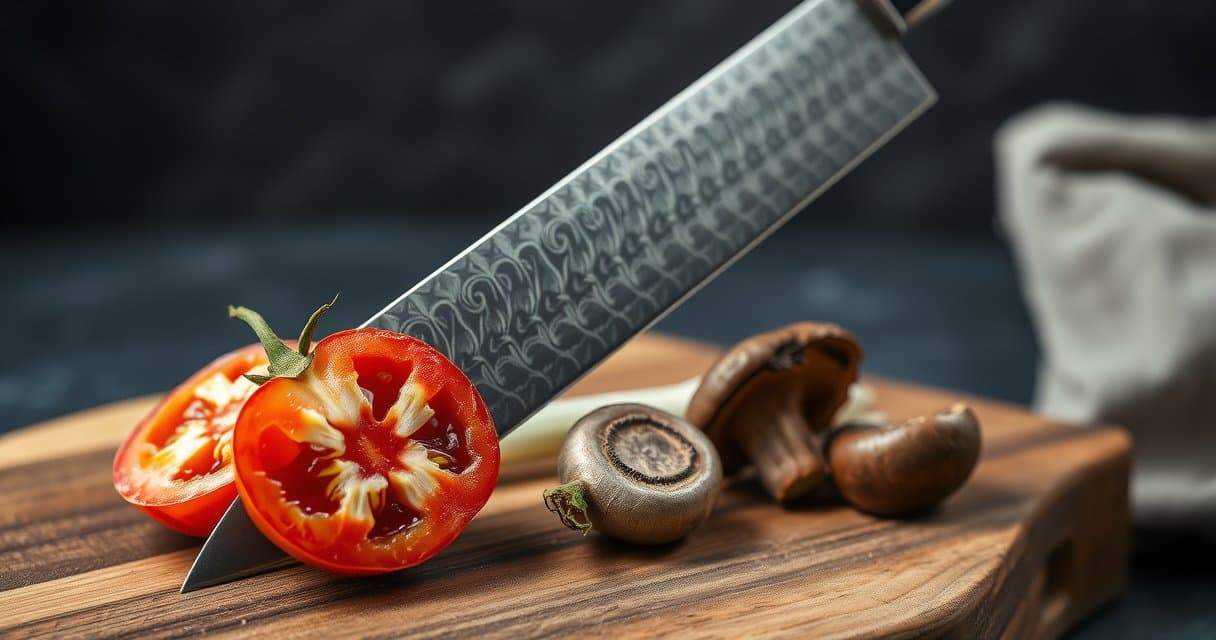
Nothing is more frustrating than a knife that crushes a tomato instead of slicing it cleanly. If this is your daily experience, it's time to discover the Japanese chef's knife. Imagine a blade that glides through food with surgical precision, revealing texture and flavor. It's not just a tool; it's a revelation for your hands and taste buds.
Key Takeaways
- A true Japanese knife is distinguished by its high-carbon steel (hardness >60 HRC) and precise blade geometry, going far beyond simple style.
- Steel choice is crucial: stainless steels (VG-10, SG2) are easy to maintain, while carbon steels offer exceptional sharpness but require more care.
- For versatile use, a 21 cm Gyuto is often recommended, while a Santoku is ideal for precise vegetable cutting.
- Maintenance is essential: avoid the dishwasher, use a suitable cutting board, and sharpen regularly with a water stone.
- Investing €150-200 in a knife forged in Japan is a durable purchase, designed to last for decades and be passed down.
What Distinguishes a Real Japanese Knife from a Style Knife
Let's be clear: most knives sold as "Japanese" in big box stores or on generalist websites are just Japanese-style knives. The difference isn't just aesthetic, it's structural. A real Japanese knife is designed as a precision tool, not as a decorative object. It's a matter of intention, metal, and hand.
The Soul of the Metal: Carbon Steel
Frankly, this is where everything is decided. Many style knives use soft stainless steel, often below 56 HRC (Rockwell). It's easy to maintain, but it dulls within a few weeks. The real Japanese knife, even in its more accessible versions, relies on high carbon content steel. We're talking about steels like VG-10, AUS-10, or the legendary blue (Aogami) and white (Shirogami) steels. Their hardness regularly exceeds 60 HRC. That changes everything: the edge is finer, harder, and stays that way much longer. Yes, some of these steels can stain (the "pure" carbon steels), but that's the price to pay for exceptional cutting performance.
The Blade Geometry: A Radical Approach
Look at the blade from the side. A classic Western knife has a thick blade and a symmetrical "V" geometry, designed to be robust. A traditional Japanese knife is often thinner behind the edge. But above all, it frequently uses an asymmetric edge (70/30 or even 90/10 for some models like the Yanagiba), optimized for a specific hand (right-handed or left-handed). This asymmetry allows for a perfect cut, without deviation. Even the symmetrical blades (50/50) on a Japanese Gyuto are generally thinner and lighter. The goal? To reduce friction and "wedging" (when the knife gets stuck in food). Result: you slice a carrot without splitting it.
Craftsmanship and Finishing, Details That Matter
It's often in the details that you see the difference. A style knife may have a poorly balanced handle or a blade that isn't perfectly straight. A good Japanese knife, even from a reputable brand, shows manic attention. The blade polish (the kasumi or mirror), the perfect joint between the handle and the tang (the machi), the absence of play in the mounting... all of this is not luxury. It is the guarantee of a reliable, safe, and pleasant tool to use for hours. The ergonomics are designed for intensive work, not for a three-minute demonstration.
The Best Japanese Chef's Knife for You?
Don't be fooled by a pretty Damascus pattern superficially welded onto low-grade steel. The crucial distinction is this: are you buying a tool designed by and for a cutting philosophy, or an object that imitates its appearance? For serious use, always prioritize a manufacturer known for its metallurgical seriousness, even if it's a simple model without frills. A good Gyuto forged in a steel like VG-10 or Blue #2, well treated, will be a much more loyal companion than a fancy knife with a seductive look. Your cutting board (wood or dense polyethylene, never glass!) will thank you.
Choosing Your Steel: Sensitivity, Hardness, and Grades
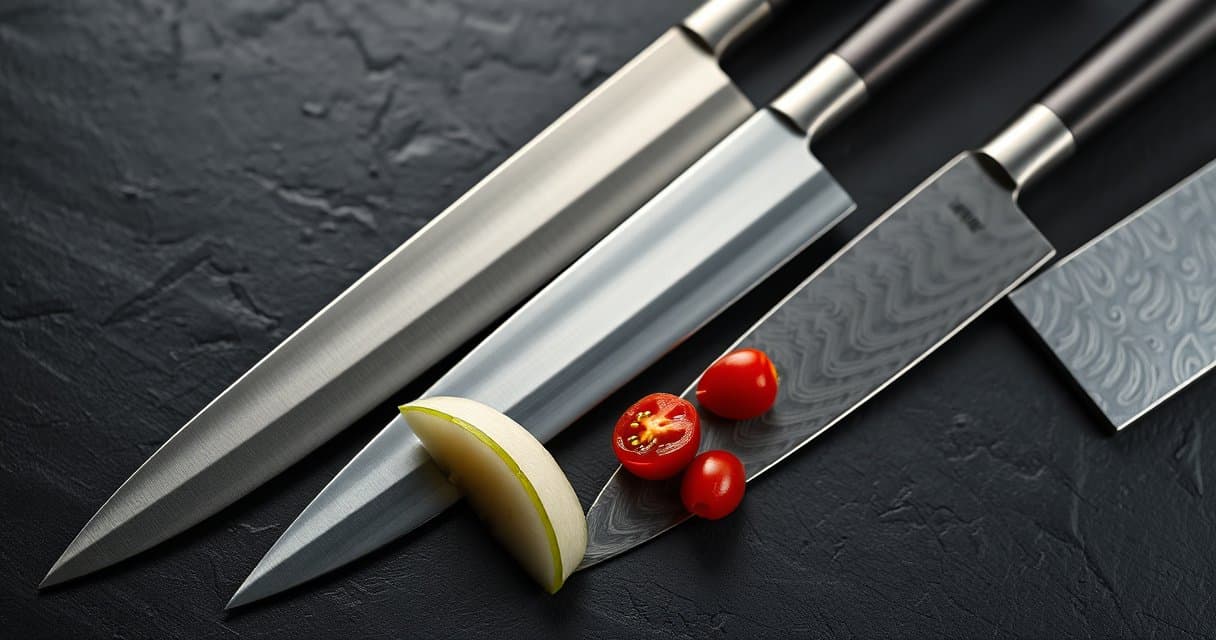
Your relationship with your knife will largely depend on the metal it is made from. It is the heart of the tool. It's not just about "choosing the best"; it's about finding the steel that matches your temperament and your kitchen ritual. Do you want a demanding partner but one that is incredibly high-performing, or a more easy-going companion? Here's what you need to know.
The Fundamental Question: Carbon vs. Stainless
This distinction is absolutely crucial. If you want a tool that responds immediately to sharpening and achieves an almost supernatural edge, turn to carbon steels (like Shirogami/White Steel or Aogami/Blue Steel). They are softer to the touch of the stone, taking a razor edge with disconcerting ease. Their price? They are sensitive to oxidation. A slice of lemon, a forgotten onion, and a stain appears. For some, it's a patina that gives it soul. For others, it's a chore. If this idea stresses you out, move on.
Stainless steels, on the other hand, offer you peace of mind. But be careful: "stainless" does not mean "soft." The best Japanese stainless steels, like VG-10 or SG2/R2, are "super" steels that combine corrosion resistance and extreme hardness, often above 60-62 HRC. They hold their edge for a very long time and are perfect for the person who cooks every day without wanting to play museum curator. Sharpening them is a bit more technical, but it's an acceptable compromise.
Understanding Rockwell Hardness (HRC): The Numbers Speak
Don't be afraid of this term. Rockwell hardness (HRC) simply measures the steel's ability to resist deformation. A standard Western kitchen knife often hovers around 54-58 HRC. A good Japanese knife starts at 58-59 HRC for basic stainless steels, and regularly climbs to 62-65 HRC for high-end carbon steels or powder metallurgy steels like ZDP-189.
Is harder always better? Almost. A blade at 64 HRC will hold a keen edge for weeks, even months, with just a stropping on leather. But it will also be more fragile to shocks (a chicken bone, an avocado pit). A blade at 59-60 HRC will be more tolerant, more "malleable," but will require more frequent sessions on the stone. It's a balance. For a first best Japanese chef's knife, aiming for the 60-62 HRC range is often ideal: an excellent compromise between edge retention, ease of sharpening, and resistance to mistakes.
The Nuances Within the Grades: The Role of Alloys
Blue steel (Aogami) is not just plain carbon. It is alloyed with tungsten and chromium, giving it superior toughness compared to white steel (purer), making it a bit less brittle for a nearly equivalent edge. Silver #3 steel (Ginsan), on the other hand, is a stainless steel that behaves almost like a carbon steel during sharpening, a real gem for the undecided.
My advice? Don't get lost in catalogs. Focus on that initial dilemma: are you ready to dry your knife after every use to have ultimate cutting performance (carbon steel)? Or do you prefer to put it away stress-free after a simple wash, accepting that sharpening will be a bit less intuitive but the edge will last a very long time (superior stainless steel like VG-10 or SG2)? Your answer determines 80% of your choice.
Our Selection
In the world of kitchen knives, it can sometimes be difficult to navigate between marketing promises and real performance. Today, we are taking a closer look at three Japanese-inspired knives, two chef's knives and one kiritsuke, from the SHAN ZU and FINDKING brands. We have analyzed their technical specifications and dissected community feedback to give you a clear view of what each offers. Whether you are looking for a robust workhorse or a tool with a singular design, this selection has something for you.
To begin, here is a comparison table summarizing the key characteristics of the three models:
| Product | Blade Length | Steel / Hardness (HRC) | Handle Type | Key Strengths |
|---|---|---|---|---|
| SHAN ZU PRO Series | 20 cm | 67-layer Damascus Steel / 62 HRC | G10 (fiberglass) | Authentic Damascus pattern, robust construction, excellent reputation. |
| SHAN ZU KORAKA Series | 20 cm | Powdered Steel / 63 HRC | Pakka Wood | Extreme sharpness (12° angle), lightweight, 2-year warranty. |
| FINDKING Kiritsuke | 23 cm (9") | AUS-10 Damascus Steel / Not specified | Ox Horn and Resin (octagonal) | Unique design (kiritsuke), aesthetic finish (roses), versatility. |
SHAN ZU PRO Series Chef's Knife
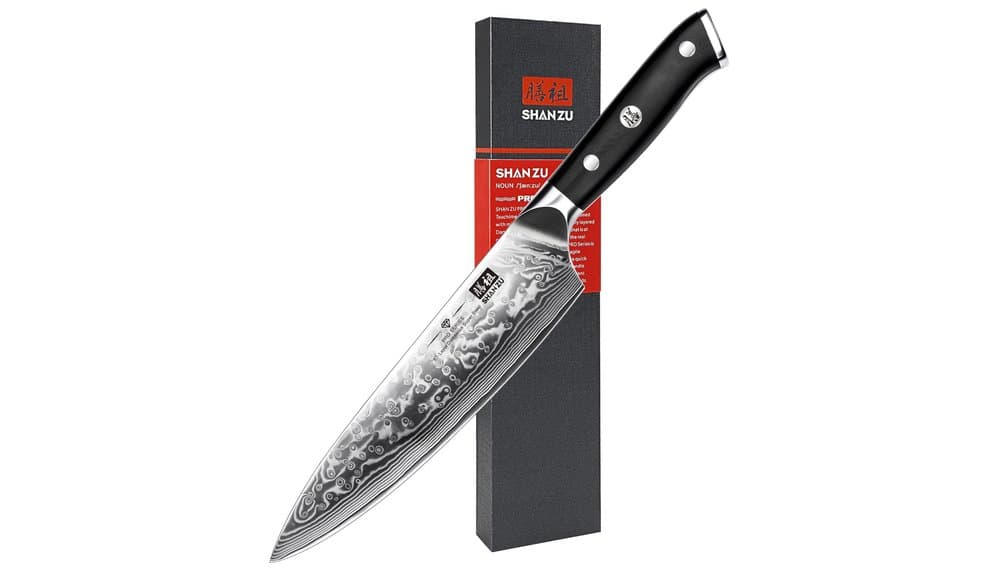
This chef's knife from the PRO series by SHAN ZU clearly focuses on authenticity and tradition. On paper, its specifications promise a serious tool: a 20 cm blade forged from 67 layers of Damascus steel with a core of Japanese 10Cr15MoV steel hardened to a hardness of 62 HRC. The manufacturer emphasizes that this is a genuinely forged Damascus and not a pattern simply laser-etched, an important distinction for purists.
According to user feedback, this point is largely confirmed and constitutes one of its major assets. The community notes that the pattern is genuine and durable, offering an aesthetic that does not fade with use. Reviews also highlight that the knife arrives exceptionally sharp and that this edge lasts over time with proper care. The G10 handle is described as providing a solid and comfortable grip, even with wet hands, and the overall balance is frequently praised.
However, this robustness has a weight, literally: at 260 grams, it is the heaviest knife in our selection. Some users find this weight reassuring for cutting hard products, while others might find it a bit tiring during prolonged cutting sessions. Finally, like any high-carbon steel knife (even protected by Damascus layers), it requires meticulous maintenance – immediate drying after hand washing – to prevent any risk of long-term corrosion.
SHAN ZU KORAKA Series Chef's Knife
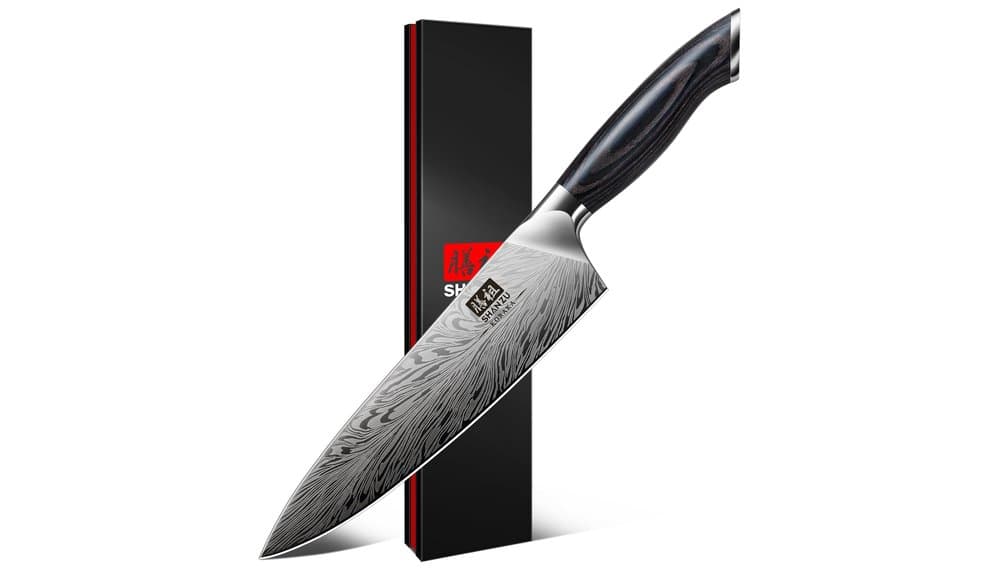
The KORAKA series represents SHAN ZU's modernist approach. Here, the emphasis is on blade technology rather than traditional aesthetics. The flagship material is a Japanese powdered steel with an impressive hardness of 63 HRC. This steel, born from advanced metallurgy, is sharpened to an extremely fine angle of 12 degrees on each side, promising a razor-sharp edge. It is important to note that the manufacturer clearly states that the pattern on the blade is achieved by laser etching and not by Damascus forging.
Customer reviews converge on one point: the cutting performance is excellent. The community reports that the knife glides through food with remarkable precision and ease, validating the promises related to the powdered steel and the sharpening angle. Its light weight of 181 grams is also an appreciated factor, offering a feeling of maneuverability and reducing wrist fatigue. The Pakka wood handle is described as offering a good compromise between comfort and stability.
The limitations, according to feedback, are mainly related to its identity. The laser-etched look, although stylish, lacks the depth and unique character of forged Damascus, which may disappoint enthusiasts of traditional finishes. Furthermore, such a fine edge and high hardness can make the blade more fragile against shocks (like hitting a bone) and more demanding to sharpen for a novice. It is a precision tool that requires a bit more know-how for its long-term maintenance.
FINDKING Kiritsuke Knife
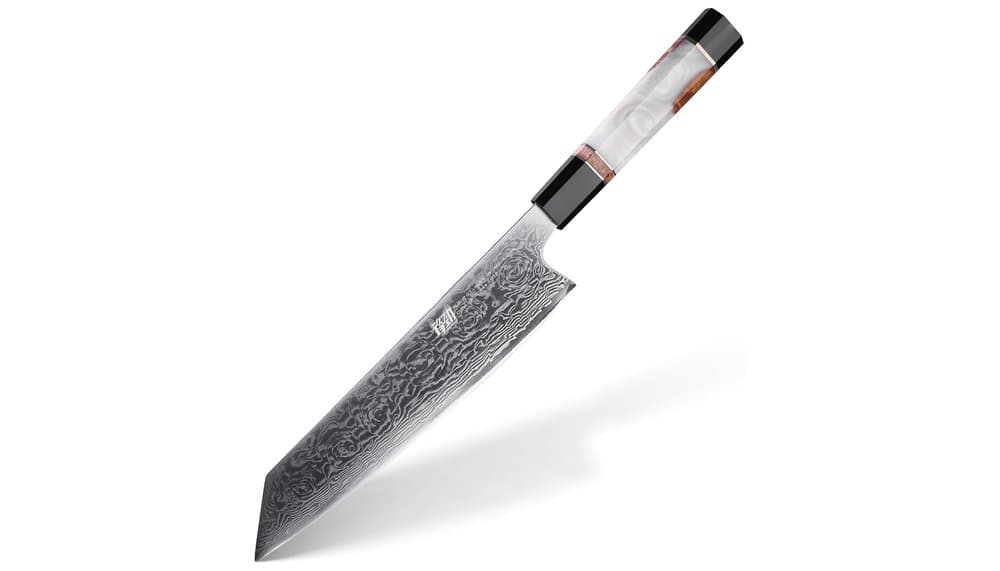
The FINDKING immediately stands out with its kiritsuke shape – a straight, pointed 23 cm (9 inch) blade, a hybrid between a chef's knife and a slicer – and its very assertive design with a rose pattern on the blade. It uses AUS-10 steel, often considered a good quality Damascus steel offering a good balance between sharpness, edge retention, and corrosion resistance. Its octagonal handle made of ox horn, resin, and wood gives it a rustic and traditional look.
Available reviews, although fewer, highlight its unique aesthetic appeal and versatility. The kiritsuke shape is appreciated for its precise shaping of vegetables and its ability to slice large cuts of meat or fish. The community notes that the knife has good balance and that the octagonal grip offers precise finger control.
Nevertheless, a few points of caution emerge. The very specific design (color, rose pattern) will not appeal to everyone and may seem less versatile from an aesthetic point of view. The handle made of natural composite materials, although beautiful, could be less durable over time than a highly stabilized G10 or Pakka wood, especially if mistreated. Finally, AUS-10 steel, although performant, is generally considered slightly behind in edge retention compared to a powdered steel like that of the KORAKA series.
Shape and Geometry: For Which Use and Which Hand?
After choosing your steel, you must choose the shape of the blade. It dictates how the tool interacts with food. A knife is not just an edge; it's an angle of attack. And for a first best Japanese chef's knife, this choice is as decisive as the metal.
The Gyuto vs. The Santoku: The Battle of the All-Rounders
This is the classic dilemma. The Gyuto (literally "beef knife") is the Japanese equivalent of the Western chef's knife. With a blade typically between 18 and 24 cm, it has a pointed tip and a pronounced belly. It is the king of the "rocking" motion for chopping parsley, and its tip is perfect for delicate tasks like deboning a chicken thigh. It's a knife that loves movement.
The Santoku ("three virtues" for meat, fish, vegetables) is shorter (16-18 cm), with a spine that slopes down towards the tip (a "sheepsfoot"). Its edge is straighter. It excels in push cutting and vertical chopping, especially on vegetables. It is often lighter and more maneuverable. If your work surface is small and you mainly cut vegetables, the Santoku can be a revelation. Honestly, for daily use very focused on vegetables, I often prefer it.
The Big Question of the Edge: Symmetrical or Asymmetrical (Single Bevel)?
Here, we touch the very essence of tradition. Most Gyuto and Santoku have a symmetrical edge (an equal "V" on both sides), like your Western knives. It's perfect, versatile, and hassle-free.
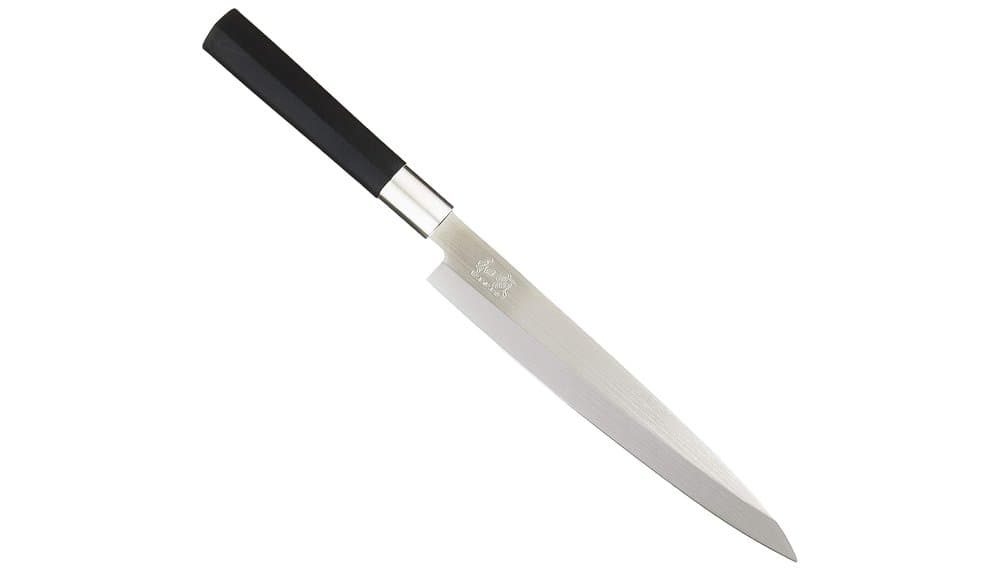
But some Japanese knives, especially specialized models like the Yanagiba (for sashimi) or the Usuba (for vegetables), are single bevel. The blade is sharpened only on one side, creating an asymmetrical geometry. This allows for slices of perfect fineness and finish, without tearing the fibers. It is a master's tool.
Beware, it's a commitment! A single-bevel knife is designed specifically for one hand (right-handed or left-handed). Using it with the wrong hand is like writing with the opposite hand: it works, but everything goes sideways and the food deflects. For a versatile chef's knife, I strongly advise against starting with a single bevel. It's a path for later, once you master sharpening and your own movements.
The Length: A Question of Confidence and Space
A 21 cm Gyuto (about 8.2 inches) is the gold standard. It offers enough length to slice a large cabbage or a salmon fillet in one fluid motion, without being too long to become intimidating on a small board. An 18 cm is more agile, a 24 cm commands respect but requires space. Hold your usual Western knife and measure it. If you find it lacks length, add 2-3 cm. If you sometimes find it cumbersome, subtract that much. It's as simple as that.
Geometry is the personality of the knife. A 21 cm Gyuto in stainless steel with a symmetrical edge is the universal knife, the "no-excuse" knife that excels everywhere. That's why it is so often recommended as an entry point.
See priceThe Right Handle for a Connection with the Tool
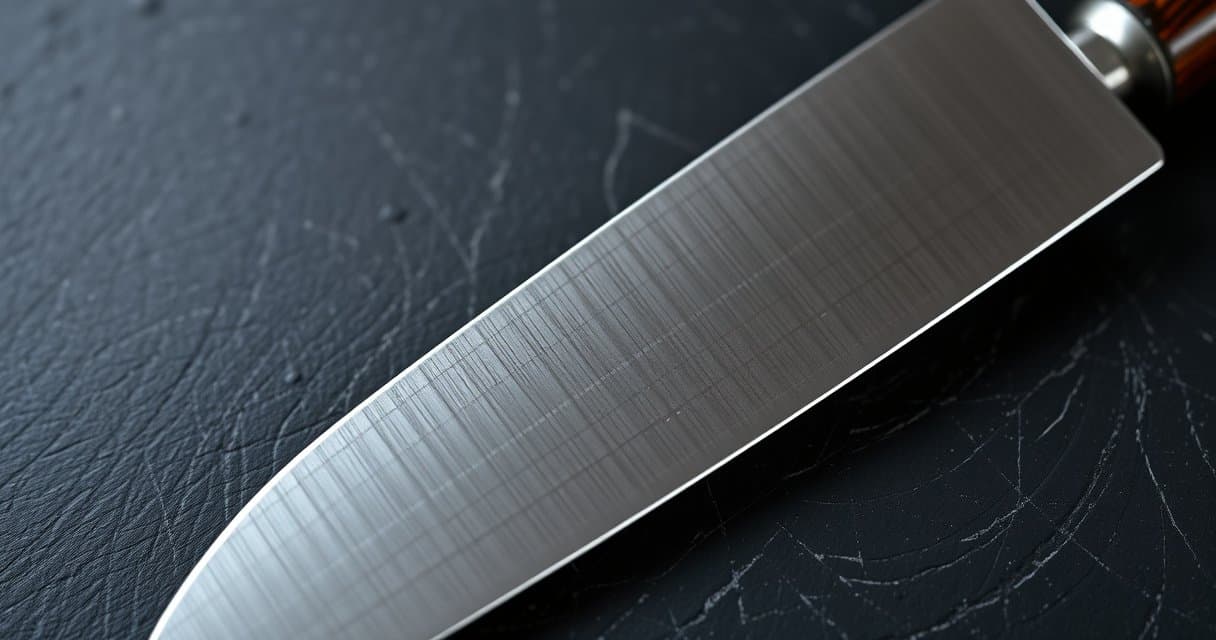
We think about it less than the blade, yet it is the point of contact between your intention and the cutting edge. A bad handle means guaranteed cramping after ten minutes and precarious control. A good handle is a natural extension of your hand. For your best Japanese chef's knife, don't skip this detail. It's what transforms a beautiful object into a working tool.
Materials: From Warm Wood to Practical Synthetic
Three main families share the market, each with its own character.
- Wood (Ho in Japanese): This is the traditional and tactile choice. From light, understated magnolia to dark, dense rosewood, through to walnut with warm grain. Wood lives, it has a soul. It absorbs some moisture from the hand, offering a secure grip even with slightly damp fingers. The downside? It requires minimal care (a bit of mineral oil occasionally to prevent cracks) and its shape can evolve slightly over time. It's a material for those who love authenticity and accept a small amount of maintenance.
- Pakkawood: This is an excellent compromise. It is a composite: wood veneers compressed and impregnated with plastic resin. It retains the beauty and visual warmth of wood (often with very aesthetic patterns), but it is nearly indestructible, waterproof, and does not warp. It is heavier and denser than natural wood. Honestly, for a knife that will undergo daily use in a home kitchen, it is often the smartest and most durable choice.
- Synthetic Materials (G10, micarta resin, ABS): Here, we are in the realm of pure performance. Ultra-durable, lightweight materials, textured for maximum grip even in the worst conditions, and perfectly hygienic. They may lack warmth to the touch, but for an intensive and humid kitchen environment, their efficiency is undeniable.
The Shape: How It Fits Your Palm
This is even more crucial than the material. We mainly distinguish three profiles:
| Handle Shape | Description | For Whom? |
|---|---|---|
| Western Handle (or "handle") | Symmetrical shape, often in two parts riveted to the tang (the extension of the blade). This is the most common shape on Gyutos. | Converts coming from Western cutlery. It offers a neutral, adaptable grip and allows for easy manipulation in different positions (pinch grip, full grip). |
| Japanese Handle (or "Wa") | Typically octagonal shape, more rarely oval or D-shaped. It is attached to the tang by a compression fit (usually with glue and a wooden dowel). | Those seeking authenticity and precise ergonomics. The octagon provides flat planes that naturally guide finger placement. The D-shape is asymmetrical and designed specifically for one hand (right-handed/left-handed). |
| "Cigar" or Straight Handle | A light and simple cylinder, often found on economical Santoku-type knives. | A functional entry-level option, but one that can lack guidance and become uncomfortable during long sessions. |
My sharp opinion? For a first serious knife, mentally test your grip. If you often hold your knife with your index finger along the spine (pinch grip), an octagonal Wa handle will give you millimeter-perfect reference points. If you have a more "full palm" grip, a good Western handle will be perfect. The worst is a handle that is too thin or with sharp edges that dig into the skin. Your hand should not fight with the tool.
Weight and Balance: The Magic of the "Pinch Point"
Take the knife naturally between your thumb and forefinger, right at the junction between the blade and the handle. This is the pinch point. On a well-balanced Japanese knife, the center of gravity is often located precisely at this spot or just in front of it. Result: the blade seems to almost float, it falls into the food by itself. You guide, you don't force.
A very heavy handle (made of solid metal or very dense pakkawood) will pull the balance towards the rear. This can give an impression of stability, but at the expense of the feeling of lightness and liveliness of the blade that is the charm of Japanese knives. A light magnolia handle will place all the mass at the front, for an edge that "bites" with incredible authority.
In the store, do this simple test: the "balance test". Place your index finger at the blade/handle junction. The knife should balance roughly horizontally, or with a slight tilt towards the tip. If it tilts heavily towards the handle, it will not behave like a true Japanese knife in action.
Maintaining Its Edge: A Daily Commitment
A Japanese knife is not a gadget to be forgotten in a drawer. It's a precision instrument, and like a good violin, it needs to be tuned. Maintenance isn't a secondary chore; it's the indispensable counterpart to the performance you love. Frankly, neglect this point and your best Japanese chef's knife will become a sad piece of metal in less than a year. The goal? To maintain that edge that slices through air and food effortlessly.
The Gestures That Preserve (and Those That Kill)
Your daily routine is more important than monthly sharpening. Start with the absolute basics: the cutting board. Forget glass, ceramic, or stone. These are edge killers. Opt for soft wood (like beech) or composites like Epicurean. They give a little, to preserve the edge.
After each use, a simple rinse under warm water with a soft sponge. Absolutely no dishwasher! The aggressive heat, shocks, and detergents attack the blade and handle. Dry it immediately and thoroughly with a cloth, especially if it's a carbon steel. A trace of moisture and rust appears in a few hours, as an indelible orange patina.
For storage, never toss it loosely with other utensils. The edge chips at the slightest contact. Use a wall-mounted magnetic strip (blade facing up), a slotted block, or individual wooden (saya) or rigid plastic sheaths. This protects the blade and you too.
Sharpening Your Mind: The Essential Kit
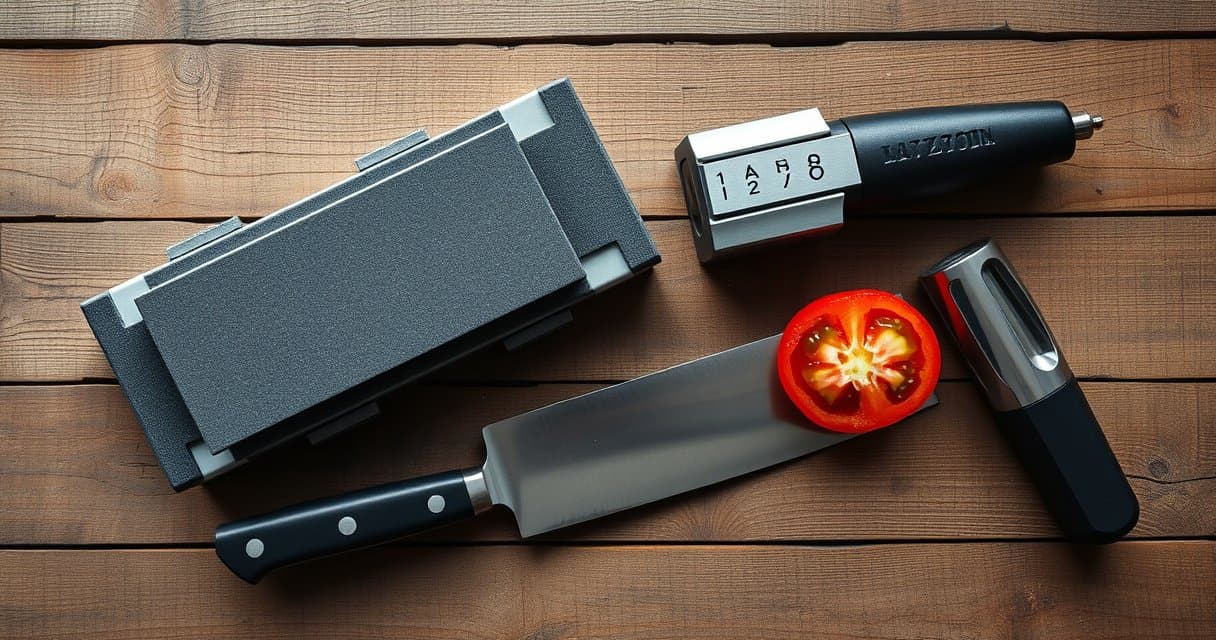
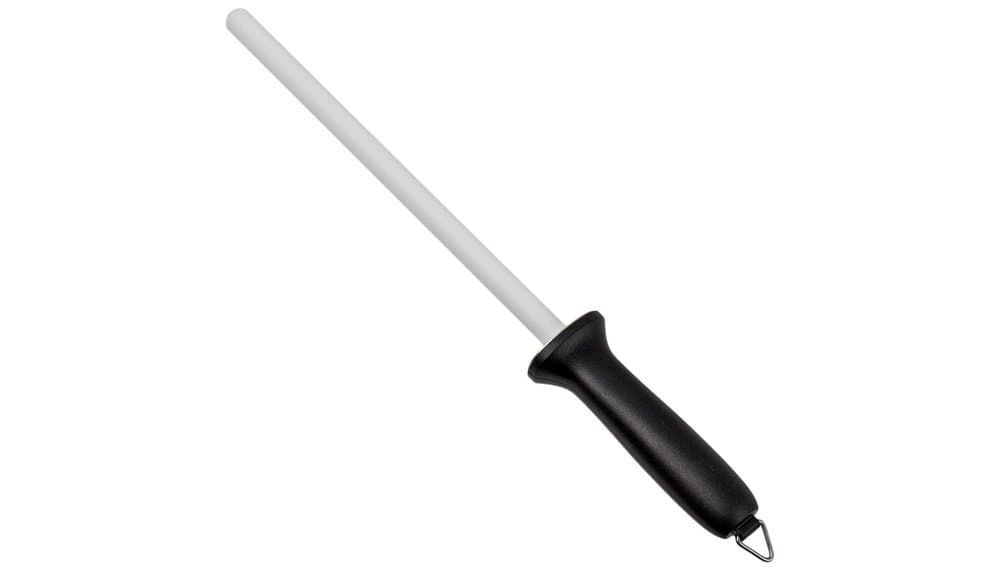
Sharpening is not optional. Even the best steel loses its bite. Two things must be distinguished: blunting (the edge bends microscopically) and wear (the metal itself wears down). For the first, a whetstone is the king of tools. Ceramic or diamond honing rods can help out on very hard steels, but they are merciless if your technique is approximate.
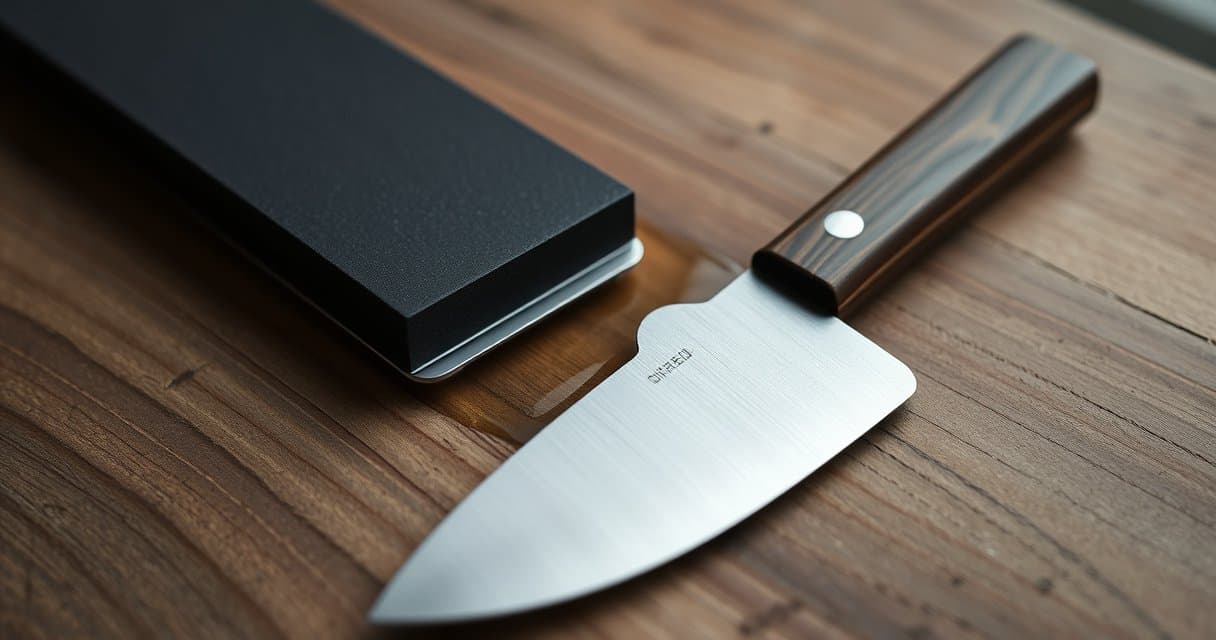
Your first stone? A 1000/3000 grit combination is perfect. The 1000 for reshaping the edge when it's truly tired, the 3000 to refine and polish it. A quality stone costs between 40 and 80€ and lasts for years. Water stones must be soaked for 10 to 15 minutes before use. The water creates an abrasive slurry and evacuates metal particles.
My categorical opinion: avoid pull-through sharpeners with wheels. They plane your blade uncontrollably, create a false edge full of chips, and will make you cry when you see the state of your beautiful geometry after a few passes.
The Sharpening Session: Step by Step
- Calm your mind. Take 20 minutes without being disturbed. Place the stone on a stable base (an anti-slip block is ideal).
- Find the angle. This is the key. For a double-bevel Japanese knife, maintain an angle of about 15 to 17 degrees. A tip: place the spine of the blade on the stone, then lift it by the thickness of a two-euro coin. That's roughly it.
- Take action. One hand on the handle, the other exerts light pressure with two or three fingers on the blade. Slide the knife as if you want to cut a thin slice from the stone, following its entire length, from the heel to the tip. Do 10 to 15 passes on each side, alternating regularly. You should feel a slight bite, a sign you are on the edge.
- Refine. Repeat the process on the fine side of the stone (3000 grit) with the same gentle, regular motions. This smooths the micro-tears left by the coarser grit.
- Verify. The ultimate test? Cut a ripe tomato or a sheet of paper held in the air. If it glides without forcing, mission accomplished. If not, do a few more passes on the 1000 grit.
It's a skill that is acquired. The first time, it's intimidating. The fifth time, it's a meditation. And it is this ritual that makes this knife a true partner, not a disposable item.
From First Purchase to Heirloom: A Twenty-Year Vision
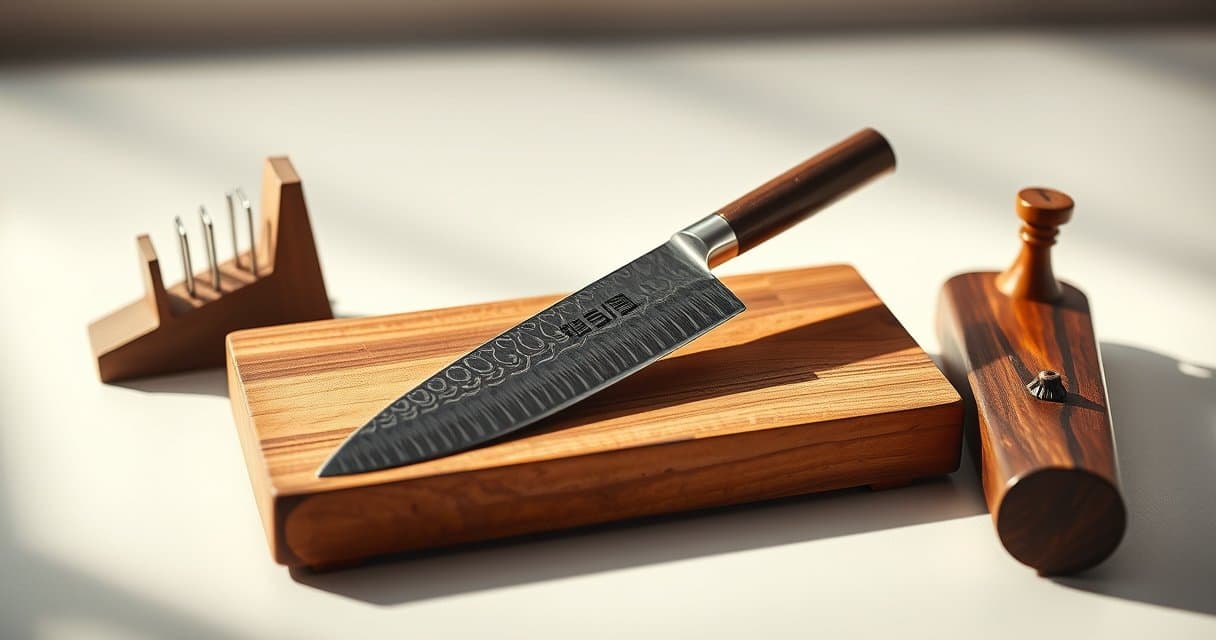
Buying a Japanese knife is not a transaction. It's the beginning of a story. You are not simply looking for a tool for the next six months, but a companion for the next twenty years. Thinking on a generational scale changes everything: the budget, the choice, the attachment. A well-chosen and well-cared-for knife will outlive you, bearing the micro-marks of your thousands of meals. It is the absolute antithesis of disposable consumption.
The Initial Investment: Where to Put Your Money?
At this stage, you know that the entry price for a quality knife, forged in Japan, starts around 150-200€. Below that, you compromise on the steel, the forging, or the finish. For a twenty-year companion, this threshold is reasonable. Divide 200€ by 20 years: that's 10€ per year. Cheaper than a streaming platform subscription, for an object that literally nourishes you.
But where is the real added value when aiming for the very long term? It is not necessarily in a hyper-complex, expensive-to-buy steel that can be difficult for an amateur to sharpen. It is in the hidden robustness: the quality of the temper (a process that makes the steel hard but not brittle), the perfect symmetry of a single-bevel blade, the solidity of the joint between the handle and the tang (that part of the blade that goes into the handle). These details determine if the knife will chip, warp, or come apart over time. Prioritize a full-tang or solid-tang construction sealed into the handle; it's the guarantee of enduring solidity.
The Evolution of Your Technique (and Your Collection)
Your first purchase will likely be a 21 cm Gyuto. It's the perfect "all-purpose knife." But over the years, your technique will refine. You will feel the limits of a "do-it-all" tool. This is where the notion of a batterie de cuisine (kitchen set) is born.
You might add a Nakiri for vegetables, whose straight blade and thinness will offer a different cutting pleasure. Later, a Sujihiki for slicing roasts with elegant precision. Each new tool is a response to an acquired skill, not a trend. The collection is built slowly and with intention. And paradoxically, the more specialized tools you have, the less you wear each one out, further extending their lifespan.
The Invisible Heritage: The Patina and the Memories
A carbon steel, like the famous Blue Steel, does not stay immaculate. It develops a patina – shades of grey, blue, gold – unique to your use. This controlled oxidation is armor against rust and the calling card of your history. It tells of summer tomatoes, marinated beef, pressed lemons. It is this patina, this acquired "soul," that makes the object inalienable. No one else can reproduce it.
It is also an object that can be passed down. It carries within it the memory of the hands that wielded it. Regular sharpening imperceptibly alters its profile, adapting it to your natural cutting angle. After years, it is literally molded to your hand. Passing it on is not giving an old knife. It is bequeathing a part of your know-how, your relationship to material, your respect for work well done. That is far more precious than a check.
So, when you hold that future best Japanese chef's knife in your hand for the first time, don't just think about tonight's chicken. Imagine it in twenty years, still just as sharp, bearing the fine lines of your sharpenings and the patina of a thousand good meals. It is this perspective that makes the difference between a purchase and an heirloom.
Conclusion
Choosing your Japanese chef's knife is much more than a simple purchase. It is a choice of commitment.
Commitment to quality, to your cooking, to an object that will support you for years to come. You are not just selecting a steel or a shape. You are welcoming a work partner.
Let it tell your story through its cuts. Trust your hand, your instinct. And savor every moment spent with it.
Happy discoveries, and above all, good cutting.
Frequently Asked Questions
What is the difference between a real Japanese knife and a Japanese-style knife?
A real Japanese knife uses high-carbon steel (like VG-10 or Aogami) with a hardness above 60 HRC and a precise blade geometry, while a style knife often uses softer, less performant stainless steel.
What is the best steel for a beginner's Japanese chef knife?
For a beginner, stainless steel like VG-10 or SG2 (hardness 60-62 HRC) is ideal as it combines durable sharpness, good corrosion resistance, and easier sharpening than pure carbon steels.
Should I choose a Gyuto or a Santoku as my first Japanese knife?
The Gyuto (21 cm) is more versatile for meat and rocking motion, while the Santoku (16-18 cm) is more maneuverable and excels at cutting vegetables; the choice depends on your primary movements in the kitchen.
How to properly maintain and sharpen a Japanese knife?
Never use a dishwasher and always cut on a soft wood board; for sharpening, use a water stone (e.g., 1000/3000 grit) while maintaining a constant angle of 15 to 17 degrees.
What is the starting price for a good Japanese chef knife?
A quality forged Japanese chef knife made in Japan starts around €150-€200, representing a lasting investment for a tool designed to last decades with proper care.