Ultimate guide for your casserole
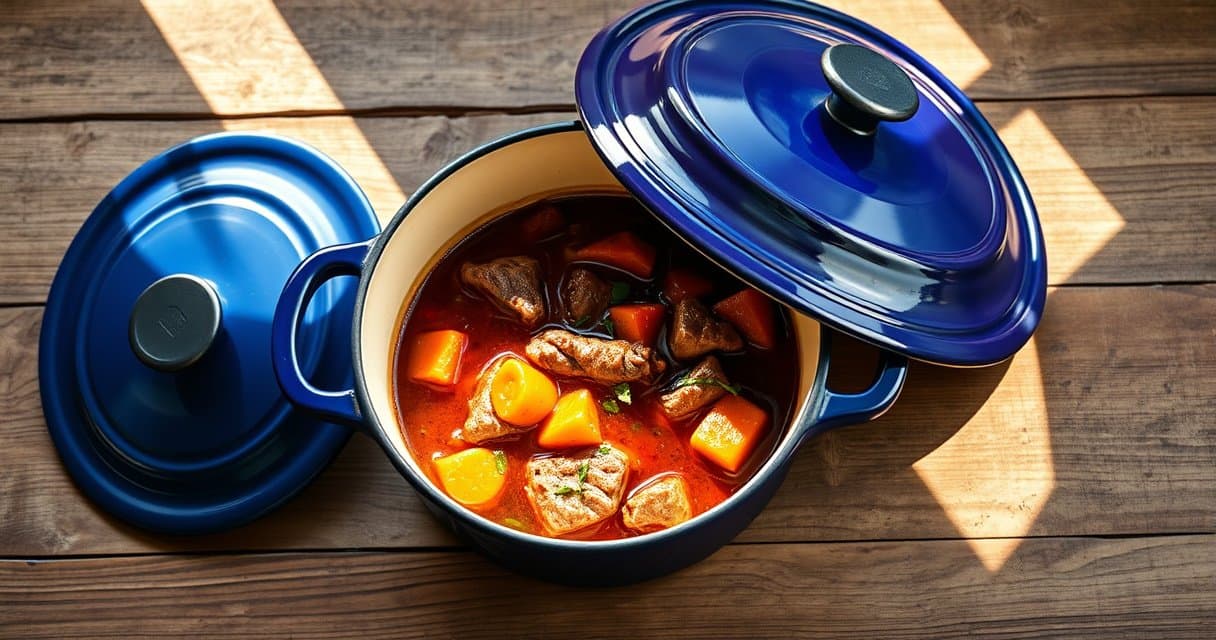
Here, you're reading a beef bourguignon recipe, and once again, the step "brown then cook slowly covered" makes you hesitate. The secret to a melting stew, perfectly cooked rice, or an irresistible bread crust often lies in a single utensil: the cast iron Dutch oven. Choosing the right one isn't just about brand or color; it's an investment for decades of successful cooking. Frankly, you shouldn't be without one.
Key Points to Remember
- The fundamental choice is between bare cast iron (performance and seasoning) and enameled cast iron (practical and versatile).
- For long-lasting performance, prioritize a thickness of at least 4 mm and a high-quality, smooth enamel.
- Choose a size suitable for your needs, with a round 4.5 to 5.5 liter model being the most versatile for a family.
- Check the weight and ergonomics of the handles for everyday maneuverability.
- Caring for an enameled Dutch oven is simple: clean with hot water and a soft sponge, without abrasives or a dishwasher.
Raw or Enameled Cast Iron: Understanding the Fundamentals
The first, and most important, decision boils down to this: raw cast iron or enameled cast iron? It's a choice that determines everything else, especially your daily relationship with the cookware. Make no mistake, both are excellent cast iron Dutch ovens, but for radically different cooking lifestyles.
Raw Cast Iron, a Story of Passion and Patience
This is the historic, authentic option. A raw cast iron Dutch oven is a living material. When new, it has a gray, matte, slightly abrasive surface. Its magic works through seasoning: a thin polymerization of oil that you will create and maintain yourself, meal after meal. This natural layer becomes your non-stick and protective coating.
Frankly, it's a commitment. You must accept never washing it with harsh soap (a simple rinse with hot water and impeccable drying over heat is enough), lightly re-oiling it occasionally, and watching its patina evolve – darker spots appear, it's normal and even desirable. The advantage? Slightly superior thermal conductivity compared to enamel for phenomenal searing, and incomparable artisanal pride. It's for you if you love the process, like with a carbon steel wok or a carbon steel knife.
Enameled Cast Iron, the Queen of Practicality
Here, the manufacturer has applied a layer of glass-ceramic (the enamel) to the raw cast iron before firing at very high temperature. It's a revolution. No need for seasoning, no rust to fear, and you can wash your Dutch oven with dish soap without worry. It's the "ready-to-use" and worry-free option, ideal for acidic tomato sauces, long-simmered stews, or if you hate the idea of having to "baby" a piece of cookware.
But beware, not all enamels are created equal. A thick, smooth enamel is easier to clean and more resistant to thermal shock. A thin or gritty enamel can be more prone to sticking. This is one of the major criteria for identifying the best enameled cast iron Dutch oven: the quality of its coating. A good enamel won't scratch with a soft sponge and will last for decades.
So, Which One Is Made for You?
Ask yourself these two questions:
- Do you often cook acidic stews (wine, tomato) or are you in the habit of leaving dishes in the fridge for several days? → Go for enameled, without hesitation.
- Are you willing to dedicate 5 minutes of specific maintenance after each use for maximum searing performance and a unique patina? → Raw cast iron will appeal to you.
Personally, I find that for a first and only "all-purpose" Dutch oven, enameled is the most serene and versatile choice. The raw version is a magnificent second purchase for enthusiasts who want to push the "chef's tool" aspect. In both cases, the cast iron core is the same: monstrous thermal mass for even cooking and a lifespan measured in generations.
Enamel, Thickness, Inertia: The Markers of a Long-Lasting Object
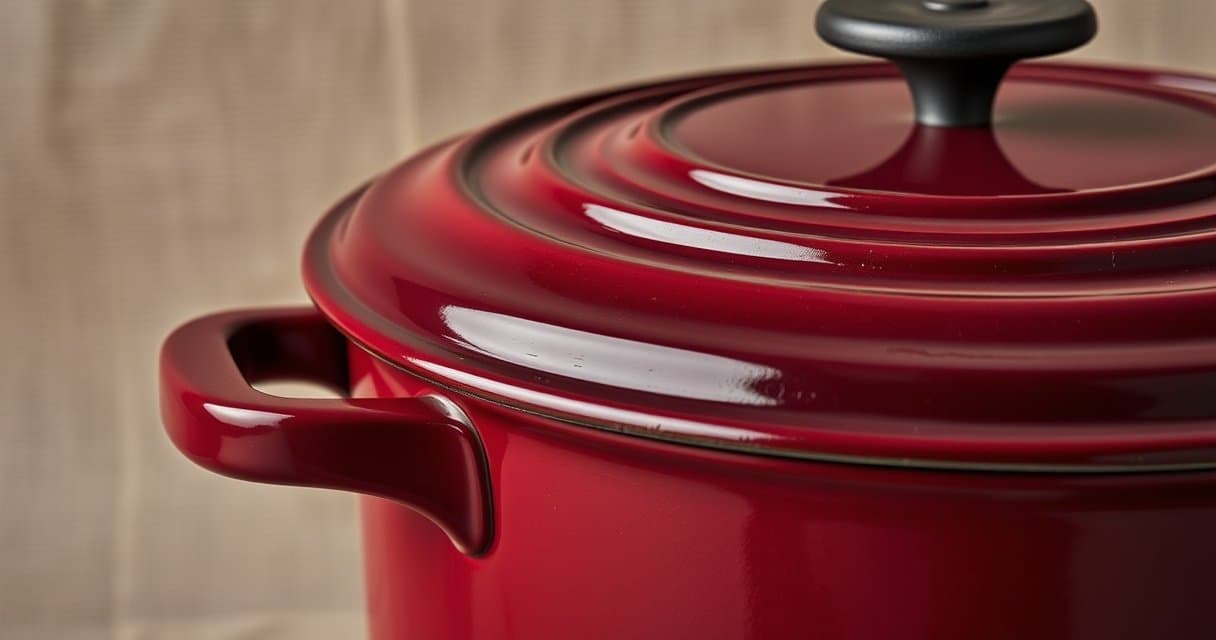
Once the type of cast iron is chosen, you need to look at what lies behind the beautiful colors. Because this is where the difference is made between a utensile that will last 5 years and a companion for life. Let me give you the keys to evaluate this in the store.
Thickness, Your Guarantee Against Surprises
It's simple: the thicker the cast iron wall, the more uniform the cooking and the more the object resists thermal shock. A pot that is too thin will create hot spots – your stew will stick to the bottom instead of simmering gently. To give you a rough idea, aim for a minimum thickness of the bottom and walls of at least 4 millimeters. Below that, frankly, the performance seriously starts to falter, especially on induction hobs which can be unforgiving. Hold the pot, feel its weight. True quality has a presence, a reassuring density. This isn't marketing, it's physics: thermal mass is what allows you to properly sear a piece of meat without it burning, then to maintain a perfect simmer for hours. It's the heart of the best cast iron pot.
The Quality of the Enamel, Where Brands Really Distinguish Themselves
If you're going for an enameled one, the enamel is not just a color. It's a technical coating. A good enamel is smooth to the touch, almost glass-like. Run your finger inside the lid or on the rim: there should be no roughness, no grain that could retain fats or food. A quality enamel is also fired at a very high temperature, making it extremely hard and resistant to daily scratches (those from a soft sponge, of course). Beware of finishes that are too matte or rough – they are often a sign of a less refined process and will be a nightmare to clean after a cassoulet.
Thermal Inertia, The Hidden Superpower
Here is the most important concept to grasp. Inertia is the ability of cast iron to absorb a lot of heat, store it, and release it in a constant and gradual manner. In practice? You bring your pot to temperature, you add your cold ingredients, and the temperature doesn't drop sharply. It regulates itself. This is what makes the magic of long, slow cooking and perfect searing. This inertia is directly linked to the thickness and quality of the cast iron itself. Dense, non-porous cast iron distributes heat evenly across the entire surface. This is why with a good pot, you don't need to constantly stir your risotto – the heat works for you, from all sides at once. It is this characteristic that makes it such a precious and different tool from a simple stainless steel saucepan.
Our Selection
For those looking to equip their kitchen with an iconic culinary utensil, the enameled cast iron Dutch oven is a must-have. Renowned for its ability to simmer, roast, and braise while preserving flavors, it is essential for long-simmering recipes. Today's selection compares three popular models, from the French icon to the reliable safe bet, and an unconventional option. The goal: to decipher, through technical specifications and community feedback, which one might suit your needs and cooking style.
| Product | Capacity | Weight | Material / Finish | Key Strengths (per specs & reviews) |
|---|---|---|---|---|
| VeoHome Cast Iron | 6 L | 6.5 kg | Enameled cast iron (shiny red or matte black) | Total versatility, moisture retention via embossed lid, French customer service. |
| Le Creuset Signature | 6.7 L | 6.13 kg | Enameled cast iron (matte black and others) | Historical reputation, premium finish, made in France, dishwasher safe. |
| Velaze Oval Dish | 7 L | Not specified (~ heavy) | Enameled cast iron (oval shape, blue lid) | Oval format practical for poultry/roasts, generous capacity, excellent seal. |
VeoHome Cast Iron Casserole Dish
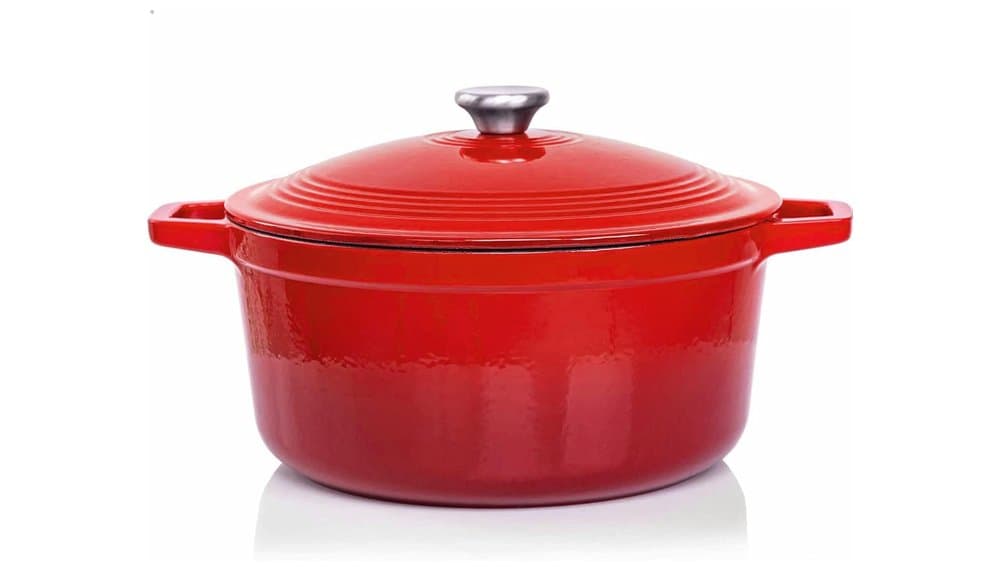
This model presents itself as a serious alternative to heritage brands, focusing on good value for money and local customer service. On paper, the specs promise complete versatility (compatible with all stovetops, including induction, and the oven), a family-sized 6-liter capacity, and robust enameled cast iron construction. An interesting technical detail is its embossed inner lid, designed, according to the brand, to retain moisture and promote continuous basting during cooking.
According to user feedback, this Dutch oven largely lives up to its promises for daily use. The community notes that heat disperses very evenly, allowing for successful stews and well-tenderized meats. Its good heat retention is also highlighted. Positive points often include the quality of the enamel (resistant to scratches over time according to several reviews) and the colorful design which adds a cheerful touch to the kitchen. However, like all cast iron, its weight (6.5 kg) is mentioned as a limitation, making it less maneuverable, especially when full. A few comments note that the metal handles can become very hot and consistently require the use of oven mitts. In summary, for those looking for a reliable, aesthetic, and unpretentious Dutch oven without breaking the bank, VeoHome receives unanimous praise in reviews. Its customer service in French is a significant plus in case of issues.
Le Creuset Signature Casserole Dish
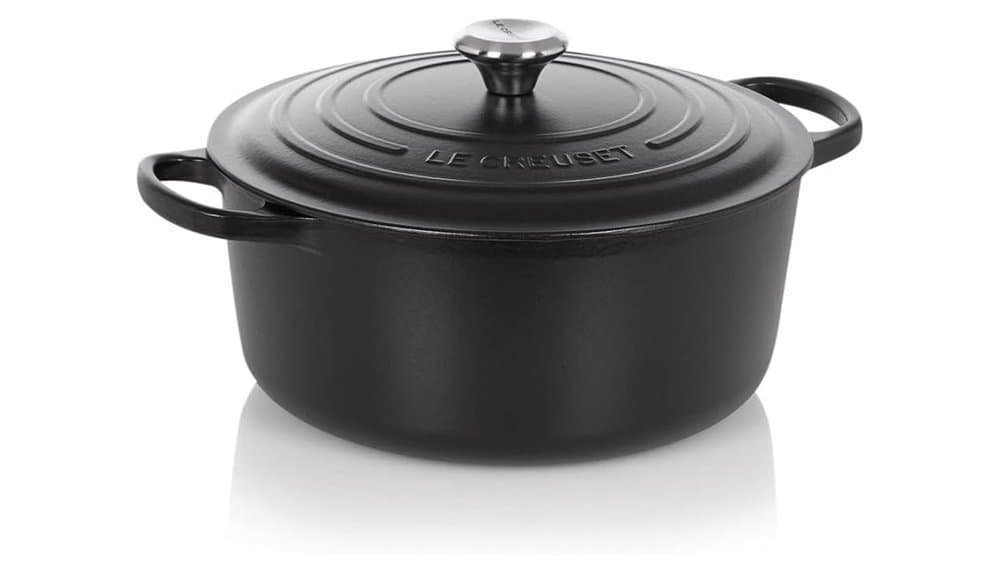
Here, we are dealing with an absolute reference, an icon of French culinary heritage. The technical specifications list the expected attributes of a high-end product: excellent quality enameled cast iron, universal compatibility (induction, oven, etc.), and attention to detail with a lid featuring a heat-resistant stainless steel knob. A major advantage, and often the first cited by owners, is that it is made in France. Its interior enamel is renowned for its resistance to wear and dulling.
Analysis of thousands of customer reviews confirms its reputation. The community agrees that it is a lifetime investment, given the solidity and durability it delivers. Users praise its performance for slow cooking and roasts, with exceptional heat retention. Another practical advantage: it is dishwasher safe (even though the brand recommends hand washing to preserve the shine), which is a real plus for such a heavy utensil. However, the feedback is also realistic. Its high price is the first drawback mentioned. Furthermore, some users note that the exterior enamel, especially on light colors, can dull or stain over time if maintenance recommendations are not followed to the letter. Finally, at 6.13 kg, it remains a massive object to handle with care. Choosing Le Creuset means opting for the guarantee of a proven culinary experience and legendary longevity, while accepting the initial investment.
Velaze Enamelled Cast Iron Casserole Dish
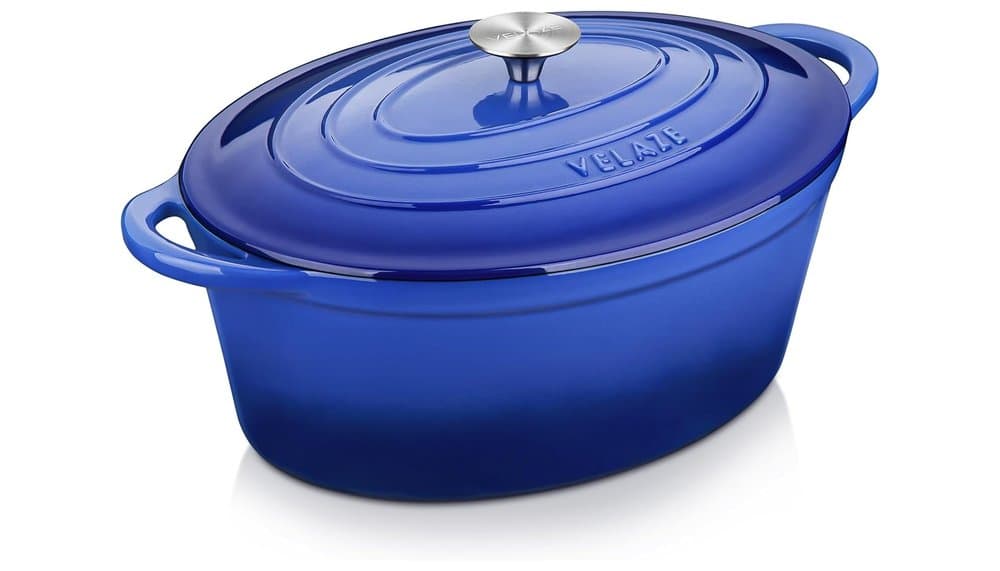
This third product is immediately distinguished by its oval shape and large capacity (7 liters), making it an ideal candidate for oblong cuts of meat like a leg of lamb or poultry. Its specifications highlight its multifunctionality (oven, all stovetops) and an enhanced seal thanks to a heavy lid, promising results close to a pressure cooker for preserving juices and flavors.
Community feedback on this model is generally very positive, especially for those looking for this specific shape. Users particularly appreciate the space offered by the oval shape, which avoids having to cut certain pieces of meat. The finishing quality for its price segment is often praised, with a smooth and resistant interior enamel. Its blue non-stick lid is a practical detail noted. As for limitations, we find the considerable weight, inherent to its size, which makes it less maneuverable. Some reviews also point out a slightly less even heat distribution on very large burners, requiring increased monitoring at the start of cooking. Finally, given its large size, one must ensure it fits in their oven. For lovers of large portions, family meals, or cooking whole pieces, Velaze offers a tailored and effective solution that advantageously complements a traditional round Dutch oven.
Choosing the Right Shape and Capacity for Your Kitchen
This is a point where we often make mistakes. We get seduced by a beautiful color or a promotion, and end up with a model too small for a family pot-au-feu or, conversely, a cumbersome monster for two people. Choosing the right shape and size ensures your Dutch oven will be used often and with pleasure.
Capacity: Think "Usable Volume"
The liters indicated are the total capacity to the rim. In reality, you will never fill it to the brim, especially for a stew that needs to simmer gently. The golden rule is to subtract about 20% to get the truly usable volume. Here's a practical little guide:
- For 1 to 2 people, or for side dishes: A 2.5 to 3.5 liter Dutch oven is perfect. It will serve you for a risotto for two, roasted vegetables, a small poultry. It heats up quickly and isn't too heavy to handle.
- For 3 to 4 people (the family standard): Aim for 4.5 to 5.5 liters. This is the most versatile size. You can prepare a beef bourguignon, a whole chicken, chili, or a good quantity of soup with leftovers for the next day. It's often the first size to acquire.
- For 5 to 6 people, or for big enthusiasts: Here, we move to 6 to 7 liter models. Essential if you often entertain, if you like to prepare large dishes to freeze, or to cook a turkey or a leg of lamb. Be careful of the weight once full: make sure you can carry it from the stove to the table without hurting your back.
My advice? If you hesitate between two sizes, take the larger one. A half-full Dutch oven cooks very well, but one that's too small will limit you forever. It's a long-term investment.
Round or Oval: A Matter of Content, Not Looks
It's not just about aesthetics, the shape has a direct impact on what you're going to cook in it.
- The round shape is the queen of versatility. Heat distributes evenly across the entire surface, which is ideal for stews, soups, pasta, bread, frying. It's the shape to prioritize for your first – and perhaps only – best cast iron Dutch oven.
- The oval shape has a more specialized role. It is made to accommodate elongated pieces of meat or poultry. A chicken, a pork roast, a lamb shank, a nice baguette will naturally fit without having to be bent. Honestly, if you don't regularly roast large cuts, the round one will do just fine.
Don't forget the lid either. It must be heavy, with a good seal. Some models have a domed interior with small spikes: this is not a gimmick. It allows condensation to fall back as fine droplets, which continuously bastes the dish and prevents meats from drying out. A real plus for multi-hour cookings.
Key Considerations for Day-to-Day Ease of Use
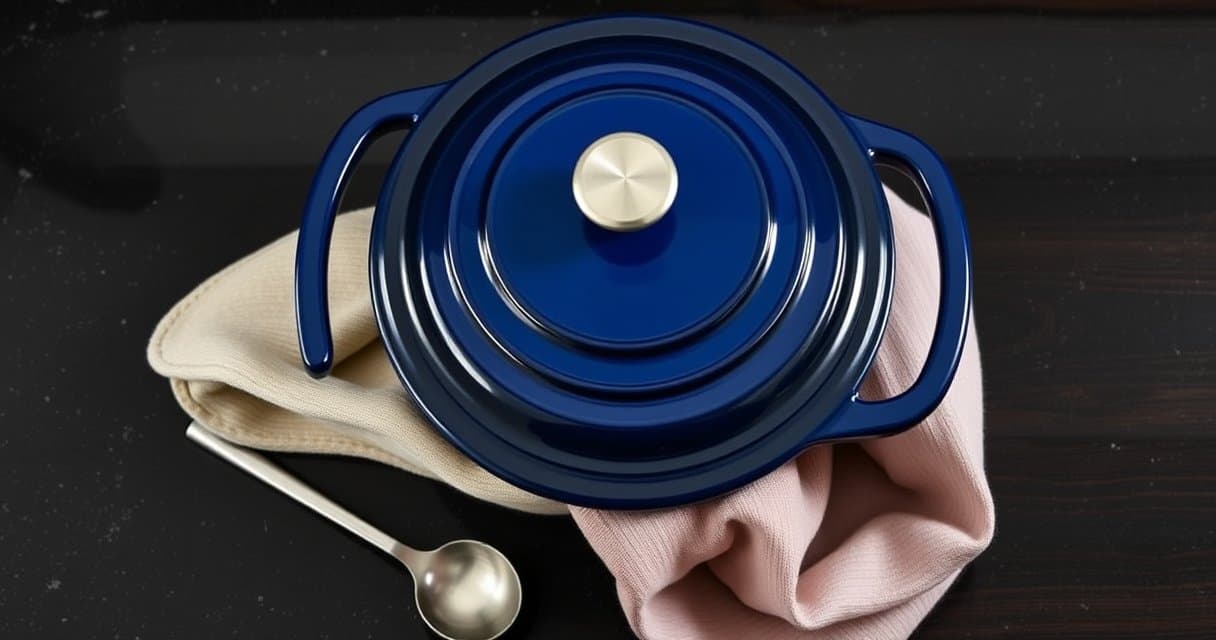
People often talk about cooking performance, but a Dutch oven that stays in the cupboard because it's a pain to use is a failure. Ease of use is what makes the difference between a beautiful decorative object and a true kitchen partner. Let's look at the details that truly matter in practice.
See priceWeight: A Reality Not to be Underestimated
A 5-liter cast iron Dutch oven full of your famous stew easily weighs 6 or 7 kilos. That's heavy. Very heavy. If you have fragile wrists or plan to lift it often, this factor is crucial. Some manufacturers slightly lighten the lids or optimize the thickness, but there's no miracle: quality cast iron has a certain mass. Take this into account based on your own strength. A tip? Test it virtually: lift a 6-liter bottle of water with one hand. That's roughly the sensation.
Handles: Sturdy, Cool, and Well-Designed
This is your point of contact with the utensil. The handles must be wide enough to comfortably slide your fingers into, especially when wearing an oven mitt. Above all, they must remain relatively cool during stovetop cooking. Some models have stainless steel knobs that get very hot, while others incorporate phenolic resin which insulates heat better. This is a real comfort.
And don't forget the lid handle! It must also be insulated. Prefer models where it is screwed on or securely fitted, and avoid small, thin metal handles that become scorching hot in five minutes.
Compatibility: From Stove to Oven Without a Fuss
Do you have an induction hob? It is imperative to check for the spiral pictogram or the mention "induction compatible" in the technical specifications. Most enameled cast iron pots are, but it's not 100% automatic. Next, think about your oven. This is simple: a real cast iron Dutch oven should withstand temperatures well above 250°C (482°F) without flinching. This is essential for breads, gratins finished under the broiler, or roasts. Also check that the bottom diameter matches the size of your burners, especially on a small gas flame, to avoid localized hot spots.
Lid Ergonomics
A good lid is one that fits perfectly and stays in place. Some are very heavy and "self-seal," which is excellent for braising but can make lifting a bit tricky. Look at how it's handled. Can you stand it upright on the counter without it tipping over? It's a small detail that changes everything during preparation.
Simple Maintenance for Maximum Longevity
A large part of the enameled cast iron pot's reputation rests on its legendary durability. But as with a good knife, this longevity must be earned. The good news? It's incredibly simple, provided you follow a few common-sense rules. Frankly, people who have problems with their cast iron often make one or two basic mistakes that are easily avoided.
Cleaning: Absolute Gentleness with the Enamel
The enamel is glass. If you scratch it, it will lose its shine, even if its functionality often remains intact. Golden rule number one: always let your pot cool down before washing it. Thermal shock is its worst enemy.
- Use a soft sponge, hot water, and a little soap. That's all.
- For stuck-on residue at the bottom, let it soak in hot water for an hour. The food will come off almost by itself.
- Absolutely avoid abrasive sponges (like green Scotch-Brite) and scouring powders. Over time, you would see a fine cloud of micro-scratches appear.
What about the dishwasher? Even if some manufacturers allow it, I personally advise against it. The chemical aggression of powerful detergents and the high-pressure water jet do not get along well with enamel in the very long term. It's five minutes by hand to preserve an object that should outlast you.
Drying and Storage: The Crucial Finish
This is the most often forgotten, yet crucial step. After washing, carefully dry your pot with a cloth, especially around the rim where the lid fits. Stagnant moisture can, in the worst case, promote deposits. Preferably store it without the lid, or slip a folded cloth between the pot and the lid to let air circulate. In a closed, humid cabinet, this avoids any nasty surprises.
Managing Minor Accidents
A calcium stain (those white deposits) from hard water? A rinse with diluted white vinegar will make the problem disappear. Has the interior enamel yellowed after a long cooking of carrots or tomatoes? This is normal and harmless. Cleaning with a bit of baking soda paste (baking soda + water) can often restore its shine.
The Myth of "Seasoning" on Enamel
This point is essential: an enameled cast iron pot is not seasoned and should not be oiled. The enamel is an inert, smooth, and permanent surface. It is useless and even counterproductive to burn oil on it hoping to create a patina. You will only get a sticky, unpleasant deposit. For raw (non-enameled) cast iron, that's another story, but it's not the subject here.
By following these principles, maintenance becomes a quick and effortless routine. It is the modest price to pay for your best enameled cast iron pot to remain as performant and beautiful in twenty years as on the first day. This is the whole point of choosing an object designed to last: a little respect, and it will repay you a hundredfold.
Conclusion
Voilà. Choosing your cast iron Dutch oven is much more than just buying a utensil.
It is choosing a kitchen partner for the next few decades. An object that carries within it the promise of deep stews, crispy breads, and perfect rice.
Take your time to choose well. Rely on the fundamentals: the material, the shape, the execution details. The rest, is a story between you, your pots, and your next dishes.
Happy cooking
Frequently Asked Questions
Frequently Asked Questions
What is the best enameled or raw cast iron Dutch oven?
The choice depends on your lifestyle: enameled cast iron is practical and maintenance-free, ideal for acidic dishes, while raw cast iron requires seasoning but offers better searing and a unique patina.
What size cast iron Dutch oven for 4 people?
For 3 to 4 people, a 4.5 to 5.5 liter Dutch oven is the most versatile standard size, allowing you to prepare stews, a whole chicken, or soups in sufficient quantity.
How to clean an enameled cast iron Dutch oven?
Always clean a cooled enameled Dutch oven with a soft sponge, hot water, and a little soap, absolutely avoiding abrasive sponges and the dishwasher to preserve the enamel.
Should you season an enameled cast iron Dutch oven?
No, an enameled cast iron Dutch oven is never seasoned; the enamel is an inert surface and oiling it would create an unnecessary and counterproductive sticky residue.
How to prevent food from sticking in a cast iron Dutch oven?
To prevent food from sticking, heat the Dutch oven gradually, use enough fat, and ensure your model has a thick base of at least 4 millimeters for even heat distribution.
What is the ideal thickness for a good cast iron Dutch oven?
Aim for a minimum thickness of the base and walls of at least 4 millimeters to ensure even cooking, avoid hot spots, and guarantee good thermal inertia.