Damascus Knife Buying Guide
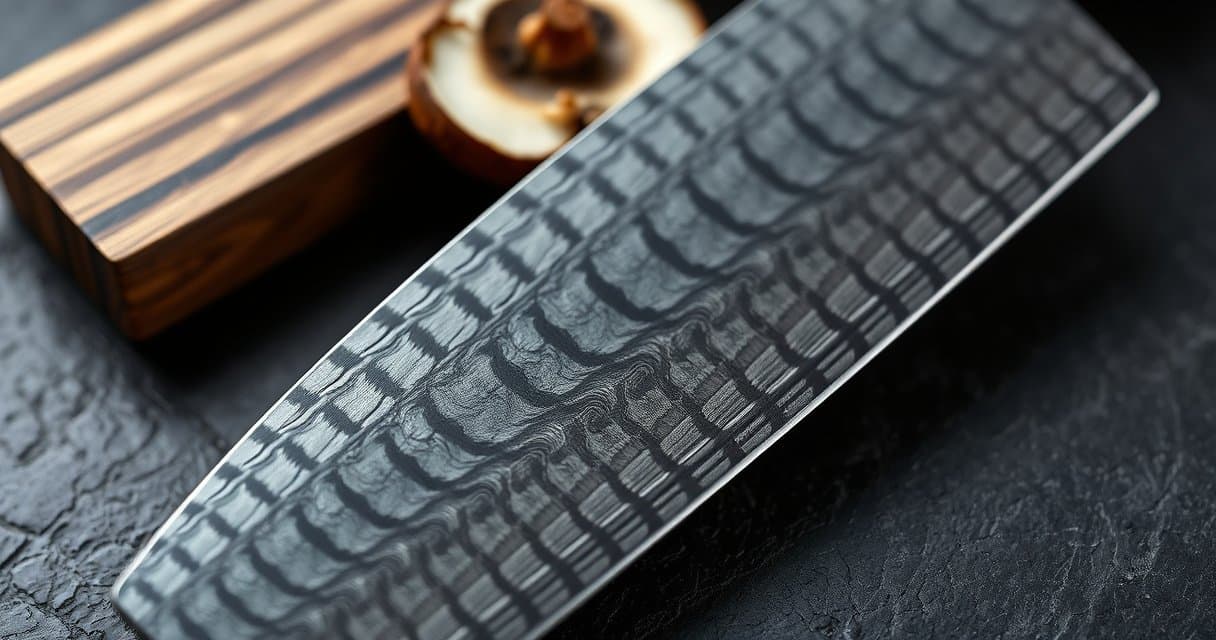
Have you ever been captivated by the swirling patterns of a Damascus knife? This hypnotic beauty hides much more than mere decoration. Behind each blade lies a fascinating alliance between the art of the blacksmith and the science of materials, and choosing the right model makes all the difference between a display piece and an exceptional kitchen companion. Let's talk straight about what really matters.
Key Points to Remember
- The real choice lies in the core steel (VG-10, carbon steel...) and the blade geometry, much more than in the number of layers or the pattern.
- The "best" knife is the one whose shape and balance match your cutting motion (rocking or push-pull) and your hand.
- A quality Damascus knife requires a maintenance commitment: immediate cleaning and drying, and regular sharpening with the right tools.
- The price mainly reflects the manufacturing method (stamped vs forged) and the quality of the materials, with the best value for money often found in the mid-range.
Deciphering the Technical Sheet: The Core Steel and the Layers
Faced with a Damascus knife, one often gets hypnotized by its ripples and swirls. Frankly, that's normal. But if you want to make an informed choice and find a true work tool, you need to look beyond the decoration and understand what constitutes the soul of the blade. That's where it all happens.
The Core: The Engine of Your Knife
Beneath the decorative layers lies a core, a single sheet of steel that forms the cutting edge. It does all the work. We're talking about the very essence of performance. You will often come across designations like VG-10, AUS-10, or carbon steels like Blue #2 (Aogami Super). Each has its own character. Take VG-10, a very common stainless steel: it offers an excellent balance, good edge retention (often around 60-62 HRC) and requires almost no maintenance. Perfect for daily use without any hassle. On the opposite end, a core made of carbon steel like Blue #2 or White #2 will be harder, capable of achieving and maintaining a razor-sharp edge much longer. The price to pay? It reacts to acidity and moisture – a simple forgotten tomato can cause it to tarnish. It's a commitment. For the so-called "best Damascus kitchen knife," it all depends on your relationship with maintenance.
The Damascus Layers: Between Art and Function
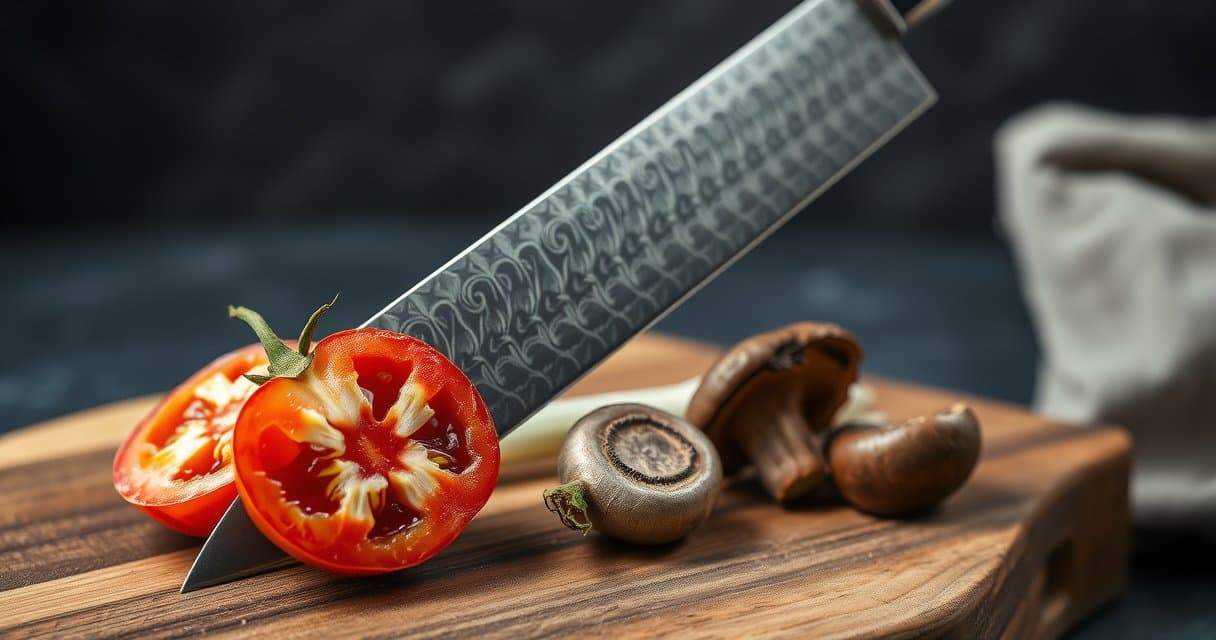
Now, let's talk about these famous layers. Contrary to a persistent belief, they are not there just to look pretty. A true Damascus is created by forging together steels with different carbon contents. This process of folding and layering (sometimes more than 100 times) gives the blade a certain flexibility and shock resistance that a monobloc blade does not have. The pattern revealed by the acid etching is the signature of this work. The number of layers? A hot topic. A Damascus with 67 layers is already very honorable and effective. One with 200 layers will be visually denser and more complex, a sign of advanced craftsmanship. But beyond a certain threshold, say 300 layers, we enter the realm of pure art: the added value is aesthetic, not necessarily technical. Don't be fooled by the highest number. What's important is the quality and clarity of the pattern, as well as the harmony with the core.
To summarize common core steel types:
| Core Steel Type | Main Characteristic | Typical Hardness (HRC) | Maintenance Required |
|---|---|---|---|
| High-End Stainless Steel (e.g., VG-10, SG2) | Balance, corrosion resistance | 60-63 | Very Low |
| Carbon Steel (e.g., Blue/White Steel) | Ultimate sharpness, cutting feel | 62-65+ | High (immediate drying) |
| "Semi-Stainless" Steel (e.g., Silver #3) | Interesting compromise | 61-63 | Moderate |
So, when you read a technical sheet, hunt for this information. If only the pattern is highlighted without mentioning the type of core steel, move on. You're looking for a kitchen partner, not a poster.
Choosing the Shape: Which Blade for Your Type of Cutting?
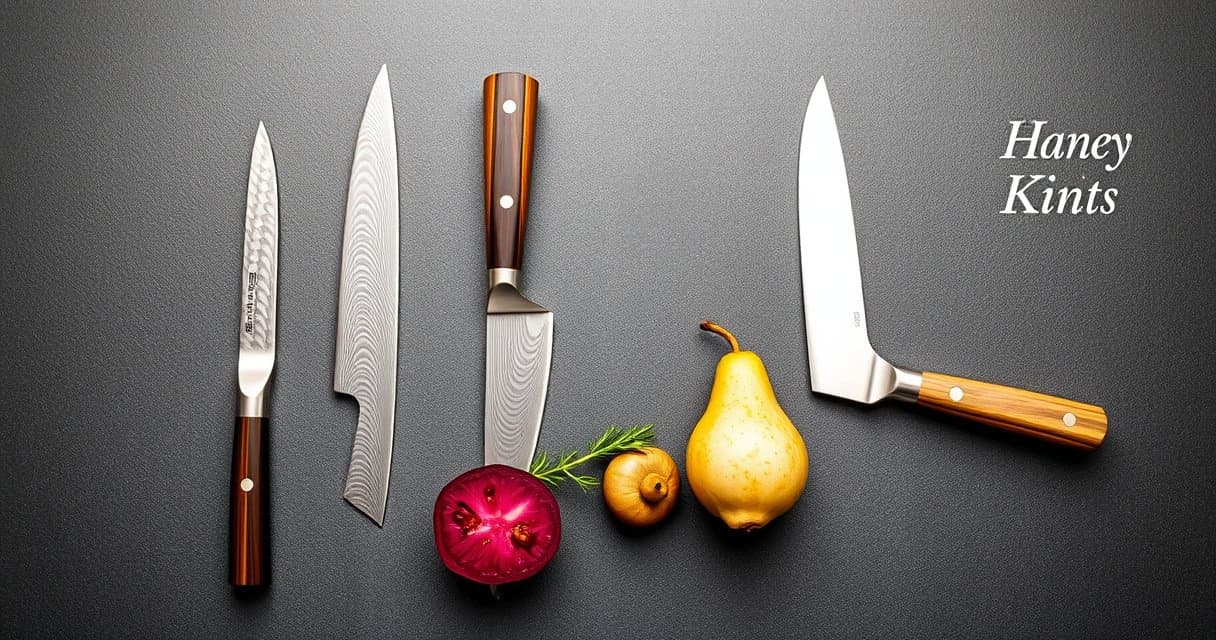
The best Damas kitchen knife does not exist. There, it's said. What exists is the best knife for your hand and your motion. Because a beautiful laminated steel blade poorly suited to your movement will remain a frustrating decorative object. You must think in terms of geometry and cutting style, not just length.
Western or Japanese Profile: A Different Philosophy
Everything is decided here. A Western chef's knife (a classic "chef's") has a thicker blade, with a pronounced curve that allows for a fluid rocking motion, where the tip never leaves the cutting board. This is the rhythmic cut, perfect for chopping parsley or dicing onions into small cubes. Its edge is typically sharpened on both sides (double bevel). The Japanese profile, like that of a Gyuto or a Santoku, is much flatter along a large portion of its length. It is designed for the push-pull cut, where the entire blade works in a straight-line motion. This is ideal for slicing fish fillets or cutting vegetables into perfect slices. The sensation is that of a knife "falling" through ingredients. If you are used to pressing with the palm on the spine of the blade to chop, the Japanese style may feel strange at first.
Length and Height: Comfort Above All
Length is not a matter of prestige. A blade of 16 to 18 cm (like a Santoku or a long utility/paring knife) is highly maneuverable and is ample for 80% of tasks. A Gyuto or chef's knife of 20 to 21 cm is the versatile standard, a true "do-it-all" knife. Beyond 24 cm, it becomes specialized, often reserved for slicing meat or for very large hands. The height of the blade (from spine to edge) is just as crucial. A tall blade (more than 5 cm) provides a lot of comfort, especially if you have large hands, as your knuckles won't scrape the cutting board. It's a detail that changes everything after thirty minutes of prep work.
The Tip and the Heel: Tools Within the Tool
Observe the tip. Thin and pointed? It's made for precision work, like deboning a chicken or mincing a garlic clove. More rounded and sloping? That's the signature of Santoku knives, designed for safe gliding on the board, but less agile for tip work. The heel, on the other hand, is your power zone. It's the part of the blade closest to the handle, where you exert the most force to cut hard things (squash, sweet potato, small poultry bones). Ensure this area is well-defined and that the junction with the handle allows for a firm and secure grip. A poorly defined heel is a knife that will slip from your fingers at the worst moment.
Our Selection
Welcome to our selection of SHAN ZU Japanese chef's knives! Today, we are breaking down three flagship products from the range for you, based on their technical specifications and feedback from the user community. We have scrutinized the advertised features and customer reviews to offer you a clear and independent analysis, without claiming to have tested them ourselves. Here are the key takeaways about these Damascus blades.
| Product | Blade Length | Blade Composition | Handle Material | Key Strengths (according to specs) |
|---|---|---|---|---|
| SHAN ZU Santoku 18cm | 18 cm | 67 layers of Damascus steel / 10Cr15MoV Core (62 HRC) | G10 fiberglass | Short, maneuverable blade, ergonomic design for precise cuts (vegetables, fish) |
| SHAN ZU Chef's Knife 20cm | 20 cm | 67 layers of Damascus steel / 10Cr15MoV Core (62 HRC) | G10 fiberglass | Increased versatility, long blade for slicing and chopping, balanced for prolonged use |
| SHAN ZU Damascus Santoku (Model B07X2F9T8V) | 18 cm | 67 layers of steel / AUS-10 Core (60-62 HRC) | G10 fiberglass | Reputed AUS-10 steel, premium gift finish, dishwasher safe |
SHAN ZU Santoku Knife 18cm
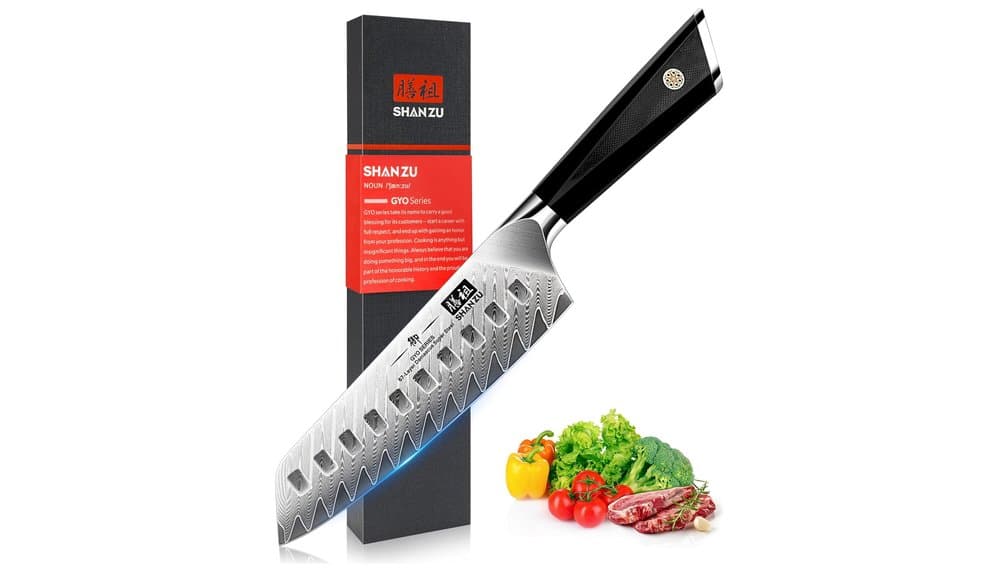
This 18 cm Santoku knife is presented as the ideal tool for precise everyday cuts. On paper, its specifications are appealing: a blade made of 67-layer Damascus steel forged around a 10Cr15MoV core promising a hardness of 62 HRC, excellent corrosion resistance, and a long-lasting edge. The community points out that the Damascus pattern is indeed very aesthetic and that the factory edge is exceptionally sharp, allowing for slicing tomatoes and fine herbs effortlessly. The G10 fiberglass handle is unanimously praised for its comfortable, non-slip grip and hygiene, as it does not retain odors.
However, user feedback adds some important nuances. Some note that this knife, like many very hard Japanese blades, can be more fragile on bones or frozen foods and requires sharpening with appropriate tools (sharpening stone) rather than a classic rod sharpener. Its balance is considered very good, but its 18 cm size may feel a bit short for large hands or for chopping large quantities of vegetables. In summary, it is an excellent knife for precision and finishing, perfect for light cooking enthusiasts and lovers of fine cutlery, but it requires some care and does not replace a heavy chef's knife for forceful tasks.
SHAN ZU 20cm Japanese Chef's Knife
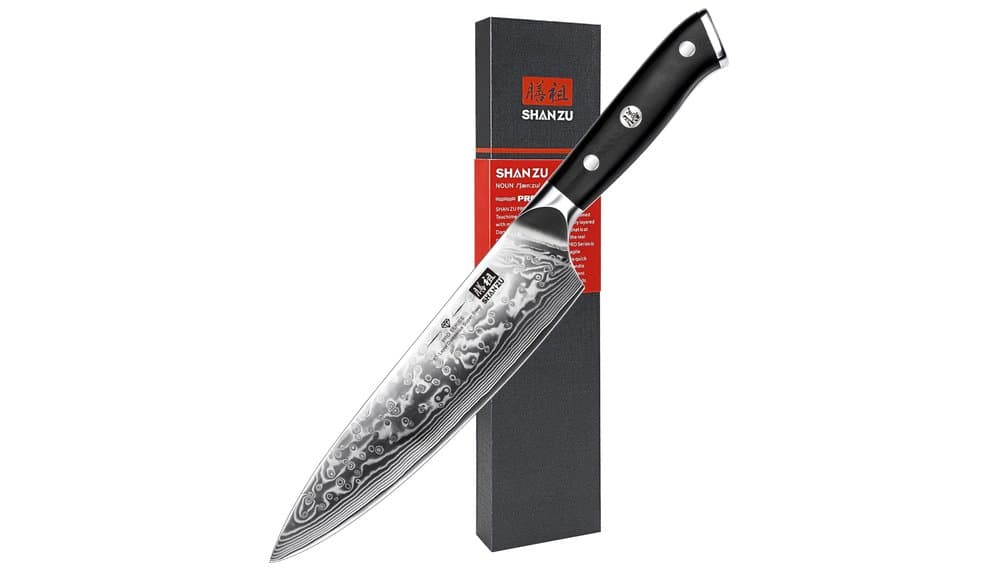
The 20 cm chef's knife aims for maximum versatility. With a longer blade and a more pronounced tip than the Santoku, it is designed for a wider range of tasks: from slicing meats to mincing herbs. Technically, it shares the same construction qualities as its little brother: the 67-layer structure for strength and beauty of the pattern, the same hard steel core, and the G10 handle. Customer reviews confirm that this model is a robust workhorse in the kitchen, appreciated for its balance which reduces wrist fatigue during prolonged use.
The points of caution raised by the community mainly revolve around maintenance. The blade requires immediate drying after washing to avoid any water marks, even though the steel is advertised as corrosion-resistant. Some users mention that the weight (260g) is an asset for cutting, but may require an adjustment period for those accustomed to lighter blades. Its profile is a compromise between the Japanese Santoku and the Western chef's knife, making it a very safe choice for a first purchase or as a single main knife for someone who does not want a whole set.
SHAN ZU Damascus Santoku Knife (Model B07X2F9T8V)
This third Santoku model, also 18 cm in length, distinguishes itself by the use of AUS-10 steel for the blade's core, a Japanese steel reputed in high-end cutlery for its extreme sharpness and ability to hold it for a long time. The specifications highlight increased protection against scratches thanks to the Damascus pattern and a "gift" finish with premium packaging. Notably, it is indicated as being dishwasher safe, which is rare for knives of this quality and simplifies maintenance.
According to feedback, users are won over by the fineness of the cut and the perceived quality. The dishwasher compatibility is a strong selling point for many. However, it should be noted that even though the manufacturer allows it, hand washing is still recommended to preserve the blade and handle in the very long term. Some reviews point out that the handle design, while comfortable, is slightly different from the other two models. With a slightly lower overall rating (4.4/5), this model seems to target an audience seeking a balance between pure Japanese performance and modern maintenance practicality, all in packaging that makes it an appreciated gift.
The Feel in Hand: Balance, Handle, and Comfort in Use
You've found a blade with a geometry that suits you? Perfect. But frankly, the real test happens with your eyes closed. The best Damascus kitchen knife is the one that disappears in your hand, that becomes a natural extension of your movement. It's a feeling, not a specification. And this feeling rests on three pillars.
The Balance Point: The Key to Fluidity
Hold the knife between your thumb and index finger, right at the base of the blade (at the "ricasso," that small unsharpened part). Where it balances perfectly, without tipping towards either the blade or the handle, is its balance point. For versatile use, it is generally sought between 1 and 3 cm in front of the handle. Why? It gives a feeling of lightness while leaving enough "weight in the blade" so that cutting requires minimal effort. A knife that is too "heel-heavy" (balance in the handle) will force you to use more pressure. A knife that is too "blade-heavy" will be tiring for precision movements and could become dangerous over time. It's a matter of control.
The Anatomy of the Handle: Stabilized Wood, Pakkawood, or Composite?
It's often an afterthought, which is a mistake. The handle is your only point of contact.
- Stabilized Wood: Sublime, warm, unique. It is impregnated with resin under vacuum, making it waterproof and very durable. However, it can be a bit smoother; make sure it offers a good grip even when wet. A must for an object you want to keep for a lifetime.
- Pakkawood: An excellent compromise. It's a composite of laminated wood and plastic resin, ultra-resistant to shock, water, and temperature changes. It often offers better grip than pure stabilized wood. It's the safe, robust, and often more affordable choice.
- Composites (G10, Micarta): These are the champions of durability and grip, even when greasy. They have a less "noble" feel than wood, but for a working tool that spends its days in the kitchen, their performance is unmatched.
The shape matters just as much. A "D-shaped" handle (flat on one side) is designed for a precise grip, typical of single-bevel Japanese knives. Oval or hexagonal shapes are better suited for a "hammer grip." Do the mental test of holding an egg without breaking it: your grip must be firm but delicate, and the handle must not create any uncomfortable pressure points on your joints.
Overall Weight: The False Good Idea of "Heavy = Quality"
Beware of the feeling of "solidity" that a very heavy knife provides. A good Damascus knife, thanks to its high-performance steel, does not need to be massive to cut perfectly. A total weight between 150 and 250 grams for a chef's knife is a good range. Beyond that, you risk muscle fatigue during long preparations. The thinness of the blade at its tip is also an indicator: it should feel agile to you, not flimsy. Good balance with reasonable weight is what will allow you to cook for two hours without even realizing it. If after a few minutes of phantom use on a countertop, your wrist or forearm starts whispering protests, walk away. Your body is right.
See priceThe Daily Commitment: Maintenance and Sharpening
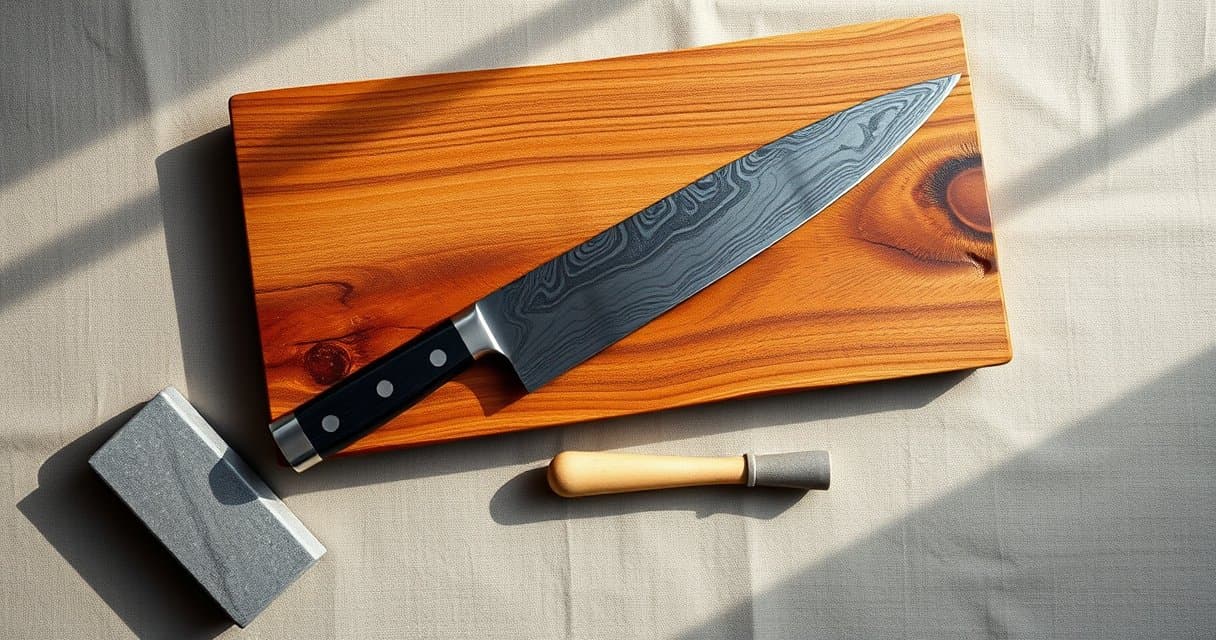
Buying a Damascus knife is a bit like adopting a sophisticated pet: it needs regular attention to stay brilliant. Don't misunderstand, this isn't labor, it's a ritual that strengthens your bond with the tool. The best Damascus kitchen knife is also the one you know how to cherish.
The Post-Work Ritual: Cleaning and Drying
Forget the dishwasher permanently. The combination of aggressive detergents, knocks with other utensils, and high-temperature drying cycles is a death sentence for the edge, the handle, and can even attack the steel layers. The golden rule? Immediate rinsing with warm water and meticulous drying with a clean cloth, as soon as you finish using it. Even for a steel renowned as "stainless," letting acidic residues (lemon, tomato, onion) dry on the blade is an invitation to localized corrosion and stains. A 30-second gesture that preserves decades of service.
Storage: A Matter of Safety and Preservation
Your knife should never be left loose in a drawer. It's dangerous for your fingers and catastrophic for the edge, which will bang against other objects. Three healthy options:
- A magnetic knife strip: The ideal choice. It displays the knife without contact, allows for complete evaporation of moisture, and turns it into a decorative element. Make sure the magnet is strong and covered with a soft protective material.
- An individual protective sheath (in wood or rigid plastic). Perfect if you have little wall space or for transport.
- A horizontal-slot block, where the blade rests on its spine, not on its edge. Avoid narrow blocks where you have to force the blade in and it rubs against the wood.
Sharpening: Restoring Bite Without Stress
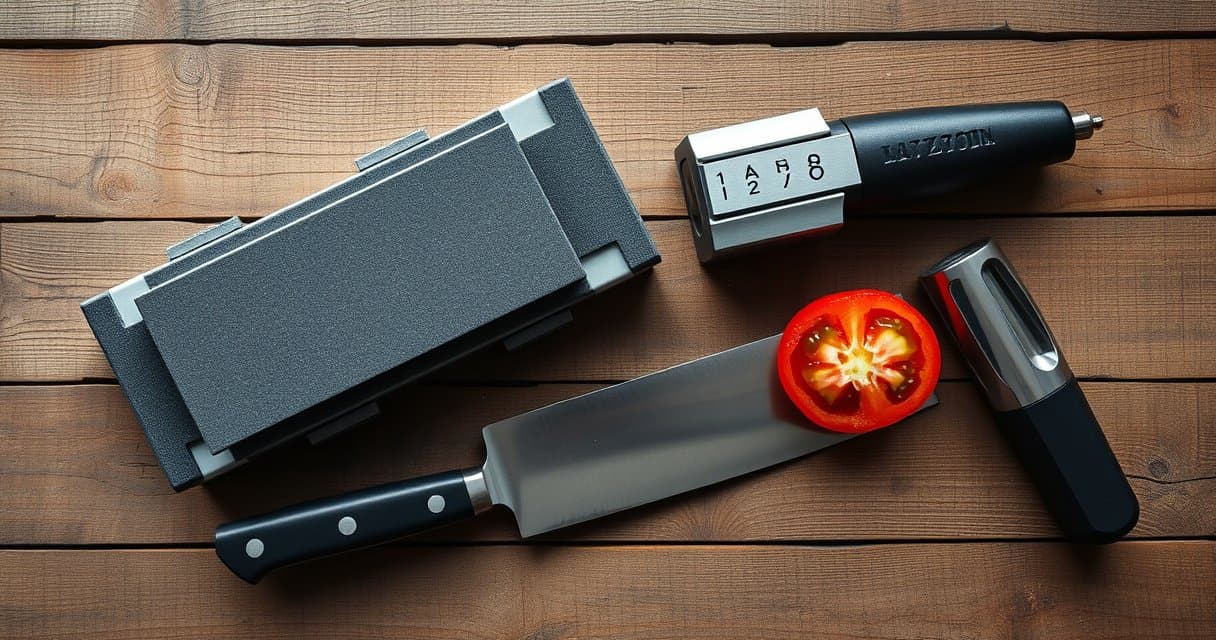
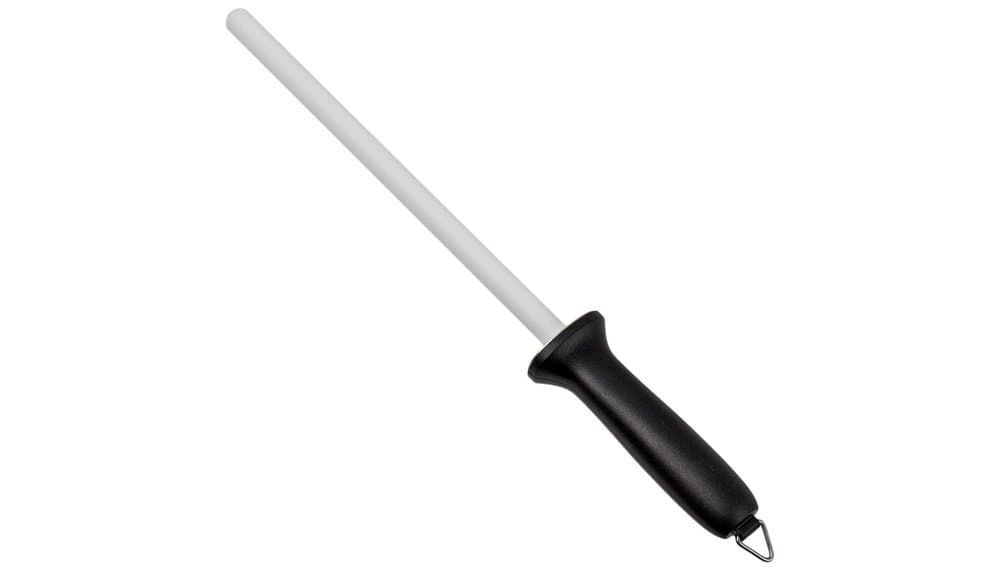
The fear of sharpening is the main barrier. Relax. A good Damascus knife, thanks to its hard steel core, will keep its edge for a very long time with a simple realignment of the edge. For this, a sharpening steel (or ceramic "honing rod") used once every two or three weeks is enough. Slide it along the blade at the original angle (often around 15 degrees) 4-5 times on each side.
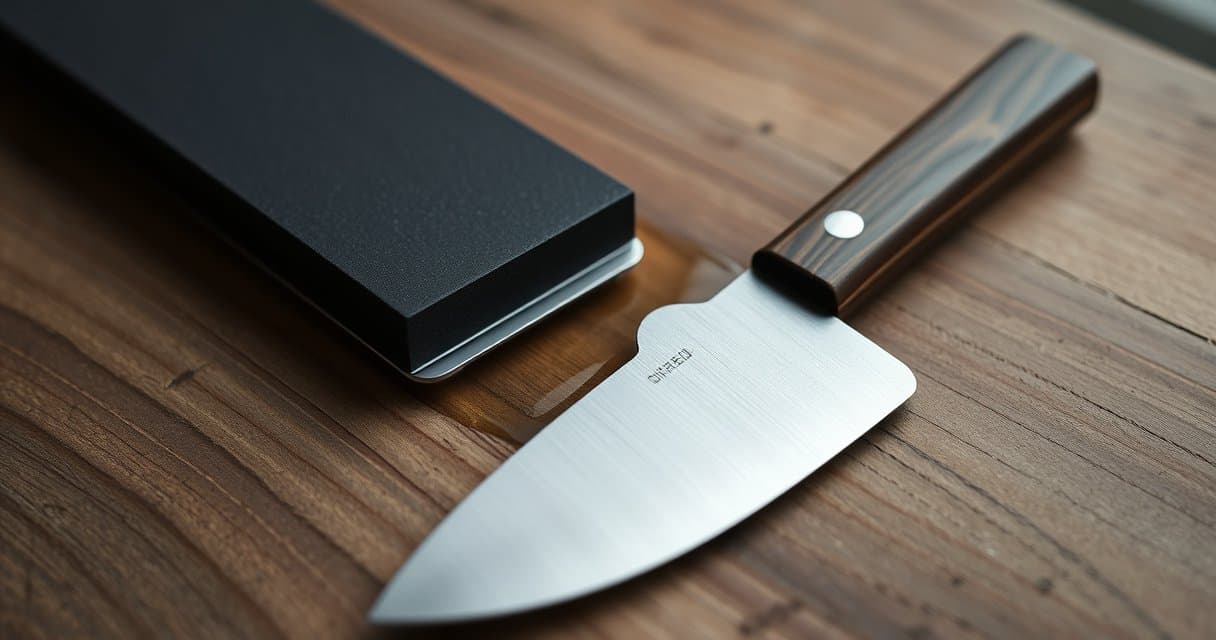
When you feel that cutting becomes laborious, even after using the steel, it's time to give it a session on the water stone. Don't pull out your coarse 220 grit stone! For regular maintenance, a 1000/6000 grit combination is perfect. The 1000 restores the edge, the 6000 polishes it. Wet the stone, place the knife on it while maintaining a constant angle (use an angle guide if you're a beginner, it's not cheating!), and push the blade as if cutting a thin slice off the stone. About ten passes on each side on each grit can already work wonders. The goal is not to reshape the blade, but to refresh its cutting edge. Honestly, it's much simpler and more meditative than people imagine.
Understanding the Price Scale: From Patterns to Artistic Forging
You look at the prices and the gap leaves you stunned: how can a Damascus knife cost 100 €... or 1000 €? The difference is not just in a maker's name. It lies in manufacturing details that radically transform the experience. Let's look at this as three distinct worlds.
The Entry Level (Approximately 80 € to 200 €): Surface Beauty
At this level, you are primarily buying a look. The blade is often stamped (cut from a pre-patterned steel sheet) rather than hand-forged. The Damascus pattern is usually applied to a single, relatively standard block of steel, often less high-performing. The "core" of high-performance steel, if it exists, is sometimes thin. The handle is made of industrial materials like basic pakkawood or polymers. It's a beautiful object that decorates a kitchen and gets the job done for occasional tasks. But for the daily cook who pushes their tool, it will show its limits in edge retention and balance. Frankly, at this price, be wary of "sets" with 5 knives: the quality is necessarily diluted.
The Serious Mid-Range (200 € to 500 €): The Territory of Best Value for Money
This, in my opinion, is where you find the true best Damascus kitchen knife for the vast majority of enthusiasts. Why? The blade is authentically forged by layer welding, with a core of high-end steel (like VG-10, SG2, or Aogami Super) that represents a substantial part of the thickness. The number of layers (often between 60 and 100) is sufficient to create a sharp pattern and beneficial properties. The balance is careful, the handle (made of stabilized hardwood, buffalo horn, or composite resin) is attached robustly, often with full riveting. You are paying for a real forging technique and high-performance materials. It is a professional, durable tool that will meet all the culinary demands of an informed amateur.
The High-End & Artisan Level (500 € and well beyond): The Functional Art Object
Here, you enter another world. The price no longer buys just performance, but the rarity and vision of an artisan. Imagine a hand-forged blade by a renowned smith, with a complex Mosaic Damascus pattern (waves, ladders, feathers) created by a masterful assembly of different steels. The core can be a highly reactive pure carbon steel, requiring meticulous care but offering an edge of surgical fineness. The handle is a unique piece, made of precious aged wood, fossil ivory, or inlaid with metals. Each piece is unique, its balance calculated to the gram. You are no longer buying a simple tool, but a collectible piece to be passed down. For daily use? Only if you are ready to bear the emotional weight of using it.
Conclusion
The world of Damascus knives is vast, but choosing one is no longer a mystery.
You now know that the true value lies in the synergy between the forge and the steel, not just in the waves of the pattern.
It is a personal choice. A commitment between your hand, your kitchen, and the art of the tool. Invest consciously, and this exceptional companion will serve you for decades.
Make this choice your own. And happy discoveries in the kitchen.
Frequently Asked Questions
What is a real Damascus knife?
A real Damascus knife is made by forging and folding together multiple layers of steels with different properties, creating a blade that is both strong and decorative, not by simply stamping a pattern onto standard steel.
What is the best steel for the core of a Damascus kitchen knife?
The best steel depends on your tolerance for maintenance: a stainless steel core like VG-10 (60-62 HRC) offers a good balance and minimal maintenance, while a carbon steel like Blue #2 (62-65+ HRC) provides superior sharpness but requires immediate drying to prevent rust.
How to choose between a Western-style or Japanese-style Damascus knife?
The choice is based on your cutting technique: a curved Western profile is designed for a rocking motion, while a flatter Japanese profile (like a Gyuto) is optimized for push-pull cutting, ideal for precise slicing.
Is a Damascus knife with more layers always better?
No, beyond 300 layers, the benefit becomes primarily aesthetic; a Damascus with 67 to 200 layers already offers an excellent balance between technical properties and beauty, with the quality of the steel core being the most important factor.
How to properly care for a Damascus knife?
Maintenance requires immediate rinsing and drying after each use, storage on a magnetic bar or in an individual sheath, and regular edge realignment with a ceramic honing rod.
Why do Damascus knife prices vary so much (from 100 € to over 1000 €)?
The price difference reflects the manufacturing method and materials: entry-level models often have a stamped pattern, while high-end models feature hand-forged blades with an exceptional steel core and handles made from rare materials, signed by a craftsman.