Tojiro DP 3-Layer Petty Sashimi Knife Review
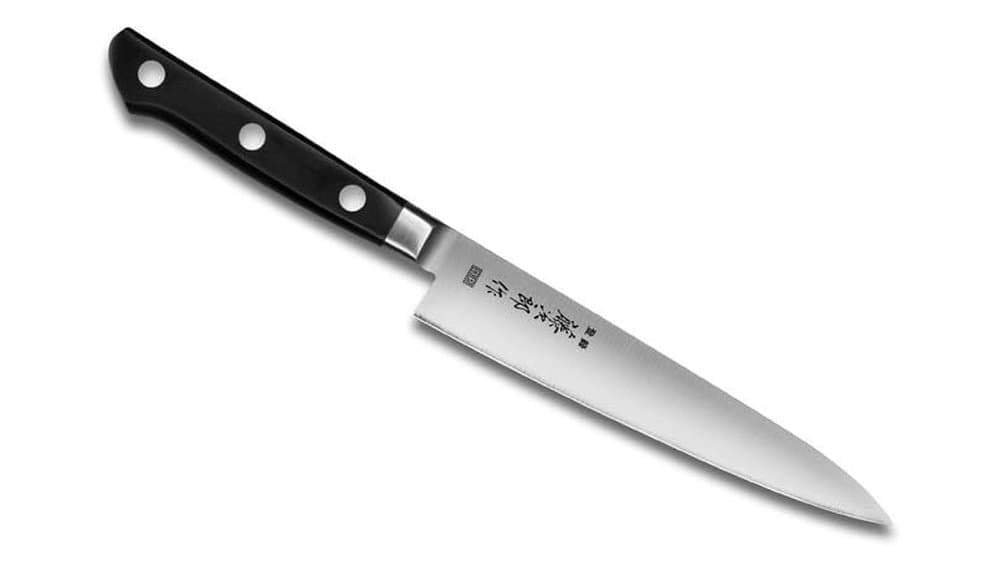
Comprehensive Analysis: The Tojiro DP 3 Layers Petty Knife for Sashimi
For the cooking enthusiast seeking a serious tool, a knife is not a mere accessory. It is an extension of the hand, a long-term investment. The Tojiro DP 3 Layers Petty Knife for Sashimi is often cited as a cornerstone in the world of affordable Japanese knives. But can it truly claim "buy-it-for-life" status for a demanding home cook? We dissect this flagship product based on its technical specifications, community feedback, and expert analysis.
Strengths
- Exceptional Cutting Performance: Right out of the box, the knife is unanimously described as extremely sharp. The low Japanese sharpening angle allows for clean and precise slicing, ideal for delicate work.
- Premium Blade Material: The VG-10 core offers an excellent balance between edge retention, corrosion resistance, and relative ease of sharpening.
- Remarkable Value for Money: The vast majority of feedback agrees on this point. Tojiro is considered a brand offering near-professional performance without the marketing markup of luxury big names.
- Practical Versatility: Although labeled "for sashimi," the 15 cm length makes it a highly versatile petty knife, capable of transitioning from preparing fine vegetables to filleting small fish.
Weaknesses
- Sometimes Utilitarian Finish: The build is solid, but according to user feedback, the finishes can lack finesse: sharp edges on the handle or blade heel, small imperfections in the wood.
- Debatable Balance: Some testers and users note a slight imbalance with a lack of weight in the handle, giving a "blade-heavy" feel. This is a matter of personal preference.
- Basic Wooden Handle: The Western-style wooden handle is judged comfortable, but its simple design and finish may seem rudimentary compared to higher-end models.
- Requires Appropriate Maintenance: To preserve its performance, it demands appropriate cutting boards (wood or polyethylene) and sharpening on a whetstone, making it poorly suited for those unwilling to perform this upkeep.
Detailed Analysis
Materials and Construction: The Heart of Durability
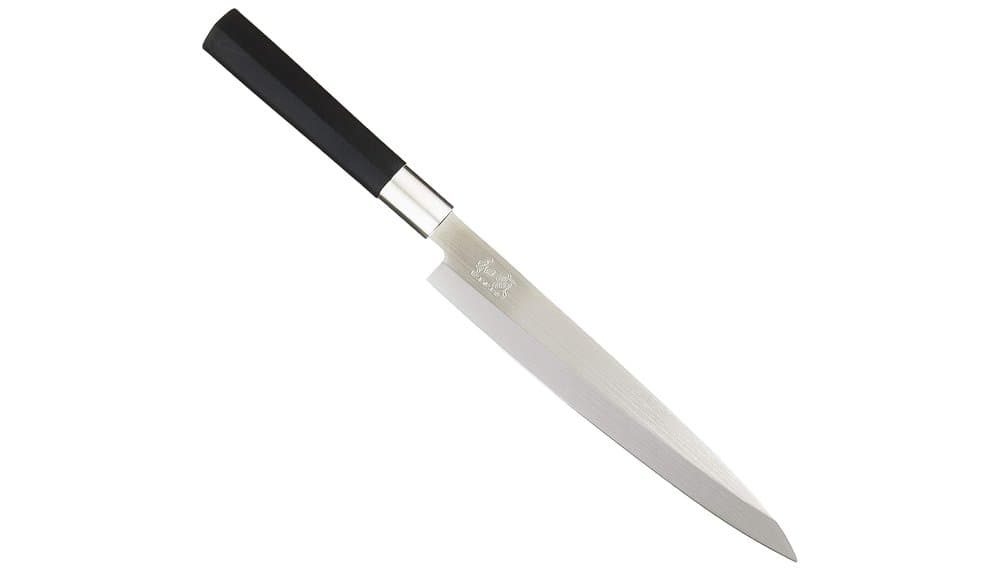
The "buy-it-for-life" promise of a knife rests first on its blade. Here, Tojiro uses a 3-layer (San Mai) architecture. This sandwich construction is crucial: a VG-10 steel core, a high-carbon stainless steel, is clad between two layers of softer stainless steel.
VG-10 is a reputable steel in the field. Its hardenability and composition (cobalt, vanadium) give it excellent edge retention. On paper, the Rockwell hardness (HRC) is stated around 61±1 HRC. This is an important figure. A blade at 61 HRC is significantly harder than most mainstream Western kitchen knives (typically between 54 and 58 HRC). This higher hardness means the edge will last longer before dulling. However, harder steel can be perceived as more difficult to sharpen for a beginner. This is where the magic of the 3-layer construction comes in: the softer sides are more easily removed on the stone, facilitating burr formation, while the hard VG-10 core ensures the longevity of the finished edge.
The handle is made of wood (often identified as pakkawood or a wood-resin composite in the DP lines). This material is appreciated for its solid and natural grip, even when wet. Its long-term durability is good provided it is not left soaking in water. According to feedback, the ergonomics are classic and effective for prolonged use, although some would have preferred more pronounced rounding.
See priceCutting Performance and Daily Use
This knife is presented as a sashimi knife, which implies a very high level of performance for neat, precise slicing without crushing the fibers of raw fish. Experts and users confirm it excels in this role. The thinness of its blade and its aggressive sharpness allow for very fine cuts with minimal effort.
However, its real strength for the home cook is its versatility. With a 15 cm blade, it effectively replaces a traditional utility knife. Users report using it to mince herbs, peel and chop vegetables, bone poultry, or prepare fruit. Its size makes it agile for precision tasks where a large chef's knife would be cumbersome. The community emphasizes that, once accustomed to its sharpness, it becomes a go-to tool for many tasks.
Long-Term Durability and Maintenance
The structural durability of this Tojiro seems robust. The blade is forged (according to product information), which, in theory, offers superior grain density compared to a stamped blade, contributing to long-term resilience. The VG-10 is rust-resistant, a major advantage for regular home use compared to pure carbon steels which require meticulous drying.
However, the "for life" aspect depends entirely on maintenance. This knife is not designed to go in the dishwasher (despite a misleading "dishwasher safe" mention, which the community strongly advises against). Heat and shocks would ruin the edge and handle. Sharpening must be done on a whetstone. VG-10, while offering a good balance, requires stones with a fine enough grit (starting from 1000 grit) for optimal results. Electric or rod sharpeners should be avoided, as they would damage the fine geometry of the blade.
The long-term points of vigilance, according to feedback, are the wooden handle (which can crack if mistreated) and the blade-handle junction (the bolster), which, although solid, can accumulate residue if not cleaned properly.
Target Audience: Who Is This Knife For?
The Tojiro DP 3 Layers Petty Knife for Sashimi is the archetype of the ideal tool for the serious home cook who wants to upgrade their skills without breaking the bank. It is an excellent entry point into the world of real Japanese knives. It suits the person who is willing to learn the basics of whetstone maintenance and to respect their tool (appropriate cutting board, hand washing, immediate drying).
It is less suitable for the person looking for a purely aesthetic, "no-fuss" knife to throw in the dishwasher, or for someone who completely refuses the idea of sharpening it. It is a working tool before being a decorative object.
Technical Specifications
| Characteristic | Detail |
|---|---|
| Model | Tojiro DP 3 Layers Petty Knife for Sashimi |
| Blade Length | 15 cm |
| Blade Construction | Forged, 3-layer (San Mai) |
| Blade Core | VG-10 Stainless Steel |
| Hardness (HRC) | ~61 ±1 (estimate based on DP range) |
| Edge | Double bevel (symmetrical double bevel) |
| Handle Type | Western-style wood handle (pakkawood type) |
| Balance | Neutral to slightly forward-tending |
| Weight | ~80 g (according to product sheet) |
| Origin | Made in Japan |
What Users and Experts Say
A synthesis of hundreds of customer reviews and expert analyses reveals very clear trends.
Praise is overwhelming regarding performance:
- Exceptional sharpness upon receipt: The phrase "cuts like butter" comes up constantly. Many are surprised by the difference compared to their old knives.
- Unbeatable value for money: This is the most frequently cited point. Users feel they get superior-level performance for a contained investment.
- Appreciated versatility: Many indicate they have abandoned their traditional utility knife in favor of this petty, both for precision and cutting pleasure.
- Overall sturdiness: The knife is perceived as well-built and reliable over time, provided it is well maintained.
Criticisms focus on details and experience:
- Rough finish: This is the most frequent negative feedback. Users mention sharp edges on the bolster or handle that can be uncomfortable during prolonged use. A short session with fine sandpaper is often recommended to customize comfort.
- Subjective balance: Some find the handle a bit "light" or "hollow," giving a blade-heavy sensation. Others see no issue with it. It's a matter of personal preference that is hard to judge without holding it.
- Basic handle: The wood is judged functional but without particular character. It lacks the finesse of finish (polishing, rounding) of premium brands.
- Crucial maintenance advice: The informed community insists: this knife is NOT for the dishwasher and requires whetstones. Beginners must be ready to learn this skill.
Conclusion
Is the Tojiro DP 3 Layers Petty Knife for Sashimi a "for life" purchase? The answer is a conditional yes.
From a material and construction standpoint, the foundations are there. The VG-10 core and the forged 3-layer construction offer a durability potential of several decades. It will survive and excel well beyond the lifespan of a supermarket knife.
However, its real longevity is inextricably linked to its owner. This knife rewards care and attention. It demands a commitment in terms of maintenance – hand washing, drying, regular sharpening on a stone – and an acceptance of its sometimes rustic finishes, which can be refined by the user.
For the serious home cook looking to invest in a first quality professional Japanese knife, who is ready to learn to maintain it, and who values pure performance over superficial luxury, this Tojiro DP is a solid and almost indispensable recommendation. It is an honest, high-performing, and durable tool that will not let you down if you take care of it.