Belgian Brock Blue Ardennes Coticule Whetstone Review
Introduction
In the highly codified world of sharpening stones, some transcend their simple utilitarian function to become objects of tradition and craftsmanship. The Belgian Brock Blue Ardennes Coticule Whetstone is the perfect example. It is not just another sharpening accessory, but a historical tool, extracted for over four centuries in the Ardennes region. On our website dedicated to durable culinary tools, where we scrutinize construction, materials, and "buy-it-for-life" potential, such a stone deserves in-depth analysis. We will go beyond the announced grit to understand what makes this block of natural rock a long-term investment for demanding cooks. Can it compete with modern synthetics against high-end Japanese or Western steels? Does its heritage guarantee a lifetime of performance? This is what we will examine, based on its technical specifications and the solid feedback from the user and expert community.
Strengths
- Natural material and unique construction: A 100% natural stone, consisting of millions of garnet micro-crystals (about 30%) embedded in a clay matrix. This unique geological structure is the source of its sharpening properties and legendary longevity.
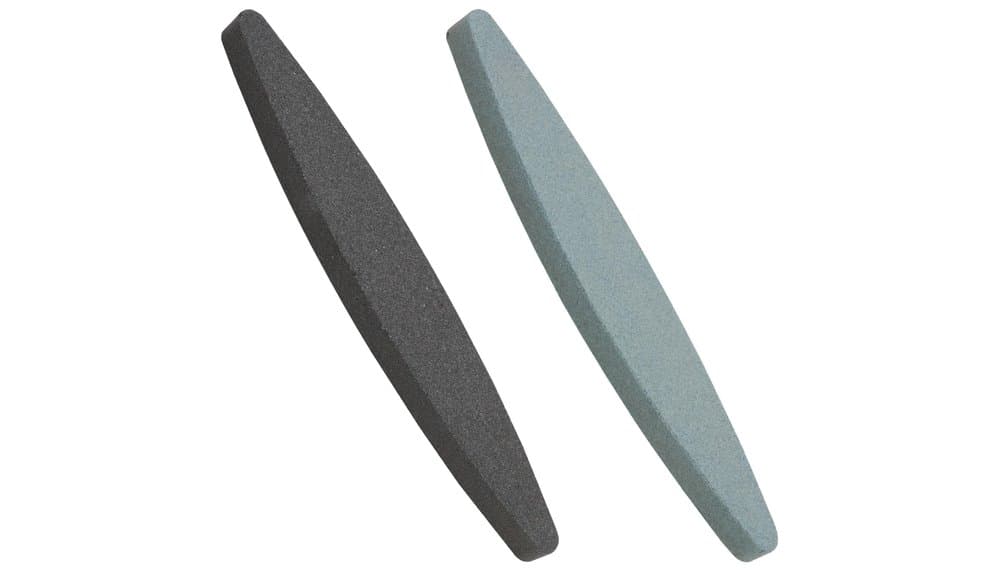
- Versatility and exceptional finish: According to expert context, this stone often combines a blue side (Belgian Blue, more abrasive) and a yellow side (Coticule, for polishing). The product analyzed here is the blue version. Users emphasize that it produces a "bitey" and durable edge, particularly suited for carbon, damascus, and tool steels, with a silky finish.
- Extreme durability and "Buy-It-For-Life" heritage: The hardness of the garnets and the nature of the stone give it extremely slow wear. Feedback from the community and experts agree that such a stone, if well-maintained, can be passed down for generations, perfectly embodying the philosophy of sustainable purchase.
- Ease of use and feel: Unlike some synthetics requiring prolonged soaking, this stone works with water only. Testers describe a "satiny" or "creamy" glide feeling during sharpening, due to the formation of a sharpening paste ("slurry"), which makes the process pleasant and effective.
Weaknesses
- Limited abrasion speed: As a natural stone, its action is slower than that of modern diamond stones or aggressive synthetics. It is not designed to repair large chips or quickly reshape an angle. It is primarily a finishing and maintenance tool.
- Learning curve: Achieving optimal results requires mastering the management of the "slurry". The amount of water, pressure, and technique directly influence the final result. For a complete beginner without guidance, progress may seem less intuitive than with a fixed-grit synthetic stone.
- Compatibility with very hard steels: Web context experts clearly indicate that it can seem less effective on high vanadium or carbon stainless steels (like PM-S30V, ZDP-189). These ultra-hard steels require more aggressive abrasives. Its preferred domain remains carbon, tool, and classic stainless steels.
- Natural variability and dimensions: Being a product of geology, there can be variations in density and hardness from one stone to another. Furthermore, some users note that the 100x60 mm format (provided) can be a bit small for comfortably sharpening large chef's knives or hobeleisen, preferring a larger size.
Detailed Product Analysis
Construction and Materials: A Geological Heritage
The heart of the analysis begins with its composition. The Belgian Brock Blue Ardennes Coticule is not manufactured; it is extracted. Its matrix contains about 30% garnet, a mineral whose hardness (7-7.5 on the Mohs scale) is a major asset. These micro-crystals detach during sharpening and mix with clay and water to form an effective abrasive paste. This monolithic and natural construction eliminates any risk of delamination or warping, problems sometimes encountered with composite synthetic stones. From a "buy-it-for-life" perspective, this is the guarantee of total structural integrity. The stone comes with a certificate of authenticity, highlighting its origin and its nature as a non-industrial object.
Sharpening Performance: Between Finesse and Bite
On paper, the grit is announced around 5000. However, comparing the grit of a natural stone to that of a synthetic one is misleading. User feedback converges: the final result on the blade is what matters. Here, the stone excels in creating a fine edge, but with "bite". Unlike some pure finishing stones that produce a smooth and fragile edge (like a "polished bevel"), the blue Coticule generates an extremely fine micro-sawtooth pattern thanks to the garnets. This translates into an aggressive and durable edge that perfectly grips tomato skin or paper, ideal for precise culinary tasks. The community notes that this feel is particularly appreciated on carbon steel blades (like Japanese white or blue steel) and tool steels, where it reveals its full potential.
See priceHandling and Ergonomics
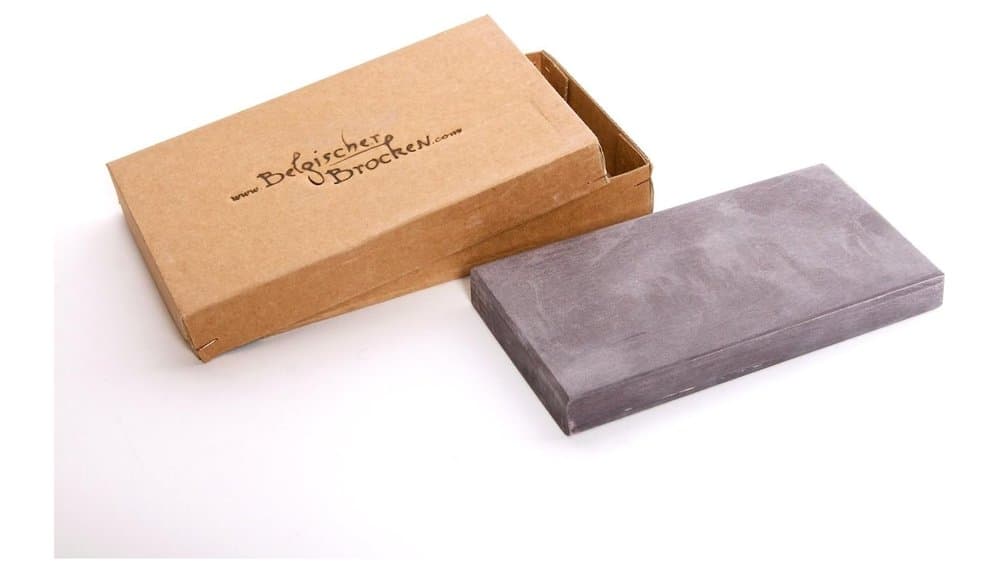
The stone, in a relatively compact format, is thick (15 mm), promising decades of wear. Its use is simple: just wet it with clean water. No soaking is necessary, making it a quick tool to set up. Tester reviews highlight the unique and pleasant feel under the blade. The created "slurry" acts as a lubricant and an additional abrasive, offering a smooth glide that minimizes the risk of deep or uncontrolled scratches. For the user, it is a tactile experience that differs from sharpening on diamond or ceramic, often described as more "organic" and controllable.
Durability and Lifetime Maintenance
This is the point where the product truly shines. Maintenance is minimal: a rinse with clean water and air drying is sufficient. There is no risk of loading (unlike some open-pore stones) or need for frequent flattening. The stone does not dish unevenly if the technique is correct. Its longevity is such that, according to experts, it is often considered an heirloom. For the serious cook looking to invest once and for all, this argument is decisive. It will not degrade over time, unlike a synthetic stone that will eventually wear down to the support plate.
Target Audience: Who is This Stone For?
The Belgian Brock Blue is not a universal stone for beginners. It is a connoisseur's tool. It is perfectly suited for:
- The owner of carbon steel knives (Western or Japanese) or tool steel knives, who seeks a perfect edge and a durable finish.
- The user who appreciates the sharpening process and the connection with a traditional tool.
- The proponent of the "buy-it-for-life" philosophy who prioritizes a single, durable, and effective long-term investment.
It will, however, be less suitable for:
- The absolute beginner looking for a quick result without setup.
- The person whose collection is mainly composed of ceramic or super-austenitic ultra-hard steels (e.g., S110V, Maxamet).
- The person who regularly needs to repair major chips on their blades.
Technical Specifications
| Characteristic | Detail |
|---|---|
| Product Name | Belgian Brock Blue Ardennes Coticule Whetstone |
| Type | Natural sharpening stone (Coticule / Belgian Blue) |
| Dimensions | 100 mm (L) x 60 mm (W) x 15 mm (Th.) |
| Weight | 250 grams |
| Grit (equivalent) | ~5000 (but natural, therefore variable) |
| Abrasive Material | Natural garnet (~30%) in a clay matrix |
| Lubricant | Water only |
| Primary Use | Finishing sharpening and maintenance |
| Recommended Steels | Carbon steels, tool steels, common stainless steels, damascus |
| Construction | Monolithic natural block |
| Included Accessories | Certificate of authenticity, sharpening guide (language not guaranteed) |
What Users Say
The synthesis of customer reviews and expert analyses from the web reveals a very clear consensus.
The recurring positive points are unanimous. Users praise the exceptional quality of the edge obtained, often described as "razor-sharp" and "long-lasting". The feel during sharpening is frequently cited as a pleasure, with terms like "satiny", "creamy", or "pleasant". The perceived durability of the stone is a massive argument, with many considering it a definitive purchase. Finally, its heritage and authenticity, symbolized by the certificate, add an intangible value appreciated by many.
The points of caution or negatives are fewer but instructive. Several experienced users regret not choosing a larger size (like 150x50 mm or 200x75 mm) for more comfort, especially on large knives. The learning curve is mentioned: one must understand how to use the "slurry" for optimal results. Finally, as noted by experts, its relative slowness against very hard steels or for major reprofiling work is confirmed; it is a finishing tool, not a heavy repair tool.
Conclusion
The Belgian Brock Blue Ardennes Coticule Whetstone is not simply a sharpening accessory. It is an investment in a heritage tool, whose value is measured over decades. Its technical analysis reveals a product perfectly consistent with a "buy-it-for-life" philosophy: natural and durable materials, integral construction with no point of failure, minimal maintenance, and high-end finishing performance.
It will not suit all profiles. Its slower action and affinity for certain steels make it a specialized tool, optimal for the user who already has a foundation in sharpening and owns quality knives (carbon, tool, classic stainless steels). For this audience, however, it offers something irreplaceable: the control, feel, and unique result of a natural stone, coupled with the certainty of never having to replace it. If you are looking for the ultimate maintenance and finishing stone for your favorite blades, and you appreciate the character and tradition of a tool, the Belgian Brock Blue fully deserves its place in your culinary workshop.