Home Theory 32cm Non-Stick Wok & Lid Review
Introduction
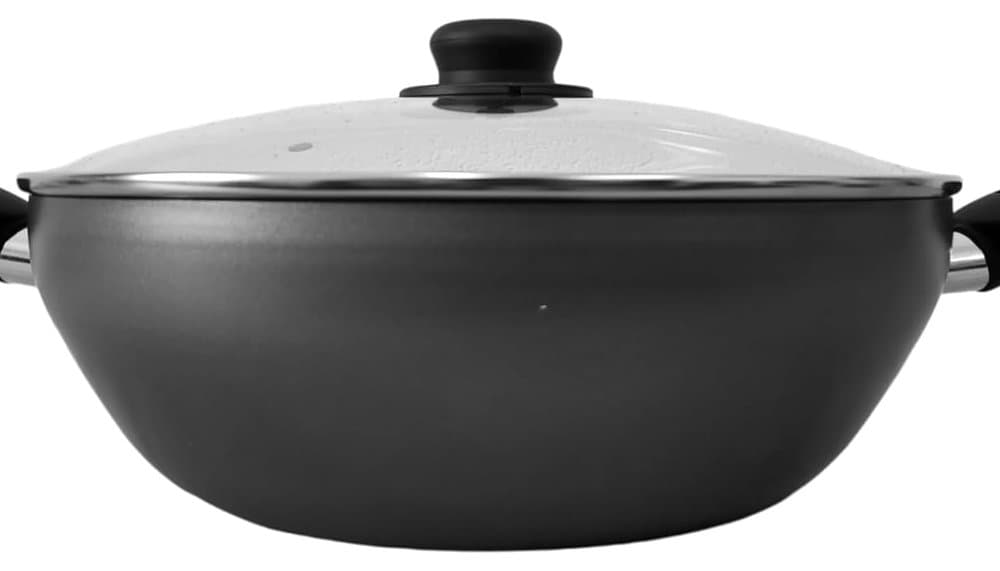
On a site dedicated to durable and high-performance culinary equipment, every new addition is scrutinized under a magnifying glass. Our focus today is on the Home Theory 32cm Non Stick Aluminum Wok with Lid. This double-handled wok with a non-stick coating presents itself as a versatile tool for modern kitchens. But in a world that favors carbon steel, cast iron, and hardened blade steels, where does it stand? Can it claim a place in the arsenal of a serious cook who thinks "buy it for life"? We will dissect its specifications, cross-reference community feedback and expert analysis to determine if it is a durable companion or a practical temporary solution.
Strengths
According to specifications and feedback, this wok has several immediate assets that explain its appeal.
- Versatility and universal compatibility: Its base is designed to be compatible with the vast majority of domestic cooktops: gas, electric, halogen, and ceramic. This accessibility makes it a safe choice for most kitchens.
- Radical ease of use: The non-stick coating is its main selling point. It allows for cooking with very little fat and guarantees easy food release, simplified cleaning, and no break-in period or seasoning required.
- Practical and well-equipped: The inclusion of a glass lid with a handle is a real plus. It allows switching from stir-frying to braising or steaming without having to search for a compatible lid. The two stainless steel handles offer a secure two-handed grip for maneuvering the full pan.
- Lightweight and maneuverable: At only 1.1 kg, it is extremely light compared to a carbon steel or cast iron wok. This makes it easy to grab, lift with one hand to stir food, and less tiring for prolonged use.
Weaknesses
However, when evaluated through the lens of durability and professional performance, structural limitations appear.
- Limited coating durability: This is its absolute Achilles' heel. Non-stick coatings, even quality ones, are inherently perishable. They wear out, get scratched, and eventually lose their effectiveness, especially when faced with metal utensils or abrasive cleaning. This planned obsolescence is the antithesis of the "buy it for life" philosophy.
- Moderate thermal performance: Aluminum is a good heat conductor, but in this light and likely thin form, it does not offer the heat retention and thermal stability of thick carbon steel or cast iron. It reacts quickly, but can also have hot spots and lose temperature rapidly when a large amount of cold food is added.
- Inability to develop "wok hei": For purists of Asian cuisine, the absence of a traditional rounded bottom and the impossibility of subjecting it to extremely high temperatures (at the risk of damaging the coating) make it incapable of generating that characteristic smoky flavor (wok hei).
- Variable construction and finish: User feedback points to some fragility in the attachment of the handles and the lid knob, suggesting sometimes inconsistent quality control.
Detailed Analysis
Materials and Construction: The Fundamental Divergence
Here, we leave the territory of traditional and durable materials like carbon steel and cast iron. The body is aluminum, a lightweight and conductive material, but in this context of a thin, non-stick wok, it is not designed to last decades. There is no seasoning to maintain, no patina to develop. It is a product whose lifespan is intrinsically linked to the integrity of its coating. The question of Rockwell hardness, crucial for a knife, is irrelevant here; performance relies on an applied polymer layer, not on the tempering of a metal.
See priceErgonomics and Handling
Testers and users agree on the ergonomics and comfort of the handles. Their length provides a good safety distance from the heat, and having two is an undeniable advantage for stability, especially with a 32 cm diameter piece. The overall lightness is unanimously praised as a comfort factor, particularly for people who might find a traditional wok too heavy.
Culinary Performance: Versatility vs. Authenticity
Its versatility is its master asset in the kitchen. It excels at everyday tasks: sautéing vegetables, preparing a quick fried rice, reheating leftovers, or even shallow frying thanks to its 3.5-liter capacity. The lid adds a practical dimension for braising. However, its heat distribution and thermal reactivity are limited by its lightweight construction. It will not withstand the repeated assaults of a professional gas burner's high heat, and it will never reach the necessary temperatures or develop the patina that makes the magic of a well-seasoned carbon steel wok.
Maintenance and Longevity: The Compromise
Maintenance is simple: hand washing with a soft sponge (despite the "dishwasher safe" mention, experts strongly discourage this practice to preserve the coating) and exclusive use of wood or silicone utensils. It's an easy protocol, but imperative. Long-term durability is the real question mark. The community is clear: this is a wok from which one can expect a few years of good service with extreme care, but it will not become a culinary heirloom.
Technical Specifications
| Feature | Detail |
|---|---|
| Product Name | Home Theory 32cm Non Stick Aluminum Wok with Lid |
| Diameter | 32 cm (12.5 inches) |
| Capacity | 3.5 liters (approximately 3.5 quarts) |
| Body Material | Aluminum |
| Coating | Non-stick |
| Lid | Tempered glass with handle |
| Handles | Double stainless steel handles |
| Weight | 1.1 kg |
| Cooktop Compatibility | Gas, electric, halogen, ceramic. NOT induction compatible (without a suitable base). |
| Oven Safe | No |
| Care | Hand wash recommended (mentioned as dishwasher safe) |
What Users and Testers Say
The synthesis of customer reviews and web context from expert tests and forums paints a nuanced consensus.
Recurrent praise focuses on the size considered perfect for a household of 2 to 4 people, the lightness that facilitates handling, and the immediate performance of the non-stick coating. Being delivered with a lid is consistently cited as a major plus. The majority of positive comments come from users satisfied with its ease of use and its initial good value for money.
Criticisms and reservations are equally clear and targeted. Several users report construction issues, such as "fragile" handle attachments or a lid knob that loosens, pointing to quality control to watch. The major concern, both among customers and in expert analyses, relates to the coating's durability. It is categorically presented as a product with a limited lifespan, requiring meticulous care (non-metal utensils, delicate washing) to hope to extend it. Finally, it is consistently compared, in the web context, to professional carbon steel woks, with the conclusion that it is their opposite in terms of longevity and potential for ultimate culinary performance.
Conclusion
The Home Theory 32cm Non Stick Aluminum Wok with Lid is a product that occupies a very specific niche, but is the polar opposite of the "buy it for life" values championed by professional tools.
It is an excellent entry-level or convenience option. For the occasional cook, someone discovering wok cooking, or someone primarily seeking ease of use and effortless cleaning for everyday meals, it fulfills its role perfectly. Its versatility, featherweight, and complete equipment are strong arguments.
On the other hand, for the serious, demanding cook who invests in tools for a lifetime, this wok represents too great a compromise. The lack of intrinsic durability, the impossibility of developing a patina, thermal limitations, and the potential fragility of the coating make it a consumable rather than a lifelong kitchen companion. It can never offer the flavor depth, fire response, and maintenance satisfaction of a carbon steel wok, which, although requiring more learning and care, improves over decades.
In short, it is a tool of transition or convenience, but not a tool for passing down.