KRODEAIR Chef's Po Non Stick Cast Iron Wok Review
Introduction
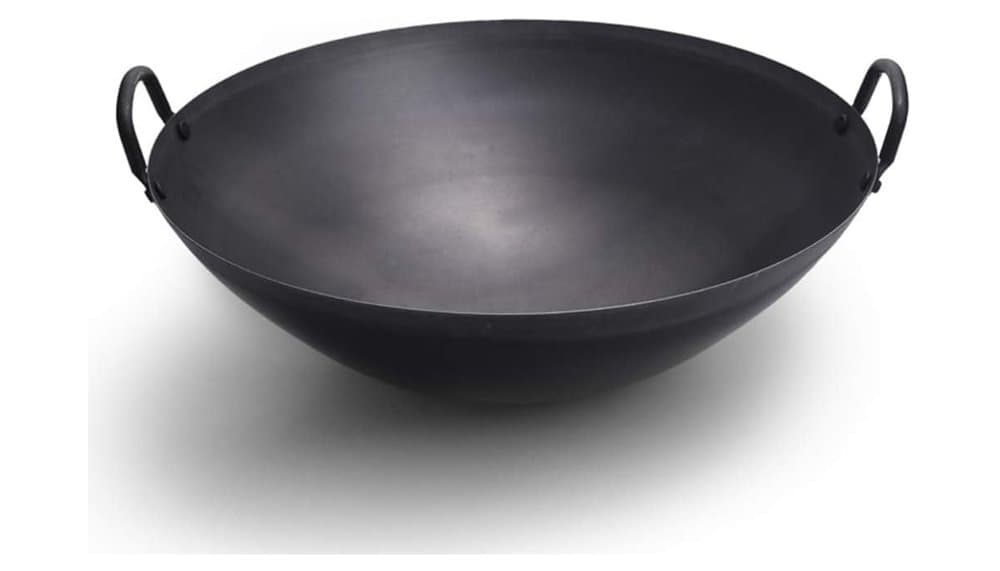
In the universe of durable cookware, woks hold a special place. Between the reactive lightness of carbon steel and the heft of raw cast iron, the KRODEAIR Chef's Po Non Stick Cast Iron Wok offers a third way: a cast iron wok coated with a non-stick finish. Here, we dissect this hybrid object from the demanding perspective of "buy-it-for-life." Can it establish itself as a serious tool for the home cook demanding near-professional performance? An analysis of the technical specifications and a synthesis of community feedback provide us with a nuanced answer.
Strengths
- High-performance and durable non-stick coating: This is its main selling point. According to testers, this coating greatly facilitates cooking and cleaning, eliminating the need for complex seasoning.
- Maximum heat source versatility: Compatible with all stovetops, including induction, ceramic glass, gas, and the oven. True flexibility for any kitchen setup.
- Cast iron construction and "hammered" finish: On paper, the mass of cast iron promises stable and uniform heat retention and distribution, ideal for simmering.
- Dual-handle design: The double grip (one long primary handle and a side helper handle) facilitates handling this very heavy wok, especially when taking it out of the oven or moving it.
Weaknesses
- Excessive weight: The most frequently cited recurring flaw. Its cast iron construction makes it extremely heavy, compromising the maneuverability and quick tossing typical of wok cooking.
- Limited high-heat performance: Its significant mass makes it less responsive to temperature changes than a carbon steel wok. It struggles to reach and maintain the very high heat required for "wok hei" (the characteristic smoky flavor).
- Sometimes limiting size: Some models (like the 28 cm) are considered too small for family use, limiting the capacity to cook generous portions in one go.
- Primary handle susceptible to heat: Although equipped with a second helper handle, the primary bakelite handle can, according to users, become uncomfortably hot during prolonged use on the stovetop.
Detailed Analysis
Materials & Manufacturing: The cast iron/non-stick paradox
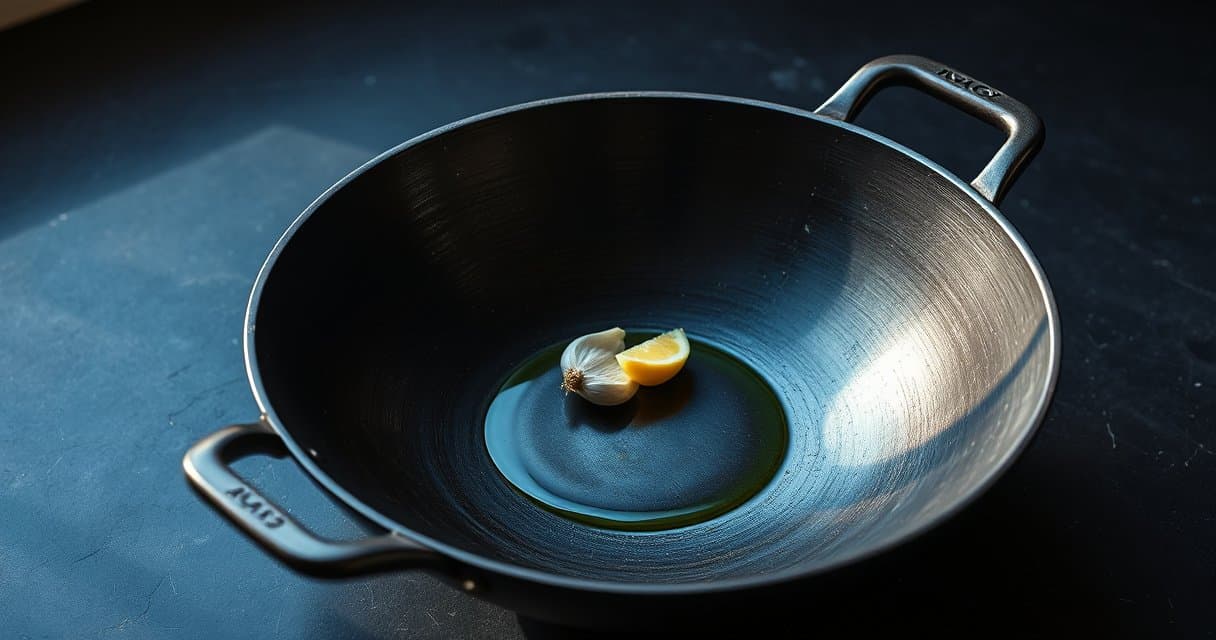
The heart of the KRODEAIR Chef's Po is cast iron. This material is renowned for its extreme durability and its ability to accumulate heat homogeneously. The "hammered" finish is primarily aesthetic; it does not have the functional impact of hammering on a carbon steel wok, which gains rigidity and cooking surface area. The real subject is its non-stick coating. This is what radically distinguishes it from traditional raw steel or cast iron woks.
From a "buy-it-for-life" perspective, this is the most debatable element. No non-stick coating, however robust, has the intrinsic lifespan of raw steel or cast iron. It is a component that wears out with time and use, despite precautions. Its presence immediately simplifies the experience but introduces a potential longevity limit that non-coated alternatives do not have.
See priceCooking Performance: Comfort vs. Reactivity
This is where the choice crystallizes. If you're looking for ease for daily stir-fries, vegetables, saucy dishes, or medium-heat frying, this wok excels. Its non-stick coating works well, and its cast iron mass ensures gentle, even cooking. The included lid is a real plus for steaming or dishes that require retaining heat.
On the other hand, for wok cooking in its most demanding and traditional form – which requires an extremely powerful heat source, lightning-fast temperature increase, and instant heat control – this coated cast iron is not the optimal tool. Its thermal reactivity is slow. It takes a long time to heat up, and once hot, it takes just as long to cool down. You will not be able to reproduce the "wok hei" technique with the same mastery as with a lightweight carbon steel wok.
Ergonomics & Handling: A Necessary Compromise
The dual handles are an intelligent response to the weight problem. They allow lifting and transporting the wok safely, exploiting its oven compatibility. However, for wok techniques that involve constant pushing and one-handed tossing, the weight becomes a major hindrance. Fatigue sets in quickly. Feedback confirms that the primary handle can conduct heat, which may require using a pot holder during cooking, further reducing the precision of movement.
Durability & Maintenance: Simplicity Today vs. Longevity Tomorrow
Maintenance is its immediate strong point: no rust to fear, no meticulous drying ritual or seasoning to maintain. Gentle hand washing is sufficient. This simplicity is very attractive.
But long-term durability rests entirely on the integrity of the coating. Unlike a carbon steel or raw cast iron wok that regenerates and improves with time (via seasoning), a damaged coating is an irreversible failure. Testers emphasize that gradual preheating and the use of wood or silicone utensils are imperative to preserve it.
Technical Specifications
| Characteristic | Detail |
|---|---|
| Product Name | KRODEAIR Chef's Po Non Stick Cast Iron Wok |
| Primary Material | Cast iron with non-stick coating |
| Surface Finish | Traditional "hammered" finish |
| Coating | Non-stick, PFOA-free (according to context) |
| Compatible With | Induction, gas, electric, ceramic glass, oven, grill |
| Handles | Two handles (primary + side helper handle) |
| Included Accessories | Lid (mentioned in description) |
| Care Instructions | Hand washing recommended, no abrasives |
What Users and Testers Say
The user community and available expert tests paint a consistent picture of this wok, with very clear trends.
Recurring positive points revolve around extreme ease of use and cleaning. People who shy away from the demanding maintenance of a traditional wok are delighted. They also appreciate its total versatility (induction in particular) and find that the non-stick coating delivers on its promises, at least in the initial period of use. The presence of the lid and the stability offered by the weight are also noted.
The most frequent criticisms converge on three major flaws:
- Weight: Considered excessive and handicapping for authentic, dynamic wok use.
- High-heat performance: Judged inferior to that of a carbon steel wok, making it unsuitable for the most demanding Asian cooking techniques.
- Size: For some models, the diameter is perceived as too small for cooking for a family.
The general consensus among testers is that this wok is a good, practical, and versatile tool for daily, worry-free cooking, but it cannot claim to replace the professional performance of a carbon steel wok for an enthusiast seeking total mastery.
Conclusion
The KRODEAIR Chef's Po Non Stick Cast Iron Wok is a product that occupies a very specific niche: that of absolute convenience. It eliminates all the constraints associated with traditional woks (seasoning, rust, meticulous maintenance) and offers universal compatibility. For the home cook who wants a single, simple, effective utensil for a wide variety of everyday dishes (stir-fries, stews, moderate frying) and who cooks primarily on induction, it represents a valid and high-performing medium-term solution.
However, if we evaluate it from the strict angle of "buy-it-for-life" and the search for professional-grade tools, its assessment is more mixed. Its non-stick coating introduces potential obsolescence that raw material woks do not have. Its weight and limited thermal reactivity clearly place it behind the agility and potential for infinite performance of a good carbon steel wok.
Final verdict: It is an excellent choice for those who prioritize simplicity and versatility in a modern kitchen and are not obsessed with ultra-high-heat wok techniques. On the other hand, for the serious enthusiast who sees their wok as a lifelong expert tool to shape and perfect over the years, the investment will naturally and inevitably steer towards an uncoated carbon steel wok. The KRODEAIR Chef's Po is a practical companion, but not a legacy piece.