La Fonderie 1890 ASILAH Enamelled Cast Iron Tajine Review
In-Depth Analysis of the La Fonderie 1890 ASILAH Enameled Cast Iron Tajine
In the world of serious and sustainable cooking, the choice of cookware is not trivial. We seek tools that combine performance, longevity, and a real ability to transform ingredients. The ASILAH enameled cast iron tajine from La Fonderie 1890 presents itself as a modern heir to a centuries-old culinary tradition. Here, we will dissect its characteristics to determine if this product meets the demands of passionate cooks who invest in gear for life.
Introduction: Tradition Revisited by Modern Industry
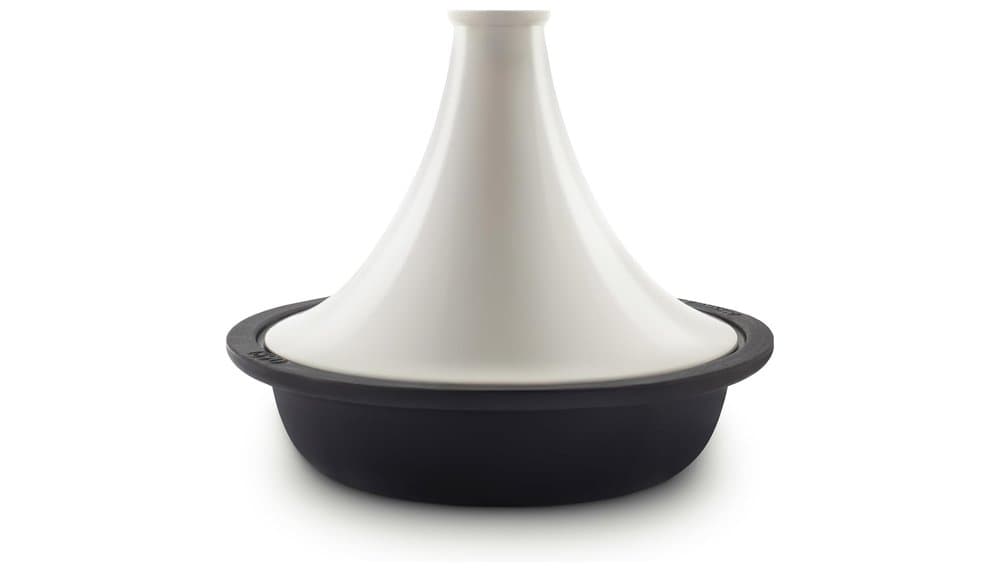
The tajine, an emblem of the slow and aromatic cookery of the Maghreb, meets European manufacturing standards here. The La Fonderie 1890 ASILAH is not an artisanal earthenware tajine. It is a hybrid object: a base made of enameled cast iron and a conical ceramic lid. This combination aims to bring the heat retention of cast iron to a steaming cooking method. Its assertive design and announced compatibility with all stovetops, including induction, make it a product intended for contemporary kitchens.
Strengths and Weaknesses
Strengths
- Remarkable Technical Versatility: Compatibility with all types of stovetops (induction, gas, ceramic) and oven-safe up to 260°C.
- Robust Construction: The enameled cast iron base promises excellent thermal inertia and even heat distribution.
- Design and Functionality: Refined aesthetics and the presence of a handle on the lid for easier and safer handling.
- Confidence-Building Commitment: 10-year warranty and the presence of local after-sales service in France, signs of a certain "buy-it-for-life" vision.
- Generous Capacity: A 2.5-liter format and 29 cm diameter suitable for family meals.
Weaknesses (Potential)
- Significant Weight: Like any quality cast iron object, it is heavy (4.5 kg). This can be a drawback for handling or storage.
- Relative Fragility of the Lid: The ceramic lid, although sturdy, is noted by experts as the most sensitive element to thermal or physical shocks.
- Specific Maintenance: Although the enamel facilitates cleaning, it requires precautions (no abrasive metals, careful handling) to preserve its long-term integrity.
- Distance from Tradition: Purists may argue that it moves away from the authenticity of natural earthenware, even though the technical performances are different.
Detailed Analysis for the Demanding Cook
Construction and Materials: A Cast Iron-Ceramic Union
The "buy-it-for-life" philosophy is first based on materials. Here, the choice is dual.
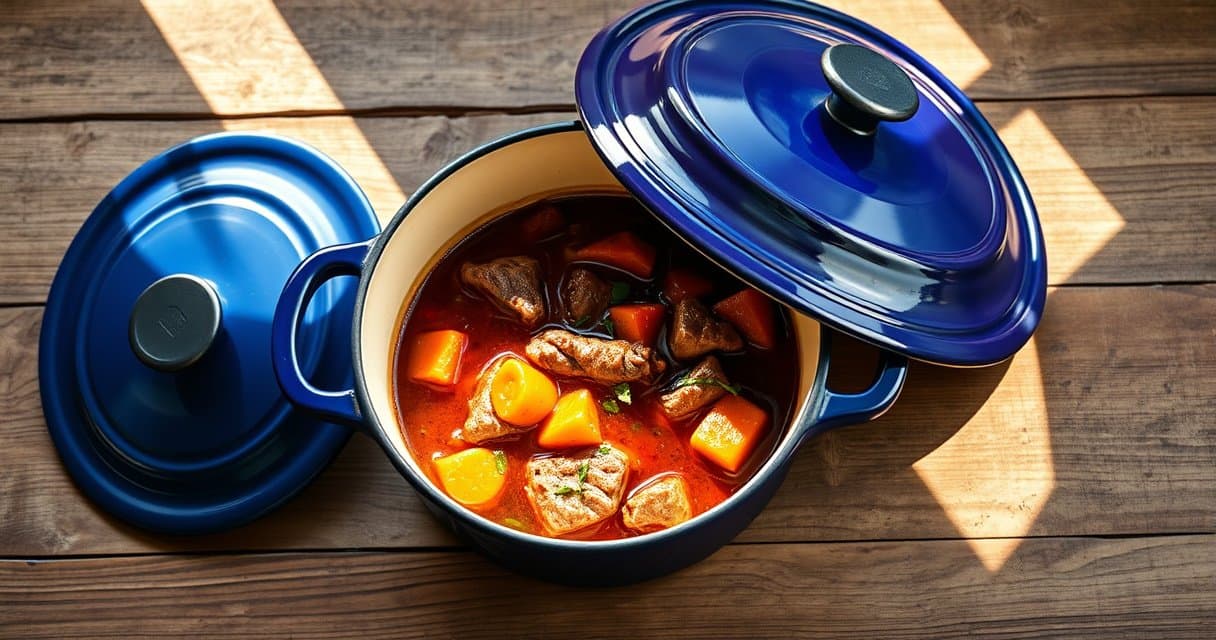
The base is made of enameled cast iron. Raw cast iron is renowned for its extreme durability and its ability to accumulate and redistribute heat evenly. The enamel provides a smooth, non-porous surface that does not require seasoning like raw cast iron and resists oxidation. This greatly simplifies maintenance. The quality of the enamel is paramount: it must resist thermal shocks and scratches to last decades. The 10-year warranty suggests the manufacturer's confidence in this finish.
The lid is made of ceramic. This choice is interesting from a traditional and functional standpoint. Ceramic is an excellent insulator and contributes to the condensation of steam that falls back in fine droplets onto the food. However, this is the point of vigilance identified by experts: its resistance to impact is lower than that of cast iron. Careful handling is required.
Cooking Performance: Inertia and Condensation
According to user feedback, the primary performance of this tajine lies in its exceptional thermal inertia. Once heated, the mass of cast iron maintains a stable and low temperature, ideal for the long simmering that tenderizes meats and develops flavors in depth. The induction compatibility is a major asset for modern kitchens, allowing precise control of the initial heat.
Customer reviews highlight even cooking and "tender" results. The conical lid system works as intended: the steam circulates and condenses, creating a moisture cycle that prevents drying out. It is this magic of steam cooking that is reproduced with the technical efficiency of cast iron.
Ergonomics and Daily Practicality
The weight of 4.5 kg is a factor to consider. It provides stability and inertia but makes handling less easy, especially for serving at the table. The presence of a handle on the lid is an excellent ergonomic idea, noted by testers, making it easier to check the cooking without risk of burns.
Its versatility is its other practical asset. Moving from the induction cooktop to the oven is child's play, expanding recipe possibilities (initial stovetop cooking then finishing in the oven). The 2.5-liter capacity is suitable for a meal for 4 to 6 people.
Long-Term Durability and Maintenance
The cast iron-ceramic pair, if well treated, can last a lifetime. The cast iron is virtually indestructible, and the enamel protects it from rust. The precautions to take are those for any quality enameled cookware: avoid impacts, sudden thermal shocks (do not plunge hot into cold water), and cleaning with abrasive utensils. The ceramic lid requires particular attention during washing and storage. The decade-long warranty is a strong argument that testifies to a construction designed to last.
Technical Specifications Table
| Characteristic | Detail |
|---|---|
| Product Name | La Fonderie 1890 ASILAH Enameled Cast Iron Tajine |
| Base Material | Enameled cast iron |
| Lid Material | Ceramic |
| Diameter | 29 cm |
| Capacity | 2.5 liters |
| Weight | 4.5 kg |
| Compatibilities | Induction, gas, ceramic, oven (resistant up to 260°C) |
| Maintenance | Hand washing recommended (not dishwasher safe) |
| Warranty | 10 years |
| Special Features | Handle on the lid |
What Users and Experts Say
An analysis of customer reviews and available expert commentary online reveals clear trends.
The recurring positive points revolve around the perceived quality and the cooking results. Users describe an object that is "solid," "magnificent," with "careful finishing." Many note that dishes are "perfectly cooked," "tender," and that the heat distributes well. Compatibility with induction is also highly appreciated. The ease of cleaning the enameled cast iron is cited as a practical advantage.
The points of caution or negative points are fewer but instructive. The weight is mentioned as the main drawback by some ("Too heavy, the cast iron"). One user reported a flatness defect in the base on one model, causing wobbling on the cooktop and steam leakage, although this seems to be an isolated case. Experts, for their part, confirm that the main point of attention is the potential fragility of the ceramic lid in the face of thermal or mechanical shocks, which requires careful handling.
Overall, satisfaction is very high, with a majority of glowing reviews about the value for money, aesthetics, and culinary effectiveness.
Conclusion: A Solid Investment for Slow-Cooking Enthusiasts
The ASILAH tajine from La Fonderie 1890 is not a simple decorative kitchen accessory. It is a serious, high-performing tool designed to last. It succeeds in modernizing a tradition by incorporating the robustness of cast iron and compatibility with contemporary cooking technologies.
For the passionate cook looking for a unique utensil for stews, tajines, or steam cooking, this model presents strong arguments: irreproachable thermal inertia, complete technical versatility, and durable construction backed by a long warranty. One must accept its weight and treat its ceramic lid with the respect due to a precious material.
It is not the lightest nor the most traditional tool, but it is probably one of the most practical and resilient in its category. If your philosophy is to invest once and for all in instruments that improve your culinary practice over the long term, the ASILAH tajine deserves a prominent place in your arsenal. It embodies an effective synthesis between the art of slow cooking and the "built to last" requirement.