lätt Home 28cm Non-Stick Cast Iron Pan Test
Introduction
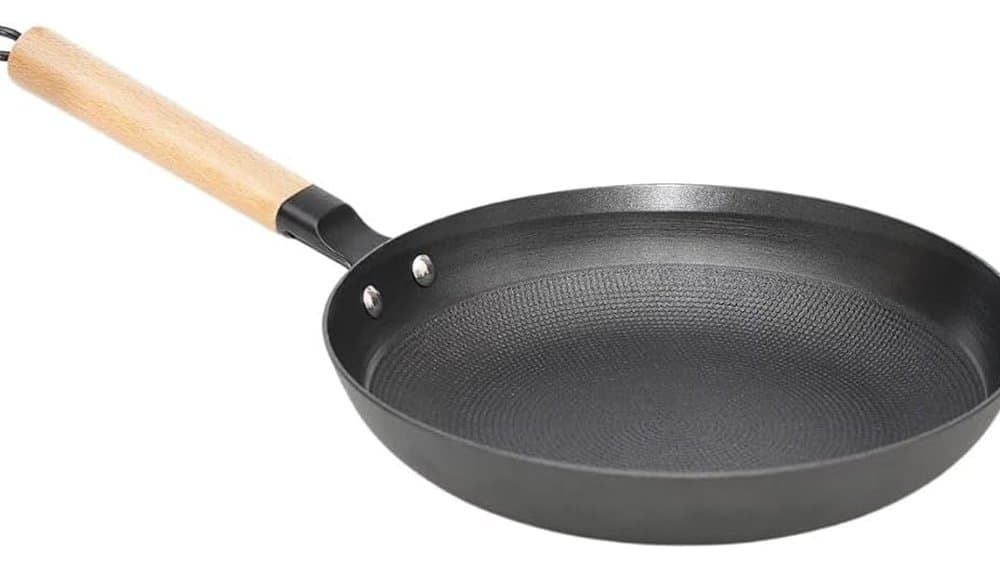
On a site dedicated to sustainable and high-performing culinary tools, such as carbon steel woks, Japanese knives, or raw cast iron, every product is scrutinized under a magnifying glass. The subject of our analysis today is an intriguing hybrid: the lätt Home 28cm Non-Stick Cast Iron Frying Pan. It promises to marry the legendary thermal inertia of cast iron with the ease of a non-stick coating, all in a lighter format. But does this fusion of genres live up to its promises from a "buy-it-for-life" perspective? We will dissect its specifications, confront its claims with user feedback and expert analyses to determine if this pan deserves its place in a demanding kitchen.
Strong Points
According to technical data and feedback, several strengths emerge for the lätt Home pan.
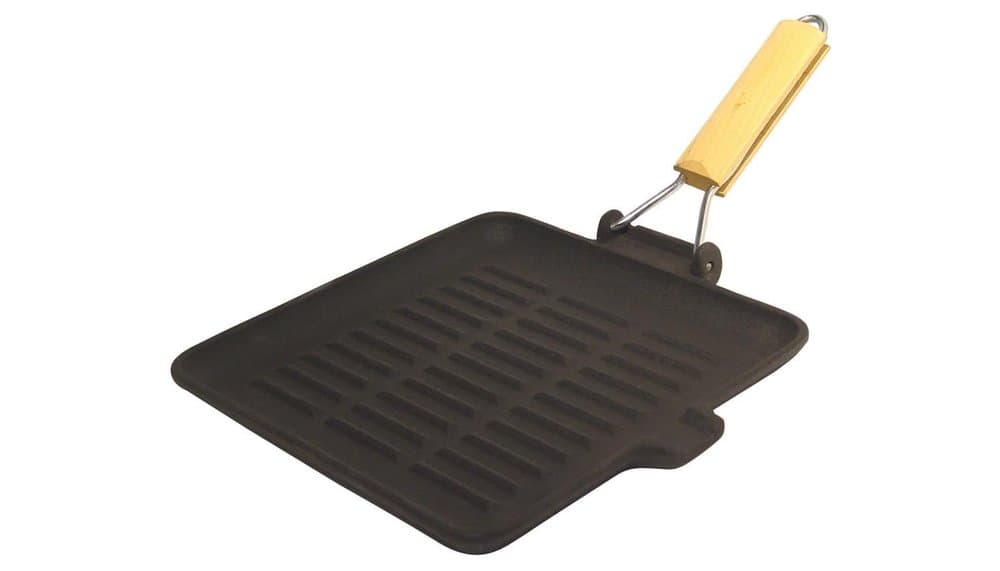
Practical immediate versatility. Compatibility with all cooktops, including induction, and oven resistance up to 400°C make it an adaptable tool. The removable wooden handle is a real ergonomic and practical asset, allowing for easy storage, simplified cleaning, and safe use in the oven. Users emphasize that this handle stays cool during cooking and offers a good grip.
Easier handling. Weighing 2 kg for a diameter of 28 cm, it is indeed lighter than a traditional raw cast iron pan of similar size. This characteristic is frequently noted by buyers, who appreciate being able to handle it more easily, especially when searing food.
Honorable thermal performance. The 3.5 mm thick cast iron base and 1.8 mm walls allow for more even heat distribution than thin aluminum. Testers note an effective "thermal flywheel," enabling slow and uniform cooking, with good heat retention.
Effective short-term non-stick performance. Upon arrival, the so-called "Diamante" or "honeycomb" coating works as advertised. Satisfied users report cooking requiring little fat and very easy cleaning, often with water and a paper towel.
Weak Points
The weaknesses of this product are unfortunately characteristic of the non-stick cast iron segment and constitute a major obstacle to a "buy-it-for-life" qualification.
Debatable coating durability. This is the major drawback, confirmed by many negative reviews. The marriage between cast iron, a nearly eternal material, and a non-stick coating, inherently perishable, raises questions. Users report delamination or blackening of the coating after only a few months of use, even with careful maintenance (hand washing, non-metallic utensils). This phenomenon renders the pan unusable and completely invalidates the durability concept.
Ambiguous maintenance. Although presented as "Dishwasher safe," dishwasher washing is strongly discouraged by the community, including by satisfied users, who see it as a certain cause of premature degradation. This inconsistency between the technical sheet and real-world usage casts doubt on the coating's robustness.
A blurred material identity for purists. For the aficionado of durable materials, this pan is neither pure "cast iron" for seasoning, nor carbon steel, nor a beautiful triple-clad stainless steel pan. The cast iron here is a support for a coating. Therefore, we are not talking about Rockwell, seasoning potential, or a sharpening edge. It is a consumable product, philosophically opposed to a VG-10 knife or a carbon steel wok that is passed down.
Questioned finish and origin. The web context of experts highlights that the "Made in China" mention and a standard cast iron construction do not place it in the premium segment. Some feedback reports an imperfect finish of the coating in the honeycomb cells.
Detailed Analysis
Materials and Construction: The Durability Paradox
The main material is cast iron, appreciated for its ability to absorb and redistribute heat evenly. However, the thickness (3.5 mm at the base) is less than that of premium-quality cast iron (which often starts at 4-5 mm), explaining the contained weight but raising questions about long-term thermal inertia. The real subject is the Whitford non-stick coating (PFOA/PTFE free). According to experts, grafting such a coating onto cast iron is a risky bet. Cast iron is excellent for high-heat and oven cooking, but classic non-stick coatings poorly withstand these extreme conditions and thermal shocks. The product's longevity is therefore tied to that of its coating, its weakest point.
See priceCulinary Performance: Between Efficiency and Limits
The pan excels at gentle to medium cooking, eggs, pancakes, or sautéed vegetables with little fat. The heat is well distributed. On the other hand, it is not designed for the very high-temperature searing typical of raw cast iron or carbon steel, at the risk of damaging the coating. It will also never develop the natural non-stick polish of a well-seasoned cast iron or carbon steel pan. Its performance is frozen in time and does not improve with use, unlike pure materials.
Handle and Ergonomics: A Real Success
The removable acacia wood handle is an excellent idea. It insulates well from heat, offers a secure grip, and its attachment system seems robust according to feedback. It elegantly solves the problem of a burning-hot handle in the oven and facilitates storage. This is a point where the manufacturer hit the mark.
Target Audience: Who Is This Pan For?
It is not aimed at the purist or professional seeking a "for-life" tool and mastering seasoning. Its audience is the family user who wants the quality feel and versatility of cast iron, without accepting its weight and specific maintenance, and who is prepared to replace their pan every 2 to 5 years. It is a transition or compromise product.
Technical Specifications
| Characteristic | Detail |
|---|---|
| Product Name | lätt Home 28cm Non-Stick Cast Iron Frying Pan |
| Diameter | 28 cm |
| Body Material | Cast Iron |
| Thickness | Base: 3.5 mm / Walls: 1.8 mm |
| Coating | Whitford "Diamante" non-stick (honeycomb type), PFOA/PTFE free |
| Handle Material | Acacia wood (removable) |
| Weight | 2 kg |
| Compatibility | Induction, gas, ceramic, electric, oven, grill |
| Max Oven Temperature | 400°C |
| Maintenance | Hand wash recommended (listed as "dishwasher safe") |
| Warranty | 2-year legal warranty of conformity |
What Users Say
The synthesis of 439 reviews (average rating of 3.9/5) and web expert analyses reveals a clear divide, largely dictated by coating durability.
Recurring Positive Trends:
- High Initial Satisfaction: Many 5-star reviews praise the beautiful finish, design, relative lightness, and excellent non-stick performance from the first use.
- Appreciated Versatility: Induction/oven compatibility and the removable handle are highly praised.
- Even Heat: Users note uniform cooking and that the pan "holds heat well."
Recurring Negative Issues:
- Premature Coating Failure: This is the subject of almost all 1 or 2-star reviews. Users describe delamination, flaking, or blackening of the bottom after only a few months (between 2 and 8 months), despite careful maintenance. Photos often accompany this feedback, showing patches of the coating lifting.
- Inconsistency on Maintenance: The "dishwasher safe" mention is strongly contested. The community agrees that a dishwasher cycle would quickly destroy the coating and unanimously recommends hand washing.
- Perceived Low Durability: Disappointment is great among those expecting the "lifetime" sturdiness of cast iron. They find the product has a lifespan limited by its coating, similar to a classic non-stick pan.
The expert context supports this observation: non-stick cast iron is often seen more as a marketing argument than an optimal technical solution, as it associates the potentially infinite durability of cast iron with the inherent fragility of a coating.
Conclusion
The lätt Home 28cm Non-Stick Cast Iron Frying Pan is a product with two faces. On one side, it appeals with its design, its ingenious removable wooden handle, its versatility, and its immediate and effective non-stick performance. It constitutes a gentle introduction to the feel of cast iron for those put off by its weight.
On the other side, it deeply disappoints from the "buy-it-for-life" perspective that interests us here. Its Achilles' heel is unequivocal: the uncertain durability of its coating. The numerous reports of failures within a few months, even with exemplary maintenance, are a strong signal. This is not an heirloom; it is a mid to high-end consumable.
Final Verdict: This pan can be a relevant choice for an occasional cook or a family seeking a versatile, practical, and high-performing utensil in the short to medium term, accepting the idea of replacing it. However, for the serious, demanding cook who invests in professional and durable tools like high-carbon steel knives or raw cast iron for seasoning, this hybrid pan represents a too-fragile compromise. In the universe of culinary tools for life, one would prefer the reliability of a pure material – raw cast iron, carbon steel, or stainless steel – whose performance and personality flourish over time, not in spite of it.