Navaris Cast Iron Frying Pan Review and Durability Test
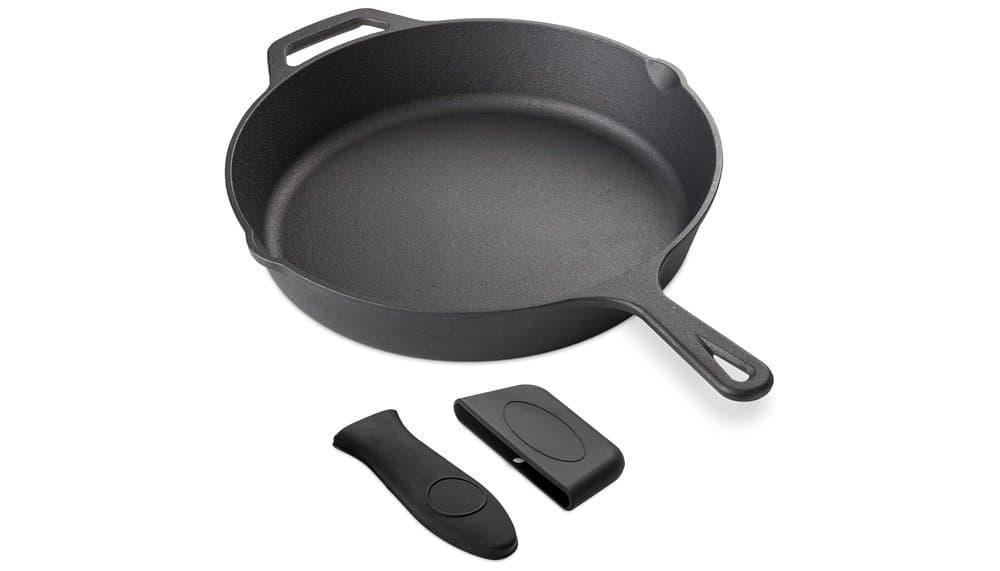
Complete Analysis: Navaris Natural Cast Iron Frying Pan
For the passionate cook in search of durable tools, the cast iron skillet is a mainstay. It represents the promise of legacy, an object that improves with time and use. The Navaris Natural Cast Iron Frying Pan fits into this lineage with classic technical characteristics and an accessible positioning. Here, we will dissect this product from the demanding perspective of "buy-it-for-life": can it become a reliable and high-performing kitchen companion for many years?
In a market where prices can soar, Navaris offers a pragmatic approach. We will see if this accessibility comes at the expense of the essential qualities expected from a serious cast iron piece, or if it constitutes a solid opportunity to integrate this timeless material into one's kitchen arsenal.
Strengths
- Perceived excellent value for money: The community agrees that it offers the fundamental advantages of cast iron at a very competitive price, making it an ideal entry point.
- Remarkable technical versatility: Compatible with all heat sources (gas, electric, induction), it can also go into the oven and on a barbecue, opening a wide range of culinary techniques.
- Simple and potentially indestructible construction: Like any quality cast iron, its one-piece construction (body and handles from a single piece of raw cast iron) gives it theoretically unlimited durability, safe from delamination or breakage provided it is properly maintained.
- Effective heat retention: User feedback confirms its ability to store and distribute heat well, a major asset for perfect searing and even cooking.
Weaknesses
- Significant weight and basic ergonomics: At 2.3 kg for the 25 cm model, it is significantly heavy. The handles, although practical with their dual grip (one long and one short), are an integral part of the piece and get hot during use, always requiring a potholder.
- Sometimes rough finish and minimal pre-seasoning: Many testers point out that the interior surface can have a grainy or porous texture. The factory pre-seasoning is often described as a starting point that must imperatively be perfected by the user.
- Learning curve and demanding maintenance: Like any raw cast iron, it requires a specific maintenance ritual (cleaning without harsh detergent, immediate and thorough drying, regular oiling) to develop its non-stick properties and avoid rust. It is not a "plug and play" utensil.
- Variable finish quality: Depending on the unit, the regularity of the casting and the surface smoothness can fluctuate, a point often mentioned in comparison with premium brands.
Detailed Analysis
Material and Manufacturing: Raw Cast Iron, No Frills
The Navaris is made of raw cast iron, the quintessential traditional material. It is not enameled cast iron (like some Le Creuset models) nor a multi-layer sandwich. It is a monolith of iron and carbon, cast in a single piece. It is this simplicity that underpins its robustness: there is nothing that can peel, crack (apart from a violent impact), or wear out over time. Its heat capacity is high: once hot, it stays hot for a long time, which is ideal for searing a steak or finishing a preparation in the oven. However, its thermal conductivity is average; heat takes a little time to spread evenly over the entire surface, requiring patient and even preheating.
Seasoning: The Keystone of Performance
This is the central topic with this product. On paper, it comes pre-seasoned with soybean oil. In practice, feedback from experts and users is unanimous: consider this pre-seasoning as merely a starting point. The grainy surface inherited from casting requires several seasoning cycles to smooth out and saturate the micro-pores. As summarized by an experienced user, it sometimes needs to be "seasoned again and again" to obtain a truly high-performing cooking surface. This process, although tedious at first, is what transforms cast iron into a naturally non-stick and protective tool. It is a time investment that pays off in the long run.
See priceErgonomics and Handling: Robustness vs. Comfort
With its two integral handles, it is designed to be handled with two hands, especially when full and heavy. The main wooden handle (attached by rivets) offers a secure grip, but it is crucial to remember that the base of the metal handle gets hot. Ergonomics are sacrificed here on the altar of durability and structural simplicity. For "tossing" motions, its weight makes it less suitable. On the other hand, its stability on the heat source is total.
Long-Term Durability and Maintenance
This is where the "buy-it-for-life" concept makes complete sense. A properly maintained cast iron piece can be passed down. The rules for the Navaris are immutable:
- Cleaning with hot water using a brush or non-abrasive sponge. Mild soap is sometimes tolerated by purists, but simple scrubbing with hot water and coarse salt is the preferred method.
- Immediate and absolute drying, ideally by placing it on low heat for a few minutes to evaporate any trace of moisture and avoid rust.
- Regular application of a thin layer of neutral oil on the warm surface to nourish the seasoning.
Its potential weak point, as noted on some forums, may lie in the long-term fixation of the rivets on the wooden handle (risk of loosening), but this remains a minor and repairable defect compared to the solidity of the main body.
Target Audience: Who Is It For?
This pan clearly appeals to two profiles:
- The curious cook who wants to discover cooking with cast iron without committing a large budget.
- The enthusiast looking for a secondary piece, dedicated to the oven, barbecue, or large searing jobs, without touching their more expensive collection pieces.
It requires patience and rigor in maintenance. If you are willing to accept its weight, perfect its seasoning, and respect its care ritual, it will repay you for decades. If you are looking for a lightweight, maintenance-free utensil, this is clearly not the right choice.
Technical Specifications
| Characteristic | Detail |
|---|---|
| Model | Navaris Natural Cast Iron Frying Pan |
| Diameter | 25 cm |
| Depth | 5.5 cm |
| Capacity | Approximately 1 liter |
| Main Material | Raw cast iron |
| Interior Coating | Soybean oil pre-seasoning (to be reinforced) |
| Handles | 1 long cast iron handle + 1 secondary cast iron grip. Main handle with riveted wooden knob. |
| Compatibility | All heat sources: induction, gas, electric, ceramic glass cooktop. Oven. Barbecue. |
| Weight | 2.3 kg |
| Max Temperature | 260°C (approximately 500°F) |
| Maintenance | Hand wash with water. Immediate and complete drying. Regular oiling. Not dishwasher safe. |
What Users Say
A synthesis of 2,912 reviews (average rating of 4.2/5) and expert feedback reveals a clear consensus.
The recurring praise concerns its perceived sturdiness, its excellent value for money, and its versatility (induction, oven). Many users are "won over" after overcoming the learning phase, praising cooking results, especially for meats that "get a restaurant-quality taste". The delivery often offered as a set of several sizes is also an appreciated point.
The criticisms and warnings focus on several points:
- The imperative need for new seasoning: The majority of detailed reviews insist on the fact that the pan must be seasoned several times by the user before the first use to obtain a proper surface. The factory pre-seasoning is deemed insufficient.
- Weight and handle heat: Its weight (2.3 kg and more for larger models) is systematically mentioned as a drawback. The fact that the handles get very hot is a constant reminder to be cautious, always requiring a potholder.
- Surface finish: Several note a "grainy" or "porous" texture that can retain paper or cloth fibers during initial seasoning and requires several oiling cycles to improve.
- Demanding maintenance: Beginners are often surprised by the level of care required: perfect drying to avoid rust, regular oiling. One user summarizes: "a pan that will last you a lifetime, but requires a lot of maintenance".
Conclusion
The Navaris Natural Cast Iron Frying Pan is an honest and unpretentious proposition. It does not rival, in terms of finish and "ready-to-use" feeling, the high-end market references. However, it perfectly embodies the very essence of the "buy-it-for-life" philosophy: a simple, robust object that requires an initial investment (in time, not just money) to reveal its full potential.
Its true price is not the purchase price, but the attention that must be paid to it during the first weeks to build a good seasoning and integrate the maintenance habits. For the serious and patient cook, willing to accept its weight and rustic nature, it constitutes a reliable, versatile, and incredibly durable tool. It is an excellent piece for learning the intricacies of cast iron, for using it in demanding contexts (oven, barbecue), or simply for owning a solid cast iron piece without breaking the bank. It is not the most refined, but it fulfills its fundamental promise: that of lasting, provided you put in the effort.