SHAN ZU 18cm Flexible Boning & Fillet Knife Review
Introduction
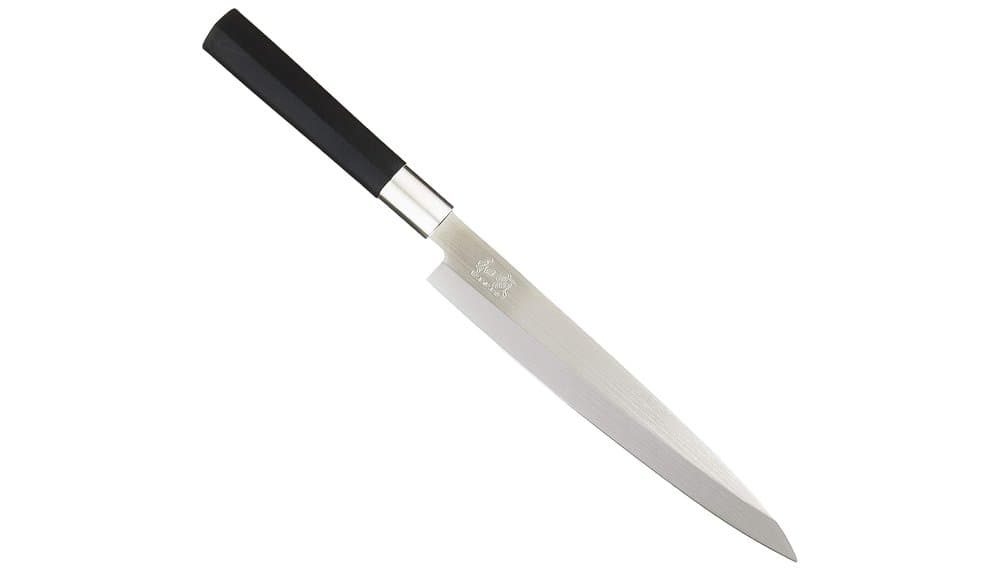
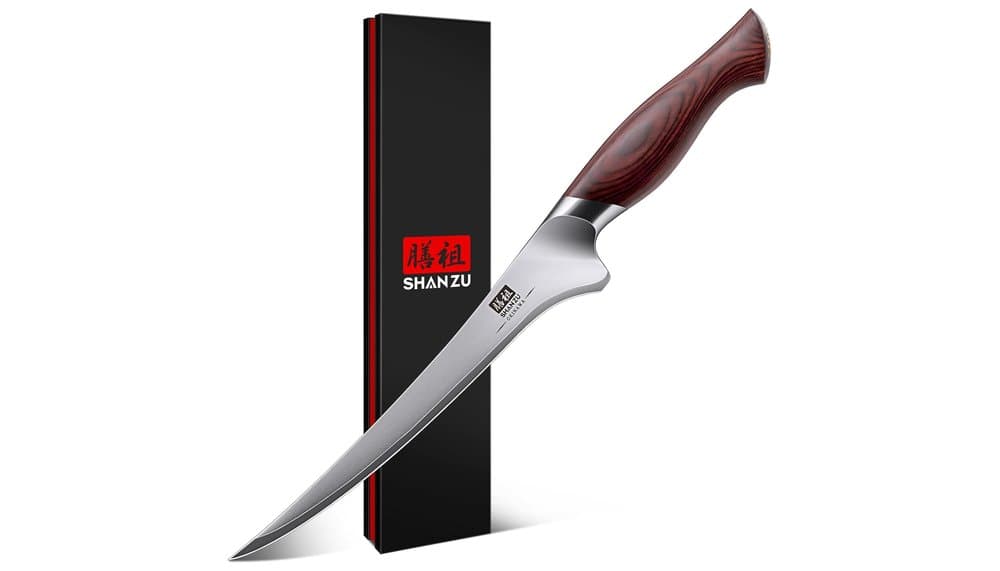
In the world of sustainable kitchen tools, some utensils are designed for a single job, but to do it perfectly. The SHAN ZU Professional 18cm Flexible Boning-Fish Fillet Knife falls into this category: a specialized knife whose sole purpose is to bone, fillet, and work with meat with surgical precision. On a site dedicated to durable culinary instruments, our goal is to dissect whether this specialized knife deserves its place in a kitchen arsenal designed to last a lifetime. We will evaluate it through the lens of materials, craftsmanship, ergonomics, and community feedback, always keeping in mind its role as a specialized tool.
I will start with the introduction, then move on to the strengths and weaknesses, followed by the detailed analysis, specifications, user reviews, and the conclusion. We must maintain a fluid tone and avoid repetitions.## Introduction In the analysis.## Introduction
In the world of kitchen knives, specialized blades often make the difference between laborious work and a task performed with elegance and efficiency. The SHAN ZU Professional 18cm Flexible Boning-Fish Fillet Knife belongs to this category of dedicated tools, promising to transform precise operations like boning or fish filleting. On a site that advocates a "buy it for life" philosophy, such a product must be scrutinized with particular rigor. Is it built to last for decades? Do its materials and design justify its integration into a serious kitchen collection? We will dissect this knife based on its technical specifications, feedback from a broad community of users, and expert analysis, to determine if it deserves its place in a durable culinary arsenal.
Strengths
- Exceptional factory sharpness: The blade is hand-sharpened to a 12° angle, a demanding standard that provides a razor edge straight out of the box, allowing for clean, precise cuts without initial effort.
- High-performance, well-treated steel: The core of Japanese 10Cr15MoV steel hardened to 62 HRC offers an excellent balance between edge retention and relative ease of future sharpening.
- Masterful flexibility: The blade's flexibility is not a defect, but a crucial functional characteristic. It allows the blade to perfectly follow the contours of bones and fish bones, minimizing meat waste.
- Ergonomics and careful finish: The Pakkawood handle is unanimously praised for its comfort, non-slip grip, and overall balance, reducing fatigue during prolonged use.
- High perceived value for money: The matte finish, laminated steel construction, and careful packaging give an impression of high-end quality that often exceeds its price positioning.
Weaknesses
- Extreme specialization: This is not a versatile knife. Its use should be restricted to boning, fish filleting, and fine slicing of meat. Any attempt to use it on hard vegetables or for hacking could damage the thin blade.
- Demanding maintenance: The thin blade and hard steel require meticulous care. Dishwasher use is prohibited, and regular sharpening on Japanese whetstones is required to maintain its performance, which may deter novices.
- Handle potentially short for some hands: Some feedback, particularly from people with large hands, indicates that the handle may be perceived as a bit short for a very enveloping grip during very long sessions.
- Durability conditional on proper use: Its "for life" longevity is intimately linked to respecting its intended purpose. Inappropriate use will prematurely dull the edge or could even cause micro-warping of the blade.
Detailed Analysis of the SHAN ZU Professional Fillet Knife
The Heart of the Blade: Steel, Hardening, and Construction
What interests us here is the very substance of the tool. SHAN ZU relies on 10Cr15MoV steel, often presented as a Japanese equivalent. It is a high-carbon stainless steel (approximately 0.65-0.75% carbon, 15% chromium, with additions of molybdenum and vanadium). This composition places it in a performance category, above basic steels like 1.4116/X50CrMoV15, but generally below high-end Japanese super steels like VG-10 or carbon steels (White Steel).
The announced Rockwell hardness of 62 HRC is a crucial point. It is in the high range for a kitchen knife, promising excellent edge retention. A blade at 62 HRC will resist dulling much longer than a blade at 55-56 HRC during appropriate use on soft tissue (meat, fish). However, this hardness has a downside: the steel becomes more brittle (less tough) and more difficult to sharpen for a beginner. Sharpening will need to be done with fine-grit stones and proper technique. The forged and laminated 5-layer (sandwich) structure offers central rigidity while potentially benefiting from anti-stick or aesthetic properties on the outer layers, although the matte finish partially masks this aspect.
See priceAnatomy and Ergonomics: The Science of Grip
The design of a fillet knife is an exercise in balance. The 18 cm blade is the ideal length for most common fish and butcher cuts. Its thinness and flexibility are its main functional assets. According to feedback, the flexibility is well-calibrated: sufficient to navigate around a bone, but not excessive to the point of lacking control near the heel.
The Pakkawood handle is a judicious choice from a "buy-it-for-life" perspective. Pakkawood, a composite of wood and resin, combines the appearance and warmth of wood with superior resistance to water, humidity variations, and shock compared to solid wood. It should neither swell nor crack with simple care (hand washing and drying). Users confirm that its ergonomic shape and smooth finish offer a secure and comfortable grip, even with wet or greasy hands, which is essential for working on animal products.
Performance and Versatility (or lack thereof)
It is imperative to refocus the analysis on this knife's role. Expert testers and informed enthusiasts agree: its performance in its field is excellent. It lifts fillets cleanly, separates flesh from bones without nicking them, and allows for very thin slices of meat. The factory edge, coupled with flexibility, makes these tasks intuitive.
However, the community consistently notes its versatility limit. This is not a chef's knife, a santoku, or a utility knife. Its use on hard products (squash, potatoes, hard cheeses) or for any twisting motion is not recommended and risks damaging it. Its long-term future depends entirely on respecting this specialization.
Durability and Maintenance: The "For Life" Pact
The durability of the SHAN ZU Professional 18cm Flexible Boning-Fish Fillet Knife is not innate; it is conditional. The materials – good quality steel, resistant handle – are there to last. But the pact with the user is clear: you treat me with respect, I serve you for years.
This implies:
- Immediate and manual cleaning after use, followed by careful drying. Never in the dishwasher.
- Secure storage, ideally in a block, sheath, or on a magnetic strip, to protect the ultra-sharp edge.
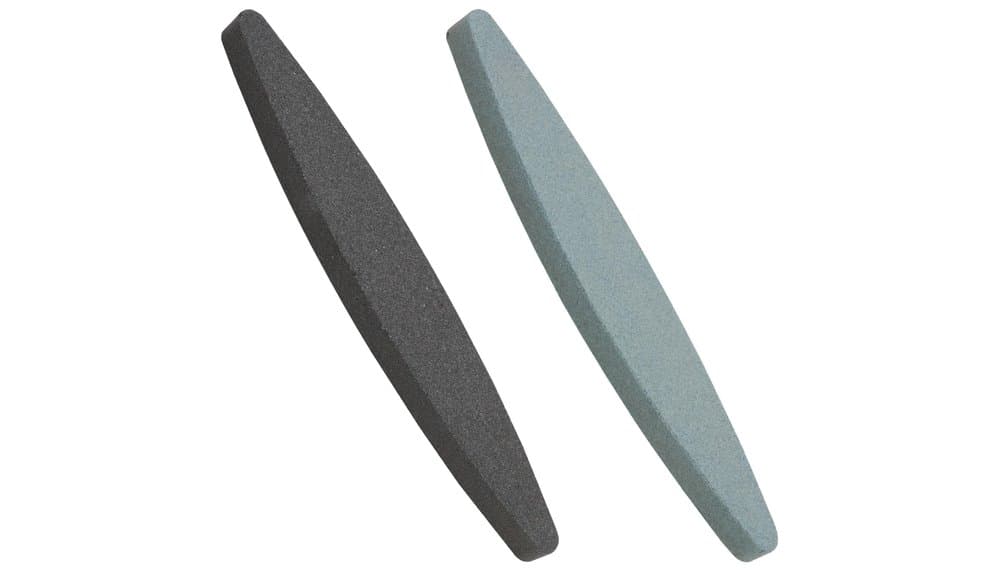
- Regular and competent sharpening. The 62 HRC steel will not dull quickly on fish, but it eventually will. It will then require quality whetstones (e.g., 1000/3000 grit) and the knowledge (to be acquired) to respect its original angle of 12-15 degrees per side. This is the price to pay for a durable edge.
Technical Specifications
| Characteristic | Detail |
|---|---|
| Model | SHAN ZU Professional Flexible Boning-Fish Fillet Knife |
| Blade Length | 18 cm |
| Blade Material | Japanese 10Cr15MoV steel (core), 5-layer laminated construction |
| Hardness (HRC) | 62 HRC |
| Sharpening Angle | ~12° per side (hand-sharpened) |
| Blade Profile | Thin, flexible, pointed tip |
| Blade Finish | Anti-glare matte surface |
| Handle Material | Pakkawood (composite wood) |
| Balance | Balanced towards the heel (according to user feedback) |
| Weight | Approximately 209 g |
| Maintenance | Hand wash only. Stone sharpening recommended. |
What Users Say: Synthesis of Customer and Expert Reviews
An analysis of nearly 900 customer reviews, with an average rating of 4.7/5, and feedback from online experts, reveals a very clear consensus.
Recurrent praise focuses on:
- Immediate sharpness: Words like "super sharp," "razor," "effortless cutting" constantly recur. Users are impressed with the cutting performance upon receipt.
- Perceived build quality: The finish, weight, balance, and aesthetics give an "impression of a high-end" and "professional knife."
- Handle comfort: The Pakkawood is described as "pleasant," "fits well in the hand," "non-slip." Its ergonomics is a major asset.
- Effectiveness for intended use: For filleting a sea bream, boning a chicken, or finely slicing a piece of beef, it is described as "perfect," "precise," and "efficient."
Frequent criticisms and warnings highlight:
- The necessity of rigorous maintenance: Several reviews remind users to "take care of it," "hand wash it," and plan to "sharpen it regularly."
- The knife's specialization: It is explicitly noted that it is a "specialized fillet/butcher knife," implying it should not be used for anything else.
- Handle size: A minority, but recurring, number of users with large hands find the handle "a bit short" or "just right" in width.
Cutlery experts, for their part, generally validate its market position: an excellent performance/price ratio in the category of flexible knives at the entry-level professional range, which however requires the user to be aware of its limits and maintenance needs.
Conclusion
The SHAN ZU Professional 18cm Flexible Boning-Fish Fillet Knife is a serious and convincing tool for the cook who understands its vocation. From a "buy it for life" perspective, it ticks several essential boxes: quality materials (10Cr15MoV at 62 HRC, Pakkawood), careful construction, and an ergonomic design that prevents fatigue. Its performance in its field – boning and filleting – is attested to by a large community of satisfied users.
However, its longevity is not automatic. It is the result of a demanding partnership with its owner. This knife is not a universal knife; it is a precision specialist. It will reward the user who reserves it for its designated tasks and who accepts the charge – rewarding for an enthusiast – of maintaining it manually and sharpening it correctly. If you are a lover of fresh fish, a home butchery enthusiast, and are willing to invest time in maintaining your tools, this knife represents a durable and high-performing choice. If you are looking for a single knife to do everything, look elsewhere. But if you are assembling a collection of quality specialized tools, the SHAN ZU fully deserves its place in the drawer.