Freelander Kiritsuke Knife Review and Performance Test
Freelander Japanese Kiritsuke Chef's Knife: A Comprehensive Analysis
The Freelander Japanese Kiritsuke Chef's Knife presents itself as a proposition combining Japanese aesthetics and technical performance at an affordable price. In a market saturated with promises, it is crucial to separate marketing from material realities and longevity. Here we analyze this knife from a "buy-it-for-life" perspective, dissecting its specifications, confronting user feedback, and evaluating its suitability for the demanding cook.
Introduction: The Kiritsuke, a Precision Tool
Traditionally, the Kiritsuke is a hybrid and versatile knife, reserved for experienced chefs. It combines the long straight blade of the Usuba (vegetable knife) with the tapered tip of the Yanagiba (sashimi knife), allowing for precise slicing and push-pull cuts. The Freelander model claims this heritage in a more accessible format. What interests us here is to determine whether this modern interpretation retains the essence of a durable and high-performing tool, or if it remains merely an aesthetic.
Strengths
Based on the specifications and feedback from the community, several strengths emerge for this knife.
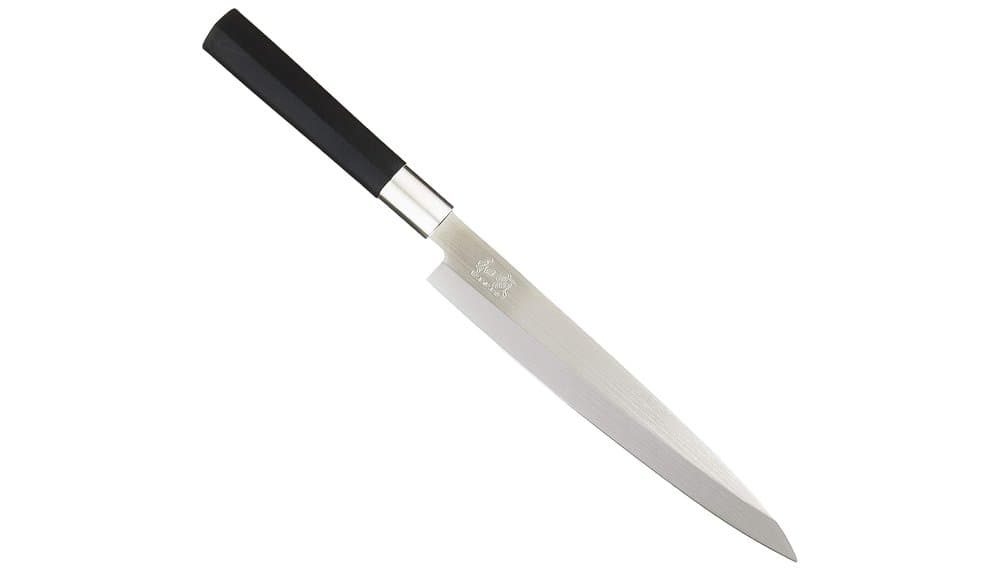
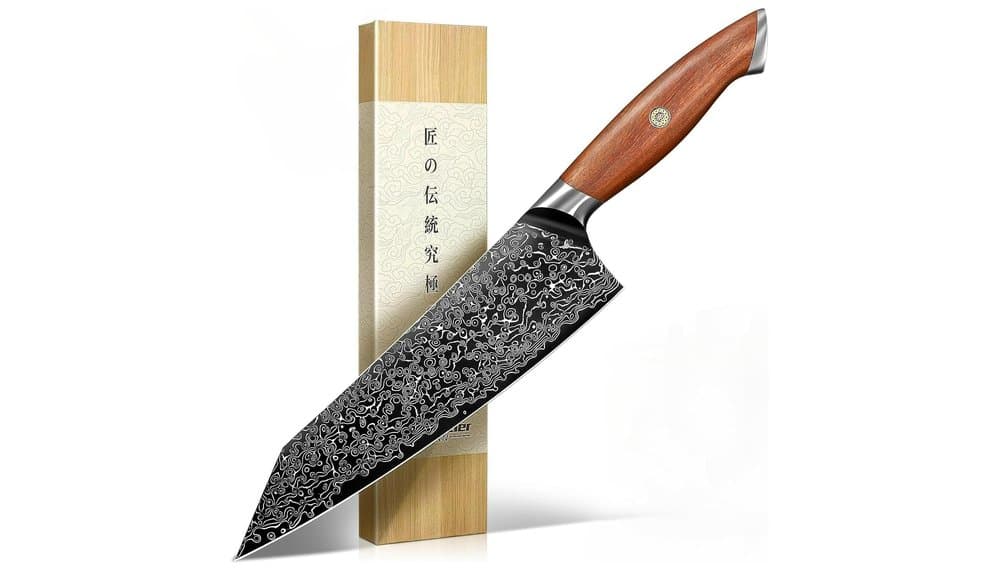
A Blade with Assertive Design and High-Performance Edge The forged VG-10 blade is a central point. This Japanese stainless steel is renowned for its excellent balance between hardness, edge retention, and corrosion resistance. With a typical announced Rockwell hardness around 60-61 HRC, it promises excellent edge retention and the ability to achieve a razor-sharp edge. The Damascus pattern is primarily aesthetic, providing a premium visual finish. The Kiritsuke geometry, with its long straight edge and fine tip, is designed for precision and push-pull movements.
Ergonomics and Balance Highlighted by Users The majority of customer reviews insist on two points: grip and balance. The ergonomically shaped wooden handle is consistently described as comfortable and stable, even during prolonged use. Testers emphasize that the knife is well-balanced, with a natural pivot point that reduces wrist fatigue. This indicates thoughtful design, crucial for a tool intended for intensive use.
Careful Presentation and Remarkable Factory Edge The knife arrives in an elegant gift box, reinforcing the perception of quality. More importantly, almost all users note that the knife is extremely sharp upon receipt, capable of slicing paper or tomatoes effortlessly. This initial sharpness testifies to good factory sharpening work.
Weaknesses
Despite its obvious qualities, some aspects deserve increased vigilance to assess its long-term durability.
Questions About the Actual Blade Construction The term "Damascus pattern" must be understood as a Damascus-type pattern, often achieved by acid etching or welding decorative layers onto a VG-10 steel core. It is not a traditional Damascus forged from multiple layers. The technical sheet mentions "Alloy Steel" as the blade material, which is vague. Although VG-10 is strongly suggested, the absence of certification or detail on the core thickness leaves an area of uncertainty about the product's real technical integrity.
Edge Longevity to Be Proven Over Time The high hardness (around 60 HRC) is an asset for edge retention, but it has a downside: the steel becomes more brittle. Experts emphasize that this type of blade is exclusively designed for cutting food products. Any contact with bones, hard pits, ceramic, or glass surfaces will inevitably chip the edge. Its longevity will depend entirely on its use and meticulous maintenance.
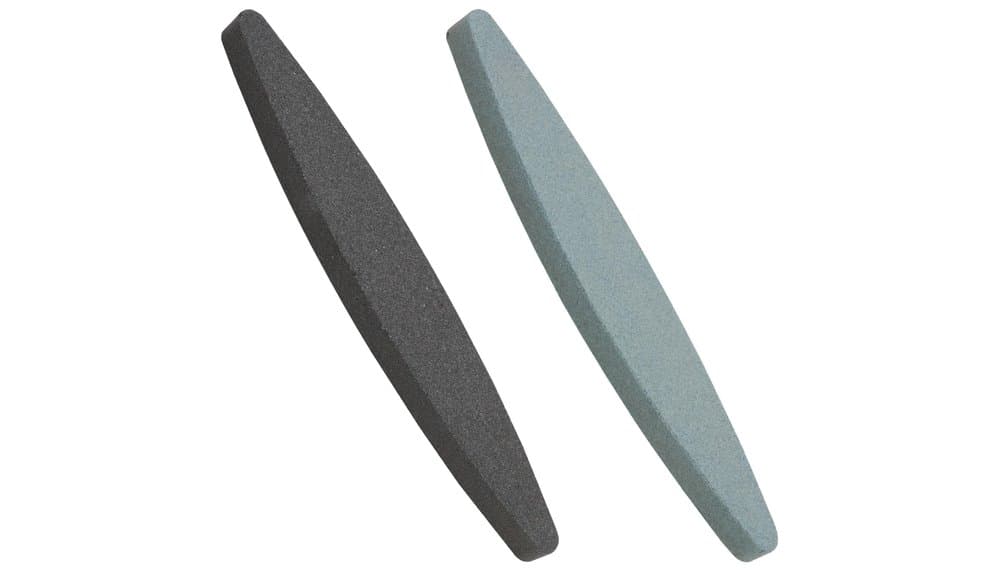
Sharpening That Will Require Skill When the edge eventually dulls, re-sharpening on a water stone will be necessary. Steel at 60+ HRC requires quality stones and proper technique. For the uninformed user, this step can represent a challenge and a risk of damaging the blade's geometry. This is not a knife that can simply be run on a classic honing steel.
See priceDetailed Analysis
Build Quality and Material Choices On paper, the specs announce a solid product. The use of VG-10 is a good sign, as it is a known and appreciated steel for its versatility. The wooden handle secured by rivets (visible in photos) is a durable construction, preferable to glued handles which can loosen over time. The "damascus" finish, although mainly decorative, helps reduce food sticking to the blade. The community notes that the knife has a "dense" and "well-finished" feel, with no play between the handle and the blade.
Cutting Performance and Ergonomics Feedback is unanimous on initial performance: the knife cuts with disconcerting ease. The long straight blade (about 20 cm) is ideal for clean slicing of cooked meats, fish, and for vegetables. Its profile makes it less suited for the "rocking" motion typical of Western chef's knives; it rather favors a push-pull or vertical slicing motion. Its weight and balance, often located just in front of the handle, provide a feeling of control that is appreciated.
"Buy-It-For-Life" Potential The potential is there, but conditional. The VG-10 steel core is capable of lasting decades if well treated. However, this status depends entirely on the user:
- Exclusive Use: For soft to firm foods only. Never for cutting bones, frozen items, or using as a lever.
- Rigorous Maintenance: Immediate hand washing and thorough drying to preserve the wooden handle and avoid any corrosion (even on stainless steel, stains can appear).
- Expert Sharpening: The user must be willing to learn to use water stones or regularly entrust the knife to a professional.
Target Audience: Who Is It For? This knife is perfectly suited for the passionate home cook who understands and respects Japanese knives. They seek exceptional sharpness, appreciate aesthetics, and are willing to care for it. It is an excellent choice for those who already master the basics of sharpening and want to move to a precision tool. On the other hand, it will frustrate someone looking for a carefree "do-it-all" knife, to throw at a chicken bone or wash in the dishwasher. It is also not a tool for professional kitchen work requiring more resilient steel or ultra-fast sharpening on a stone.
Recap Technical Specifications
| Feature | Freelander Kiritsuke Detail |
|---|---|
| Blade Type | Kiritsuke (hybrid chef/sashimi) |
| Total Length | ~31 cm (blade ~20 cm) |
| Blade Material | VG-10 Steel (stainless) with Damascus pattern |
| Estimated Hardness (HRC) | ~60-61 (standard for VG-10) |
| Edge Type | Double bevel (50/50) |
| Construction | Forged blade |
| Handle Material | Wood (type not specified) |
| Handle Attachment | Full tang with rivets (probable) |
| Weight | 450 g |
| Maintenance | Mandatory hand wash, immediate drying |
What Users Say: Trends and Field Feedback
The synthesis of customer reviews (primarily French and German speaking) reveals clear trends.
Recurring Positive Points:
- Exceptional Sharpness Upon Receipt: "Tomato sliced thinly without effort", "passes the paper test without a problem".
- Comfort and Balance: "Fits perfectly in the hand", "perfect balance", "ergonomic handle".
- Finish and Aesthetics: "Beautiful presentation in gift box", "product that looks quality", "beautiful damascus pattern".
- Perceived Value for Money: Often described as "excellent" or "unbeatable" for the offered performance.
Points of Caution or Negative Aspects:
- Excessive Packaging: Some note unnecessary overpackaging (plastic film).
- Questions on Damascus Authenticity: One user expresses doubt ("Ob es nun wirklich ein Damastmesser ist sei dahingestellt" – "whether it's really a Damascus knife remains to be seen"), confirming the pattern is perceived as mainly aesthetic.
- Isolated Delivery Incident: One reported case of an opened parcel and missing product (logistical problem, not related to the product itself).
Community Verdict: The consensus is extremely favorable, with an average rating of 4.4/5. Users seem delighted by the cutting performance and feel in hand, often exceeding their expectations for the price. Reservations concern peripheral aspects (packaging) or technical ones (nature of the damascus), but not the basic functional performance.
Conclusion
The Freelander Japanese Kiritsuke Chef's Knife is a surprising success in its segment. According to massive feedback, it offers the tangible experience of a high-performance Japanese knife: an aggressive edge, careful ergonomics, and refined aesthetics. Its use of credible VG-10 steel and a forged construction gives it serious longevity potential.
However, one must not be mistaken: this is not an indestructible tool. Its hard steel demands respect and meticulous maintenance. It perfectly embodies the conditional "buy-it-for-life" compromise: it will last a lifetime if and only if its owner uses it as a precision instrument and not as a brute force tool.
For the knowledgeable home cook looking to add a sharp and elegant specialty blade to their arsenal, and who is ready to assume its maintenance, the Freelander Kiritsuke represents a very convincing and apparently justified choice. For those who want an all-purpose knife to mistreat, they should continue their search.