SHARPAL 145H Diamond Stone Review & Test
Introduction
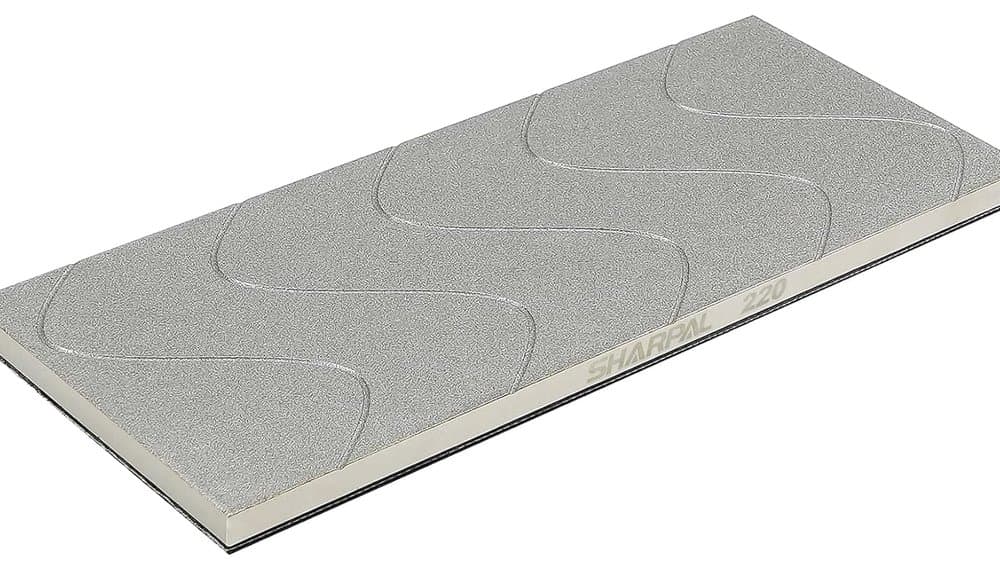
In the world of sharpening tools dedicated to Buy It For Life, one category is essential for maintaining the others: flattening stones. A water stone sharpener, no matter how high-end, loses all its effectiveness if its surface is not perfectly flat. This is where the SHARPAL 145H Diamond Flattening Stone comes in. Marketed as an economical and high-performing tool for stone maintenance and coarse sharpening, the question is whether its technical promises and price-to-performance ratio make it a lasting tool for the serious cook or demanding artisan. Our analysis focuses on its ability to last, its materials, and its suitability for a long-term investment philosophy.
Strengths
- Advertised Precision Flatness: The key specification for a flattening stone. The specs announce a lapped flatness of +/- 0.05 mm, a level which, if respected, is professional-grade.
- Generous Work Surface: With its 254 mm length by 101 mm width, it offers 60% more surface area than many standard models. This is crucial for efficiently flattening large water stones and for the comfortable sharpening of wide blades or tools.
- Premium Cutting Material on Paper: The use of single-crystal diamonds in 220 grit (extra coarse) promises superior aggressiveness and durability compared to traditional abrasives like silicon carbide.
- Ready-to-Use Design: Thanks to its electroplating technology, the stone requires no break-in period. It is usable immediately, simplifying adoption for beginners.
- Improved Stability: The non-slip rubber base is an essential detail for safety and precision during work that requires pressure.
Weaknesses (Potential)
- Variable Quality Control: A crucial point raised by the community. For a tool whose very reason for being is flatness, reports exist of units that may not be perfectly flat upon receipt. This is a critical flaw.
- Questionable Coating Durability: Although diamond is the hardest abrasive, the method of fixing it to the substrate is paramount. Testers and users note that the coarse side can show signs of premature wear if used intensively to flatten very hard synthetic or natural stones.
- Marginal Size for Certain Knives: Although large for flattening, its 10 cm width can be considered a bit narrow for the comfortable and safe sharpening of very long chef's knives, where a wider plate would offer better stability.
- Debris Generation: Like any diamond stone used dry or with little water, it can produce messy metal slurry that requires post-work cleanup.
Detailed Analysis: A Durable Investment?
Here, we dissect the elements that make a "Buy It For Life" tool. The SHARPAL 145H presents a mix of impressive specifications and user experiences that invite nuance.
Construction and Materials: Theory vs. Practice On paper, the materials are excellent. Single-crystal diamonds offer each grain as a single, extremely hard and sharp crystal, meant to break down in a controlled manner to reveal new cutting edges. This is a significant theoretical advantage over polycrystalline diamonds or silicon carbide. The nickel-plated steel substrate and dense rubber base speak to a thoughtful design. However, the quality of assembly – particularly the uniform and durable fixing of the diamonds – appears to be the critical point. The expert sharpening community emphasizes that this is often where economical brands differ from market leaders like DMT or Atoma. Longevity is less about the hardness of the diamond than about the strength of the binder that holds it.
Performance: Flattening and Sharpening Its primary function is flattening water stones, natural or synthetic, including high-grit Japanese stones. User feedback confirms it fulfills this mission effectively, especially in a domestic or semi-professional setting. The large surface area significantly speeds up the work compared to smaller models. For sharpening, the 220 grit is ideal for reprofiling very dull edges, repairing chips, or working with modern hard steels (VG-10, AUS-10, powder steel) that resist traditional stones. Testers note that its cut is fast and aggressive.
Ergonomics and Daily Use Ergonomics are mainly dictated by its size and stability. The large surface allows for working with two hands during flattening, distributing the effort. The rubber base works: it firmly holds the stone on a wet work surface. For knife sharpening, the format remains usable, although purists will prefer a dedicated, even wider plate for long knives. It is a tool designed to be used with water, which reduces dust and cools the abrasive, a good practice for its longevity.
Verdict on "Buy It For Life" The SHARPAL 145H positions itself as a smart compromise rather than an ultimate tool. For the passionate cook who maintains a few good stones and their knives, it is a very capable tool that can last for many years, provided one receives a perfectly flat unit and uses it with care (always with water, avoiding excessive pressure on the edges). For the professional who flattens stones daily or the demanding sharpener seeking the definitive tool, the questions about coating longevity and the consistency of quality control can be deal-breakers. In that case, the higher initial investment in a premium brand may prove more economical over several decades.
Technical Specifications
| Characteristic | Detail |
|---|---|
| Product Name | SHARPAL 145H Diamond Flattening Stone |
| Grit | Extra Coarse (220) |
| Abrasive Size | 60 microns |
| Abrasive Material | Single-crystal diamonds |
| Surface Technology | MirrorFlat (uniform distribution) |
| Dimensions (L x W x H) | 254 x 101 x 12 mm |
| Weight | 1.84 kg |
| Advertised Flatness Precision | +/- 0.05 mm |
| Base | Non-slip rubber |
| Usage | Dry or with water |
| Applications | Flattening sharpening stones (natural/synthetic), coarse sharpening, reprofiling |
What Users and Experts Say
A synthesis of 154 customer reviews (with an average rating of 4.8/5) and analyses from the expert sharpening community reveals a nuanced consensus.
The praise is recurring:
- Immediate Effectiveness: Users are unanimous about its effectiveness in flattening water stones, even high-quality ones like Naniwa. "Works perfectly," "quick work" are typical comments.
- Perceived Excellent Value for Money: Many compare it favorably to more expensive brands for occasional or moderate use, finding it offers very decent performance for a lower investment.
- Large Surface Appreciated: The size is consistently cited as a major advantage for the comfort and speed of flattening.
Reservations and criticisms focus on specific points:
- Lottery on Flatness: This is the most frequently reported issue outside of simple reviews. Some buyers have received stones with a perceptible flatness defect, which is unacceptable for the intended use. This suggests variable end-of-line quality control.
- Questions About Durability: Several experienced testers on specialized forums caution against accelerated wear of the diamond coating, particularly on the coarse side, if used intensively on hard stones. It is not the recommended tool for a professional sharpening workshop.
- Messy Use: The importance of using water is emphasized to contain metal residue, otherwise difficult to manage.
The advice that often comes back is this: for domestic use or for starting out in maintaining one's stones, the SHARPAL 145H is a very valid and economical choice. For intensive or professional use, it is better to consider this purchase as an intermediate solution and budget accordingly for potentially faster wear, or to turn directly to products with an established pedigree of durability.
Conclusion
The SHARPAL 145H Diamond Flattening Stone is a tool that perfectly embodies the principle of "very good value for money." Its technical specifications are ambitious and, when respected by quality control, it delivers effective and precise work. For the serious cook or sharp tool enthusiast who wants to keep their set of sharpening stones in perfect condition without breaking the bank, it represents a very convincing and largely sufficient solution.
However, our analysis forces us to distinguish it from a truly "Buy It For Life" tool in the strictest sense. Reports of premature coating wear and the lottery on initial flatness introduce doubt about its extreme longevity under an intensive workload. It is the ideal equipment for the demanding but occasional user, who, with a bit of luck in the quality control draw, will obtain a long-term companion for their workshop. For those whose use would be daily and professional, it can be seen as an economical entry point, knowing that the next step will likely be an investment in a diamond plate from a brand renowned for its absolute reliability over the very long term.