VICTORIA La Calaca Enamelled Cast Iron Skillet Review
Introduction: The Union of Art and Craftsmanship
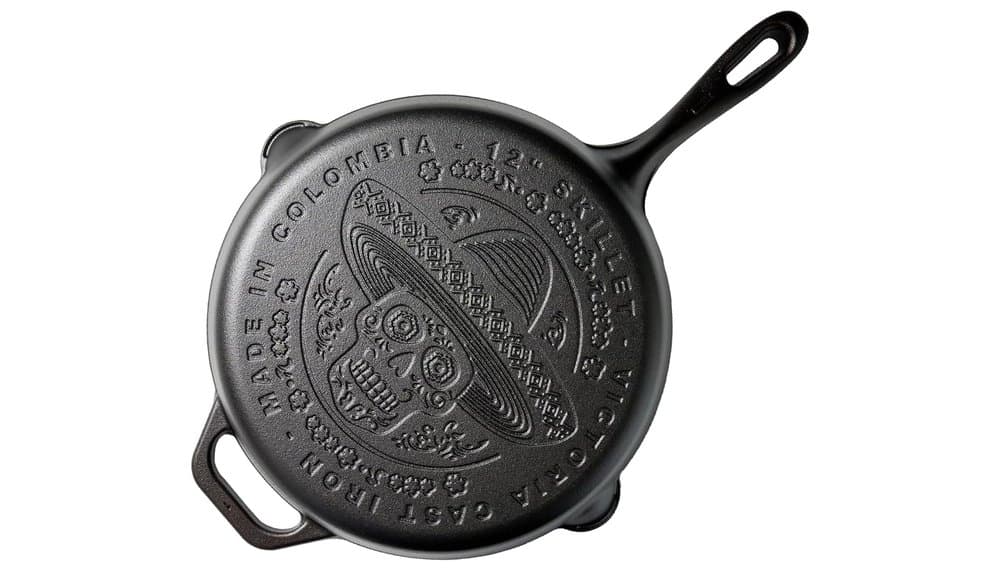
On a site dedicated to culinary tools designed to last, we examine objects that stand the test of time through their performance and robustness. The VICTORIA Day of the Dead La Calaca Enamelled Cast Iron Skillet holds a special place in this landscape. It is not just a cooking utensil; it is a collector's piece, an artistic tribute to the Día de los Muertos tradition. But beyond its striking decoration, what is it really worth for the serious cook seeking professional and durable equipment? This technical and practical analysis dissects its specifications, confronts user feedback, and evaluates its legitimacy as a lifelong investment.
Strengths: Versatility, Health, and Heritage
An Iconic and Durable Design
The most immediate asset is its "La Calaca" enamelled design. According to the manufacturer and feedback, this enamel is not a simple sticker; it is vitrified at high temperature onto the cast iron. This means the pattern is integrated into the protective layer, offering wear resistance similar to that of high-end enameled cast iron Dutch ovens. For the user, it's a product that escapes the austerity of raw cast iron without sacrificing durability.
Healthy Materials and Robust Construction
The heart of the utensil is recycled raw cast iron, a classic buy-it-for-life material. The interior white (on the enameled version) or black enamel is presented as free of PTFE, PFOA, and heavy metals. This eliminates the risks associated with degraded synthetic coatings and meets a growing demand for healthy cooking. The cast iron itself is inert and non-toxic, and the enamel acts as a permanent barrier against rust.
Thermal Performance and Absolute Versatility
Like any good cast iron, it excels in heat retention and distribution. Testers emphasize that once hot, it maintains a stable temperature, ideal for perfect searing and slow oven cooking. Its compatibility is total: induction, gas, electric, ceramic glass, oven (no indicated temperature limit), barbecue, and even campfire. This versatility makes it a unique tool for the entire household, from the cooktop to camping.
Weaknesses: The Compromises of Enameled Cast Iron
Weight and Handling
At 3.7 kg empty, this 30 cm skillet demands respect. For users, this is the main compromise. It requires good wrist strength, particularly for pouring preparations or moving it from one heat source to another. The long wooden handle helps but does not eliminate the sensation of mass, a point to consider for cooks with limited physical resources.
Enamel Sensitivity
The enamel, though hard, is not indestructible. The consensus among experts and users is clear: it fears violent thermal shocks (moving from a scorching oven to cold water) and scratches from metal utensils. Its non-stick power is inferior to that of a perfectly seasoned raw cast iron skillet. It requires gradual preheating and the use of fat for optimal cooking without sticking.
See priceSpecific Maintenance
Although presented as easier than raw cast iron (no rust possible), it is not as forgiving as a Teflon pan. Hand washing is recommended to preserve the integrity of the surface in the long term. Some notes in the product description are contradictory (mentioning both "dishwasher safe" and "not suitable for the dishwasher"), but caution leans towards gentle hand washing.
Detailed Technical Analysis
Materials and Manufacturing
The technical datasheet is explicit: cast iron. This is not a light alloy or triple-ply steel. It is the traditional material: thick, dense, and with high heat capacity. The VICTORIA brand, with its history since 1939 in Colombia, highlights manufacturing based on a circular economy (recycled cast iron). This is an important point for a sustainable purchasing approach. The enamel is a layer of fused glass; its quality determines resistance to stains and micro-cracks.
Culinary Performance
On paper, the specifications promise even heat distribution. In practice, feedback confirms that heat spreads well, although preheating must be more patient than with an aluminum pan. Its great strength is thermal stability: it does not cool down when food is added, which is crucial for a perfect steak or grilled vegetables. The presence of two pouring spouts is a practical and appreciated detail for such a heavy utensil, allowing sauces to be poured without incident.
Durability and "Buy-It-For-Life" Philosophy
This is where the product truly shines. Quality enameled cast iron, with no moving parts or synthetic coating, has a potentially multi-generational lifespan. The enamel removes the only weakness of raw cast iron: maintenance against rust. Provided basic rules are respected (no thermal shocks, no sharp metal utensils), there is nothing that can wear out or functionally degrade. The implicit lifetime guarantee of this type of product is its inertness and solidity.
Technical Specifications
| Characteristic | Detail |
|---|---|
| Diameter | 30 cm |
| Weight | 3.7 kg |
| Capacity | 3.1 Litres |
| Main Material | Enameled Cast Iron |
| Handle Material | Wood (secured by bolt) |
| Compatible With | Induction, Gas, Electric, Ceramic, Oven, Barbecue, Campfire |
| Interior Coating | Vitrified Enamel (black or white depending on model) |
| Health | PFOA Free, PTFE Free |
| Maintenance | Hand washing recommended |
| Manufacturing Origin | Colombia |
What Users and the Community Say
Customer reviews, with an average rating of 4.7/5 stars, paint a very consistent picture of the product. We extract the strong trends.
Recurrent praise focuses on:
- Aesthetics and unique design: The "La Calaca" decoration is the primary reason for satisfaction, transforming the utensil into a conversation piece.
- Perceived construction quality: Users describe a solid, flawless skillet with careful finishing. The fact that it is made in Colombia and not in China is often seen as a mark of quality.
- Versatility: Its use on all heat sources, including outdoors, is highly praised.
- Relative ease of cleaning: Compared to raw cast iron, many note that it is simpler to wash and dry without worry.
Practical criticisms and remarks:
- Weight: This is the most frequently cited drawback. The skillet is heavy, which can discourage easy handling.
- The need to learn its use: Several note that the non-stick property is not immediate or magical. You must preheat over medium heat, use enough fat, and avoid turning food too early.
- Questions about flatness: One user notes that the bottom may not be perfectly 100% flat, which could affect optimal contact on the most sensitive induction hobs, although this does not seem to be a widespread problem.
- Enamel maintenance: The community reminds that the enamel must be treated with care, like that of a cast iron Dutch oven, to avoid chipping.
Conclusion: A Tool of Character for the Patient and Aesthetically-Minded Cook
The VICTORIA Day of the Dead La Calaca Enamelled Cast Iron Skillet is a product that transcends its utilitarian function. From a purely technical buy-it-for-life perspective, it ticks all the boxes: indestructible material (cast iron), simple construction, universal compatibility, and unlimited lifespan under normal use. It brings the unmatched thermal performance of cast iron without the obligation of constant seasoning.
However, it is not the ultimate and universal tool. Its substantial weight and the need to adopt a cooking technique adapted to cast iron (slow preheating, heat management) make it a demanding utensil. It will suit the passionate cook who values thermal stability for grilling, sautéing, and finishing in the oven, and who is ready to tame its behavior.
Ultimately, its purchase is justified on two levels: as a durable performance tool for the one seeking a single skillet for decades, and as a culinary art object for the one who believes beauty also has its place in a serious kitchen set. It is not the fastest or lightest skillet, but in absolute terms, it is probably one of those that will remain in your kitchen the longest, and perhaps even in your children's.