YOSUKATA 34cm Flat Bottom Wok Review & Test
Introduction
In the realm of serious cookware, the wok is not simply a pan: it is the extension of the cook's fire and technique. For those seeking a professional, durable, and high-performing tool, the choice of material and construction is paramount. The YOSUKATA 123 34 cm Flat Bottom Wok Pan positions itself as a serious contender in this category. It promises the authenticity of a carbon steel wok, universal compatibility thanks to its flat bottom, and construction built to last. Here, we will dissect this product from the demanding perspective of "buy it for life", analyzing its specifications, cross-referencing community feedback and expert observations, to determine if it deserves a place in a high-end kitchen arsenal.
Key Strengths
Based on technical data and a synthesis of feedback, several major strengths emerge for the YOSUKATA.
Robust Construction from Quality Carbon Steel: This is the heart of the product. Unlike stainless steel or aluminum, pure carbon steel is the traditional and preferred material of professional woks. It combines excellent heat retention with very fast thermal reactivity, essential for high-heat stir-frying where temperature control is crucial. Its thickness, or gauge, of 1.5 mm to 2 mm depending on sources, gives it appreciable thermal inertia without making it excessively heavy, a balance often highlighted.
Versatility and Total Compatibility: The flat bottom is the key element that transforms a traditional wok, designed for a powerful gas burner, into a tool adapted to the modern domestic kitchen. It ensures optimal and stable contact on induction, ceramic glass, electric, and of course gas cooktops. This universality is a decisive advantage for most home cooks.
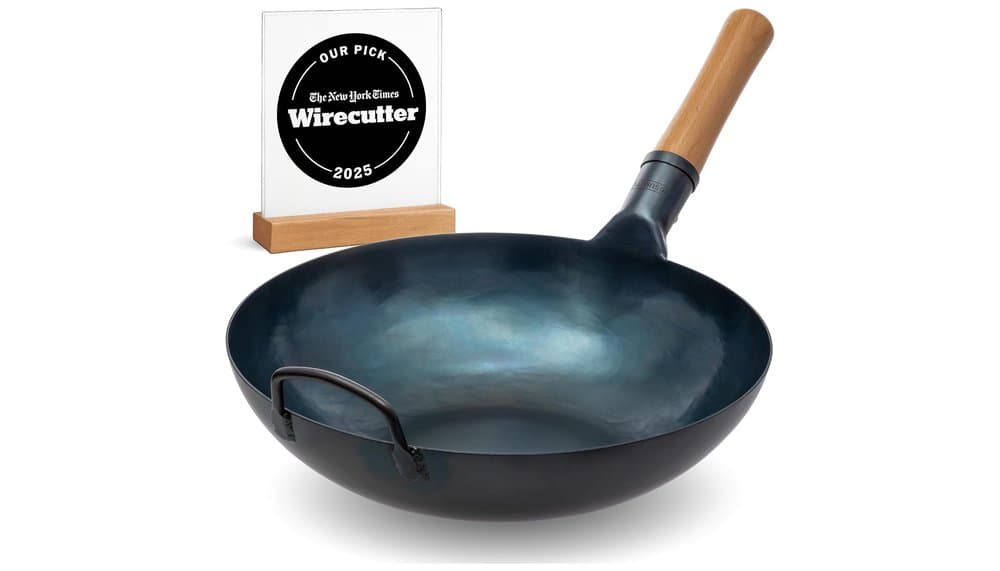
Practical Heat Treatment and Pre-Seasoning: The characteristic blue color is not a simple coating. It is the result of an oxide heat treatment (the "blueing" process) performed at high temperature (beyond 315°C/600°F). This treatment provides a first layer of protection against rust and serves as an excellent base for personal seasoning. The fact that it is delivered pre-seasoned allows, theoretically, for quick start-up cooking after a simple application of oil.
Well-Designed Ergonomics and Balance: The presence of a long wooden handle fixed by welding (avoiding screws that could loosen) and a secondary helper handle in steel is consistently praised. The wood stays cool and offers a firm, comfortable grip, even during prolonged use. The overall balance, despite the weight, is considered good.
Weak Points
No perfect tool exists, and the YOSUKATA wok reveals some limitations, mainly related to the very nature of carbon steel and certain user expectations.
Learning Curve and Demanding Maintenance: This is the most critical point. Carbon steel is not naturally non-stick; it becomes so through carefully developed and maintained seasoning. Negative reviews, often strong, almost exclusively come from users who experienced a rust or sticking problem from the very first use. This indicates either a lack of knowledge of the required maintenance (immediate and thorough drying, light oiling), or a sensitivity of the factory pre-seasoning which can prove too superficial for some.
Weight and Maneuverability for Some: Weighing 2.72 kg (approx. 6 lbs) empty, this 34 cm wok is a substantial tool. While its capacity (about 5 liters/quarts) and cooking surface are assets for a family, its weight, once loaded, can make it difficult to handle with one hand, particularly for tossing motions. Some users find it "a bit heavy" or cumbersome on a small countertop.
Sometimes Light Factory Seasoning: Several testers and expert reviews agree: the pre-seasoning is a good starting point, but it is highly recommended, even necessary, to perform several thorough personal seasoning cycles before an intensive first use. Those who skipped this step sometimes saw the blue patina come off or experienced sticking issues.
Detailed Analysis
Now, let's dive into the analysis of the characteristics that make this wok a "buy-it-for-life" object or not.
Material and Construction: The Guarantee of Durability
The choice of carbon steel is, unequivocally, that of durability and culinary performance. Unlike Teflon coatings that wear out, a well-maintained carbon steel piece improves with time. Its patina, its seasoning, becomes darker, stronger, and more non-stick with each use. The so-called "hand hammered" construction is not just aesthetic; it allows for a subtly irregular heat distribution, which, paradoxically, is beneficial in a wok by creating micro-zones of different temperatures. The welding of the main handle eliminates a potential point of failure. On paper, the manufacturing inspires confidence for a lifespan of several decades.
See priceThermal Performance and Reactivity
This is where carbon steel excels. Testers and experts highlight its ability to heat up very quickly and reach very high temperatures, essential for the wok hei technique (the "breath of the wok"). The flat bottom ensures good transmission on electric stovetops, while the flared shape allows heat to climb the sides. Heat distribution is judged to be even and efficient, without excessive hot spots that would burn food. Its high heat capacity also allows for deep frying with remarkable temperature stability.
Ergonomics and Long-Term Handling
Ergonomics is a crucial dimension for a tool used daily. The community notes that the wooden handle is well-sized, comfortable, and does not transmit heat, even during long cooking sessions. The secondary helper handle, although metal and potentially hot, is deemed indispensable for lifting and handling the wok safely, especially when full. The balance between the two grip points is well calculated. For extended cooking sessions, this configuration seems to reduce fatigue compared to a wok with two small loop handles.
Seasoning Potential and Non-Stick Properties
This is the point that separates satisfied users from disappointed ones. Seasoning is not a coating; it is a polymer of carbonized oil that bonds to the metal surface. The blue heat treatment of the YOSUKATA offers an excellent micro-texture for this layer to adhere. Users who took the time to re-season the wok carefully (multiple layers of high-smoke-point oil, like flaxseed or grapeseed oil, heated to the smoking point) report exceptional and durable non-stick performance. Those who used the pre-seasoning as-is sometimes had disappointments. The conclusion is clear: this wok rewards the initial preparation effort.
Technical Specifications
| Characteristic | Detail |
|---|---|
| Model | YOSUKATA 123 Flat Bottom Wok Pan |
| Diameter | 34 cm (13.5 inches) |
| Body Material | Carbon Steel |
| Thickness (Gauge) | Approximately 16 gauge (about 1.5 mm) |
| Surface Treatment | Blue Heat Treatment (Blueing) and Pre-Seasoning |
| Bottom | Flat |
| Compatibility | Induction, Gas, Electric (coil and glass/ceramic), Open Flame |
| Weight | 2.72 kg (approx. 6 lbs) |
| Capacity | 5.2 quarts (approximately 5 liters) |
| Main Handle | Wood, Fixed by Welding |
| Helper Handle | Steel |
| Maintenance | Hand wash only, immediate drying |
What Users and Experts Say
An analysis of thousands of customer reviews and available expert feedback reveals very clear trends.
Recurrent praise revolves around the perceived build quality ("very solid," "nice finish," "very good product"), versatility ("works perfectly on induction"), and cooking performance once well seasoned ("doesn't stick at all anymore," "heats up quickly and well"). Informed and patient users, who understand the maintenance process for carbon steel, are extremely satisfied and consider it a buy-it-for-life purchase.
The main criticisms are polarized. A significant minority (represented by 1-star reviews) reports problems with early rust or the blue treatment peeling from the first use. A careful reading reveals that these incidents are almost systematically linked to: an initial abrasive cleaning, insufficient drying, or an attempt to cook acidic or watery food (like a beef with onions with a lot of juice) without a sufficiently robust prior seasoning. Other criticisms concern the weight ("a bit heavy to handle") and size ("too big for my burner"), which are more matters of suitability to need than manufacturing defects.
Culinary experts and testers reinforce these points. They confirm that the YOSUKATA is above average for low-end woks due to its thickness and finish. They emphasize the importance of investing time in the initial seasoning and accepting the inherent learning curve of carbon steel. They generally recommend it as an excellent choice for the serious home cook ready to commit to the maintenance of their tool.
Conclusion
The YOSUKATA 123 34 cm Flat Bottom Wok Pan is not a plug-and-play kitchen utensil. It is a professional tool that demands a minimum of knowledge and commitment from its owner. Its quality carbon steel, robust construction, and universal compatibility make it an exceptionally performant and durable cooking platform, potentially for a lifetime.
However, it will not suit those seeking the absolute simplicity of a standard non-stick coating. Its true potential is only expressed after a phase of careful appropriation and seasoning. Negative feedback, though a minority, is a stark reminder of this requirement.
For the serious, passionate cook who understands that the best tools require a partnership with the user, the YOSUKATA therefore represents an excellent investment. It offers the reactivity, power, and durability of restaurant woks, adapted for the home kitchen. If you are ready to learn its language – gentle cleaning, meticulous drying, and the art of developing its patina – this wok will repay you a hundredfold in culinary performance and longevity.