32nd CI GriddlePlate Reversible Cast Iron Griddle Test
Introduction
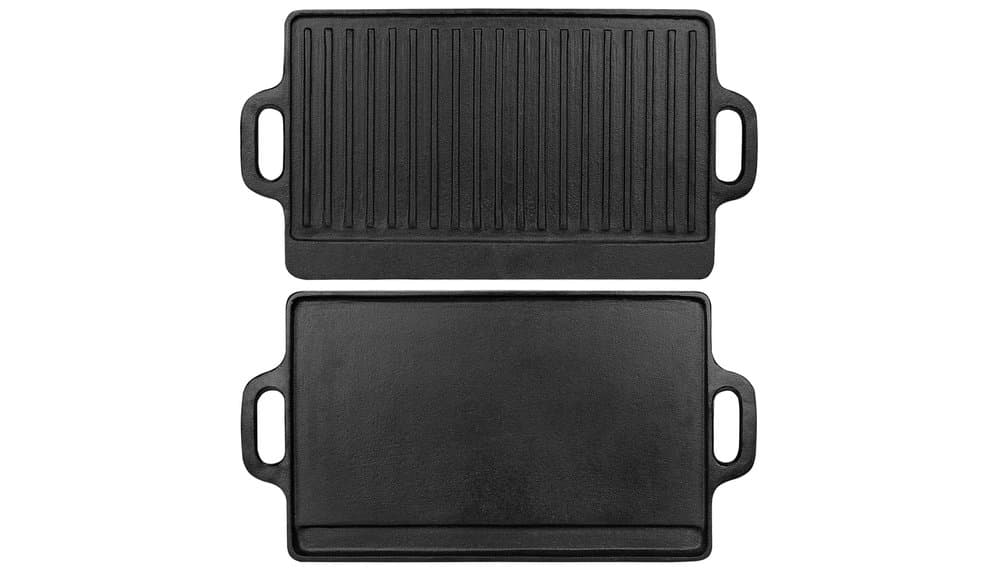
In the universe of durable cookware, cast iron holds an iconic place. It embodies robustness, thermal inertia, and that unique ability to improve with age, provided it is well cared for. The 32nd CI GriddlePlate Reversible Cast Iron Griddle presents itself as a modern and versatile iteration of this timeless material. It is a reversible cooking griddle, a simple but powerful concept: one flat side, one ridged side, all in a single block of cast iron. On paper, this piece promises to cover a wide spectrum of cooking, from classic grilling to an American-style breakfast. But in practice, how does it perform against the demands of the exacting cook and from a buy-it-for-life perspective? This is what we will analyze, not through direct testing, but by deciphering its specifications, cross-referencing community feedback and general knowledge about working with cast iron.
Strengths and Weaknesses
Strengths
- Maximum versatility: The reversible design is its main asset. One griddle for two distinct functions, switching from steaks with grill marks to smash burgers or perfectly smooth pancakes.
- Universal compatibility: According to its specifications, it is compatible with all types of cooktops: gas, electric, induction, and even barbecue. This adaptability makes it a tool as relevant indoors as outdoors.
- Intrinsic thermal performance: Like any good cast iron product, it offers exceptional heat retention and distribution. Once up to temperature, it maintains a constant, even heat, ideal for searing.
- Durable construction: The cast iron material is, by nature, virtually indestructible if properly maintained. It resists impacts and very high temperatures.
- Natural non-stick potential: With careful and regular seasoning, the griddle develops a natural patina that improves its non-stick performance over time.
Weaknesses
- Weight and maneuverability: At 3 kg, the griddle is heavy and cumbersome. Handling it, especially when hot and needing to be flipped, requires caution and a good grip.
- Demanding maintenance: Like any unenameled cast iron, it is prone to rust if maintenance is neglected. Immediate and complete drying is imperative.
- Inconsistent quality control: User reports mention flatness issues upon arrival (warping) and, in rare cases, cracking during the first heating. This suggests variations in quality control or the casting process.
- Learning curve: Mastering the preheating (which can be lengthy), temperature management, and specific maintenance requires moving away from habits associated with modern coated cookware.
Detailed Analysis of the 32nd CI GriddlePlate
Materials and Construction: The Foundation of Durability
The heart of this product is cast iron. Unlike carbon steel, which is lighter and more reactive, or alloyed stainless steels, cast iron is a dense, porous material with average thermal conductivity but remarkable thermal inertia. It is this mass that allows it to store a large amount of heat and release it steadily, even when cold food is placed on it. This is the key to achieving a beautiful Maillard crust.
On paper, the construction seems simple: a single casting. The critical question for this type of product is the homogeneity and flatness of the casting. Defects at this level can lead to uneven heat distribution, cold spots, or cause the griddle to rock on a glass-ceramic cooktop, potentially damaging it. Reviews indicate this is a point of vigilance.
See priceCooking Performance: Heat and Versatility
The thermal principles of cast iron are well-known and apply here. Heat retention is excellent, making it a tool of choice for grilling requiring an intense and constant "flash" of heat to sear meat without overcooking the interior too quickly. Heat distribution, although slower to establish than with aluminum or copper sandwich materials, is very even once the griddle is properly preheated. Testers and the community confirm its effectiveness for searing steaks, making hamburgers, and cooking vegetables.
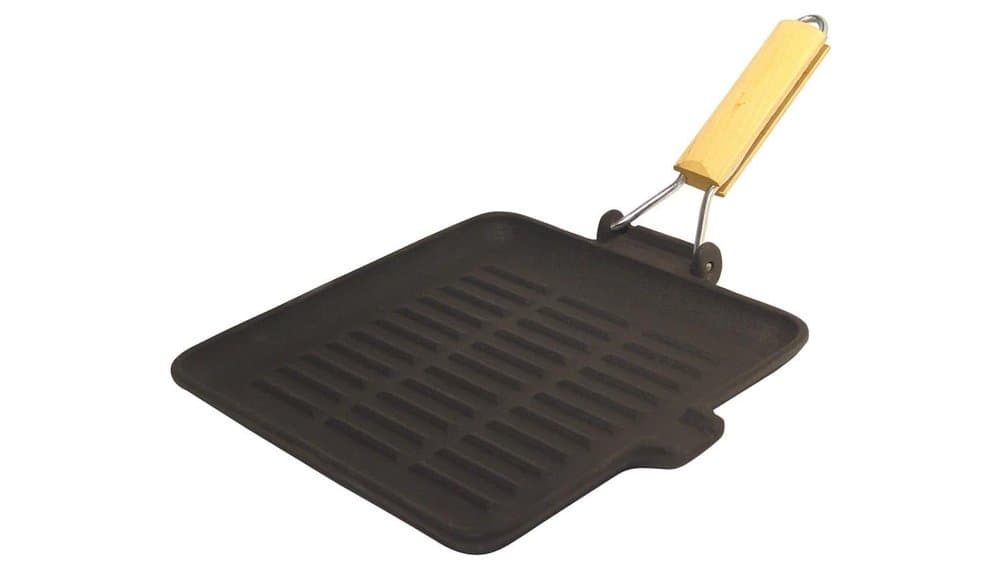
Versatility is its main argument. The side with deep ridges is for classic grilling, allowing fat drainage and leaving appetizing marks. The perfectly flat side opens the door to other uses: cooking pancakes, eggs, crepes, or the highly prized "smash burger" technique, where the meat patty is smashed to obtain maximum crispy surface area. It is this duality that justifies its bulk in the eyes of many users.
Handling and Ergonomics: The Weight/Performance Compromise
Ergonomics is where the compromises are most visible. The griddle itself does not have dedicated handles. It is held by the edges, which, given its weight and size, is not easy when hot. Experts consistently recommend using thick kitchen gloves or forearm-covering pot holders. The need to flip it (heavy, hot, sometimes greasy) is a maneuver that requires attention. It is not an agile tool, but that is the price to pay for its mass and solidity.
Maintenance and Durability: The Lifetime Contract
This is where the true buy-it-for-life character is decided. Cast iron is not a "no-fuss" material. It offers a pact: careful maintenance in exchange for an unlimited lifespan.
- Seasoning: The product comes with factory seasoning. This is a good starting point, but all specialists agree that it is necessary to reinforce it yourself before first use, with several thin layers of high-smoke-point oil (linseed, canola, grapeseed) polymerized in the oven. This process creates a natural non-stick surface and protects the iron.
- Cleaning: Never in the dishwasher. Cleaning is done with hot water, optionally with a soft brush or coarse salt as an abrasive. The use of detergent is debated; many recommend avoiding it to not degrade the seasoning, while others allow it sparingly. The non-negotiable point is immediate and absolutely thorough drying, often by placing the griddle on low heat for a few minutes.
- Rust prevention: After drying, a thin protective layer of oil is applied before storage. Forgetting this, especially in a humid environment, can lead to rust, as reported by some disappointed users. This is not a product defect, but a characteristic of the material that demands discipline.
With this care, the griddle can be passed down through generations, its seasoning improving with each use.
Technical Specifications
| Characteristic | Detail |
|---|---|
| Product Name | 32nd CI GriddlePlate Reversible Cast Iron Griddle |
| Main Material | Cast Iron |
| Dimensions (L x W x H) | 53 cm x 25 cm x 2.5 cm (overall dimensions with lip) |
| Cooking Surface | ~46 cm x 23 cm |
| Weight | 3.02 kg |
| Surfaces | Reversible: 1 smooth flat side / 1 deep-ridged side |
| Seasoning | Pre-seasoned (requires initial reinforcement) |
| Compatibility | Gas, electric (coils and halogen), induction, barbecue, campfire |
| Finish | Black, natural non-stick through seasoning |
| Maintenance | Hand wash with hot water. Not dishwasher safe. Immediate drying essential. |
| Warranty | Information not provided by the manufacturer. Subject to legal warranty of conformity. |
What Users Say: Trends and Experience Feedback
Synthesizing available customer reviews and expert analyses paints a nuanced but instructive picture.
Praise focuses mainly on culinary performance once the griddle is mastered. Satisfied users praise its searing power, the quality of grill marks, and the practicality of the dual sides. Many appreciate its compatibility with induction and barbecue, seeing it as a unified tool for indoor and outdoor cooking. The feeling of robustness and durability is also a recurring reason for satisfaction.
Criticisms and warnings are equally instructive and point to concrete aspects:
- Variable manufacturing quality: Several reviews report flatness issues upon arrival (warping), sometimes requiring an exchange. An isolated but serious case mentions cracking during the first heating, which, although rare, indicates a possible casting defect or internal stress in the iron on some units.
- Susceptibility to rust: Some feedback mentions rapid appearance of rust after what was assumed to be normal use and cleaning. This reinforces the imperative need for perfect drying and systematic protective oiling, even after a single use.
- Weight and handling: The heaviness is frequently cited as a drawback, making flipping and cleaning less easy.
- Seasoning needs improvement: Even pre-seasoned, most sources advise consolidating the seasoning yourself upon receipt to optimize non-stick performance and long-term protection.
Conclusion: For Which Cook Profile?
The 32nd CI GriddlePlate Reversible Cast Iron Griddle is not a tool for everyone. It is a demanding tool that requires knowledge and care. It is not suitable for those seeking the absolute simplicity of ceramic or Teflon coatings, disposable after a few years.
On the other hand, for the serious cook, amateur or experienced, who understands and accepts the "ritual" of cast iron, it represents a solid and versatile investment. Its dual function eliminates the need for two separate griddles, and its thermal performance is worthy of a professional tool. It is a piece that, if it passes the initial hurdle of sometimes fluctuating quality control (check its flatness upon receipt) and receives meticulous maintenance, has all the characteristics to last a lifetime and beyond.
Its buy-it-for-life potential is real, but it is conditional. It depends not only on the intrinsic quality of the material (excellent), but also and especially on the commitment of its owner to care for it according to the rules of the art. If you are ready to accept this contract, this reversible griddle will likely become a cornerstone of your cookware, capable of tackling a wide range of culinary challenges with rustic and reliable efficiency.