Alises Enamelled Carbon Steel Paella Pan Review
Introduction: Enameled Carbon Steel, a Hybrid Proposition for Paella
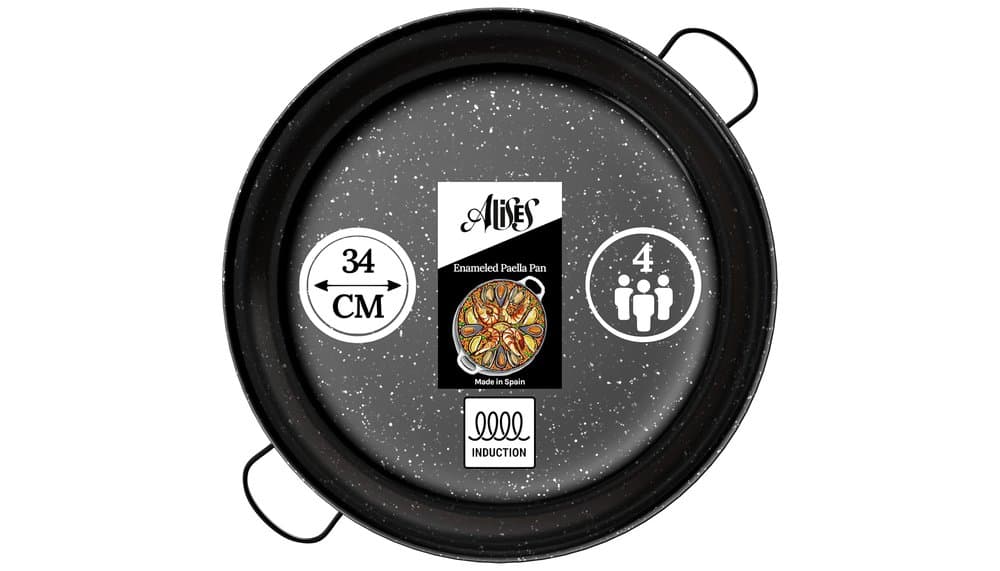
On our site dedicated to durable and high-performance culinary tools, we scrutinize materials like raw carbon steel, cast iron, or Japanese VG-10 steel. The Alises Enamelled Carbon Steel Paella Pan presents a fascinating case study. It combines a carbon steel body, a material prized for its thermal reactivity and legendary durability, with an enamel coating. This combination seeks to offer the benefits of carbon steel without the maintenance constraints of seasoning. Here, we will analyze whether this 34 cm Spanish paella pan meets the demanding criteria of serious home cooks and if it can claim a place in a "buy-it-for-life" kitchen battery.
Strengths
- High-Performance Base Material: The carbon steel core promises fast heat-up and excellent thermal conductivity, ideal for searing paella ingredients evenly.
- Extremely Simplified Maintenance: The enamel completely eliminates the risk of rust and removes the need for traditional seasoning. Cleaning is reputed to be very simple, often a simple soak in hot water is enough.
- Universal Compatibility: The pan is compatible with all heat sources, including induction, a major asset in modern kitchens.
- Authentic and Functional Design: With its two side handles and 34 cm diameter (5-liter capacity), it respects the traditional format of the paellera, allowing for easy handling and cooking for about 5 people.
- Artisanal Manufacturing: The fact that it is made in Valencia, Spain, by a small family business suggests a certain attention to detail and a connection with the dish's geographical origin.
Weaknesses
- Absence of Customizable Seasoning: The enamel is a permanent barrier. You will never be able to develop the natural, non-stick patina personal to raw carbon steel or cast iron, which improves over time.
- Conditional Durability of the Enamel: The potential weak point lies in the long-term integrity of the enameled coating. If it is chipped or cracked, the underlying carbon steel will be exposed and can rust, compromising the pan's integrity.
- Sensitivity to Thermal Shock: Like any enamel, excessively brutal heating or thermal shock (placing a very hot pan under cold water) can cause micro-cracks or even chips.
- Usage Limitations: Not suitable for the oven (the enamel may withstand it, but the riveted handles might have limiting joints) and requiring hand washing, it loses versatility compared to a raw carbon steel pan.
- Variable Food Release: Contrary to "naturally non-stick" marketing promises, several user reviews indicate that food can stick, especially if the cooking technique is not mastered.
Detailed Analysis
Construction and Materials: The Paradox of Enameled Carbon Steel
The heart of this analysis lies in the material choice. Carbon steel is, on paper, an excellent choice for a paella pan. Its fine structure allows for a very fast thermal response, essential for controlling rice cooking and the Maillard reaction of proteins. It is also incredibly durable and can literally last a lifetime. However, the enamel coating fundamentally changes the proposition.
According to the principles of sustainable cooking, enamel on cast iron is a classic, but on thinner carbon steel, it is less common. The advantage is immediate: zero specific maintenance, no risk of rust in the open air. The drawback is just as clear: you sacrifice the main evolving virtue of carbon steel, which is its ability to season to become more and more non-stick and to develop a unique character. Here, the non-stick performance is frozen by the quality of the smooth enamel as it leaves the factory. Its lifetime durability ("buy-it-for-life") therefore depends almost entirely on the resistance of this enamel to shocks, scratches, and repeated heat cycles.
See priceCooking Performance: Thermal Speed vs. Required Mastery
User reviews converge on one point: the temperature rise is efficient and heat distributes well across the large surface, especially when used on a gas burner suited to its diameter. This is where the base material excels.
However, regarding food release, opinions are divided. Part of the community reports impeccable results and easy cleaning after soaking. Others, like user Patricia Husband, note that "food sticks very quickly". This divergence is probably explained by cooking technique. On enamel, it is crucial to preheat the pan correctly and use a sufficient amount of fat. Unlike seasoned carbon steel which becomes hydrophobic, enamel does not offer the same margin for error. It behaves like a smooth, inert surface, effective but without the progressive non-stick security of seasoning.
Ergonomics and Practicality
The two-handle design is the standard for a paellera and proves effective for handling a pan of this size. The advertised weight of 1 kg for a 34 cm diameter indicates a relatively light construction, facilitating handling and serving at the table, which is a real plus compared to much heavier enameled cast iron. The handling seems satisfactory for its dedicated use. The main constraint is its incompatibility with the oven (listed as "No" in the specs), limiting some finishing techniques.
Maintenance and Long-Term Durability
This is the major point of divergence with traditional carbon steel. Maintenance is extremely simple: washing with hot water, often without even needing abrasive detergent. The fight against rust, a constant concern with raw steel, is eliminated. This makes it a very accessible product.
But the "for life" perspective is conditional. Enamel, if it is of good quality and well-treated, can last for decades. However, it remains sensitive to mechanical shocks (use of metal spatulas, dropping) and thermal shocks. Once the enamel is chipped, the pan is no longer protected. For an informed user, re-enameling is complex and rarely cost-effective. The absolute durability of a raw carbon steel pan, which can be sanded, re-seasoned, and passed down, is therefore not quite achieved here.
Technical Specifications
| Feature | Detail |
|---|---|
| Model | Alises Enamelled Carbon Steel Paella Pan |
| Diameter | 34 cm |
| Capacity | 5 liters (approx. 5 servings) |
| Body Material | Carbon steel |
| Interior/Exterior Coating | Enamel (dark gray color) |
| Handles | Two, riveted, material not specified (likely steel) |
| Compatibility | All stovetops (Gas, Electric, Ceramic Glass, Induction) |
| Oven Safe | No |
| Weight | 1 Kilogram |
| Care | Hand wash only |
| Origin | Made in Valencia, Spain |
What Users Say
The synthesis of 755 customer reviews (average rating of 4.3/5) and available feedback paints a nuanced and instructive picture.
Recurrent praise focuses on:
- Ease of cleaning: Many users, like "Amazon Customer" and "angel," emphasize that a simple soak in hot water is enough to loosen rice residue, confirming the practical advantage of enamel.
- Cooking performance: Reviews often mention even cooking and good results for paella, particularly when used with a suitable gas burner.
- Finish and stability: The manufacturing is generally judged to be of good quality, stable on the heat. User Javi in Spain confirms: "La paellera es de buena calidad, temía que pudiera doblarse con las temperaturas pero nada de eso." ("The pan is of good quality, I was afraid it might warp with the heat but not at all.").
- Absence of rust: This point is consistently appreciated by those who want to avoid raw steel maintenance.
Frequent criticisms and reservations concern:
- Food sticking: Several reviews, including the one by Patricia Husband already cited, report that food can stick, tempering the "naturally non-stick" claim. This suggests that mastering temperature and the amount of fat is crucial.
- Bottom shape: One user notes that the bottom is "not really flat" for optimal use on a ceramic glass cooktop, which can affect uniform thermal contact.
- Size and heat management: For larger diameters (46 cm), Fabrice notes that it is necessary to use "several burners at the same time," which is a logistical constraint for traditional cooking on a single large burner.
Conclusion: Who is this paellera for?
The Alises Enamelled Carbon Steel Paella Pan is a well-designed product that occupies an interesting niche. It is not the ultimate, evolving "buy-it-for-life" tool that a raw carbon steel pan can be, where you become the guardian and craftsman over the years. Its durability is conditional on the integrity of its enamel.
However, it represents an excellent compromise for the serious cook who:
- Seeks the authenticity of the format and the thermal reactivity of carbon steel for successful paellas.
- Wants great ease of maintenance without worrying about immediate drying, oiling, or rust.
- Primarily uses induction or gas and does not need to put it in the oven.
- Accepts that the non-stick performance is fixed (good if preheated and oiled correctly) and not evolving like with seasoning.
It is a paellera of very good quality for dedicated and regular use, which will serve you for a long time if you treat it with the care that enamel deserves: no abrasive metal utensils, no violent thermal shocks, and hand washing. For the carbon steel purist who sees patina as a love story with their tool, the raw model will always be the holy grail. But for those who want a high-performance, authentic, and worry-free tool for successful paellas with family or friends, the enameled Alises is a fully credible candidate recommended by the vast majority of its users.