Arcos Series Universal Usuba Knife Test & Review
Introduction
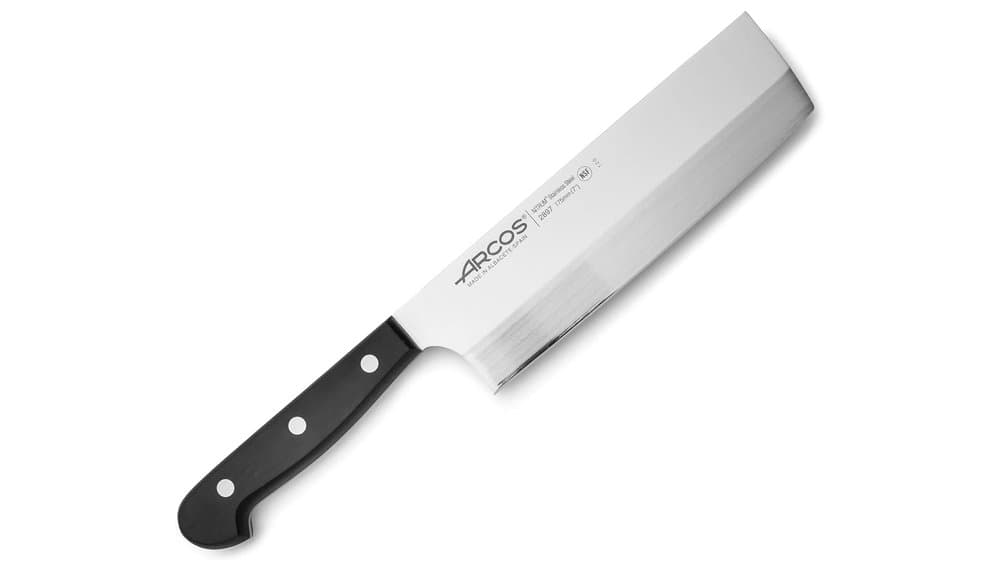
On our site dedicated to durable and high-performance culinary tools, we often examine knives designed to last a lifetime. Today, we analyze a product that sparks curiosity: the Arcos Séries Universal Usuba Knife Japanese Chef's Knife. This Japanese knife features a traditional usuba design, but it comes from Arcos, a Spanish brand known for its professional and domestic kitchen knives. This hybrid between a specialized Japanese form and modern Western manufacturing raises a central question: can it claim a place in the demanding enthusiast's kitchen from a "buy-it-for-life" perspective? We will dissect its specifications, compare promises with real-world feedback, and determine who this tool is truly for.
Key Strengths
- Factory Sharpness and Ease of Maintenance: The knife arrives with a remarkable sharpness according to most users, ready to use. Its NITRUM stainless steel promises good corrosion resistance, simplifying daily maintenance.
- Robust and Durable Construction: The POM (Polyoxymethylene) handle is unanimously praised for its solidity, ergonomics, and ease of cleaning. The construction without visible rivets reinforces this impression of durability.
- Effective Specialization: For the tasks it is designed for – fine vegetable cuts, "katsuramuki" work (spiral peeling) – testers confirm it is effective and precise.
- Balance and Feel in Hand: Despite mixed opinions on weight, many users find the knife well-balanced, offering a sense of control during cutting.
Key Weaknesses
- An Ambiguous Identity: This is the major critical point. According to experts and informed feedback, this is neither a true traditional Japanese usuba (single-bevel) nor a versatile knife. Its sharpening is often reported as symmetrical (double-bevel), making it less performant for pure Japanese precision techniques.
- Unsuitable Blade Thickness: Several feedbacks, particularly from experienced users, point to a blade that is too thick for a traditional usuba. This thickness can hinder cutting finesse on certain vegetables and cause wedging (poorer food release).
- Too Narrow Specialization: It is absolutely not versatile. Unsuitable for meat, fish, boning, or any cut requiring a rocking motion, it is confined to a very specific role.
- Complex Sharpening for Novices: Even with a potentially simplified blade profile, maintaining the edge on a straight and thick blade demands a more advanced sharpening technique than for a classic Western chef's knife.
Detailed Analysis
The Blade: Between Japan and the West
The heart of the analysis lies in its blade. The NITRUM steel from Arcos is a nitrogen-enriched martensitic stainless steel. On paper, this promises a good compromise between corrosion resistance, ease of sharpening, and edge retention. However, Arcos does not disclose a Rockwell Hardness (HRC) value. Comparing with other ranges from the brand and user feedback, it can be estimated to likely be between 56 and 58 HRC. This is an honorable and robust hardness for intensive use, but below Japanese carbon steels (like White Steel #2) or high-end stainless steels (like VG-10 or SG2) which flirt with 60-63 HRC. The consequence? Correct, but not exceptional edge retention, and relatively accessible sharpening with classic stones. It's a choice that prioritizes robustness and carefree use over ultimate edge performance.
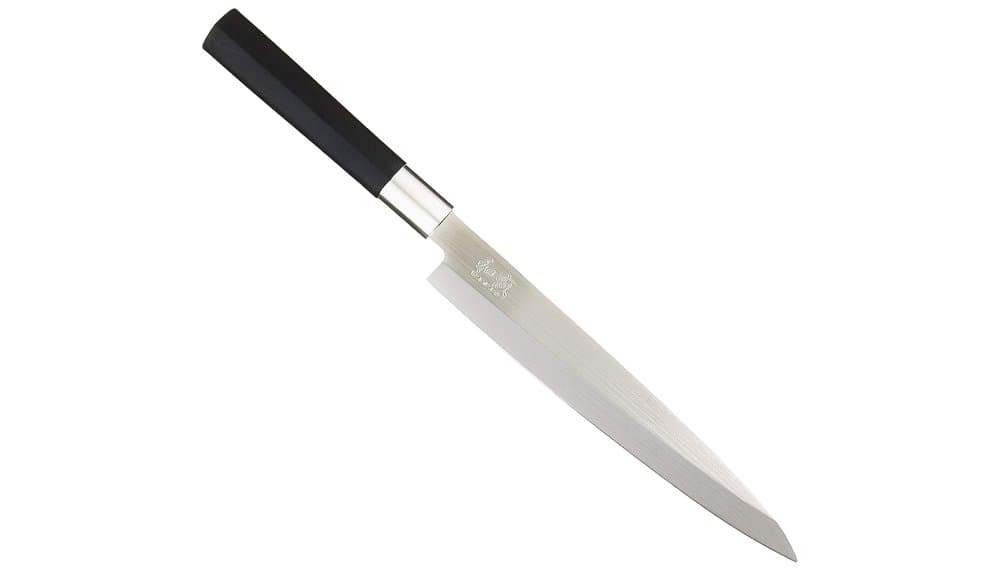
The geometry is the real issue. A traditional usuba has a very pronounced single-bevel, straight and flat. According to critical feedback and user photos, the Arcos Universal Usuba seems to have a double-bevel sharpening (symmetrical or heavily asymmetric), closer to a double-bevel "nakiri". This makes it more approachable for a Westerner, but causes it to lose the cutting finesse and control of a true usuba. Its spine thickness, noted as excessive by some, confirms this "robust mainstream" orientation rather than "sharpened specialist".
See priceHandling and Balance
On this point, feedback is positive. The POM (Polyoxymethylene) handle is a very dense technical plastic, resistant to shocks and discoloration. Its ergonomic "Universal" shape is designed to suit right-handed and left-handed users alike. Users emphasize its comfort during prolonged use and the ease of keeping it clean. The knife's balance, often located at or slightly in front of the blade's heel, gives a feeling of solidity and control for the push-pull movements characteristic of vegetable cutting.
Durability and "Buy-It-For-Life" Perspective
Can this knife be considered a buy-it-for-life purchase? The answer is nuanced.
- For construction materials: Yes. The POM handle is almost indestructible in a culinary context. The NITRUM stainless steel will resist rust and reasonable shocks. The construction seems solid.
- For performance over time: This depends on the user and their expectations. Its robust blade will withstand wear and tear, but its specialized edge will require regular and competent maintenance. A user unable to sharpen it correctly will see their tool turn into a mediocre knife within a few years. Furthermore, its "adapted" design makes it less relevant for a purist who, over time, might prefer a more authentic tool.
It should not be compared to a carbon steel chef's knife, which requires maintenance against oxidation but offers unparalleled edge finesse and ease of sharpening. It is a less demanding alternative in daily maintenance, but more demanding in long-term sharpening technique.
Target Audience: Who is This Knife Really For?
This knife is not for the beginner looking for their first and only main knife. Its specialization is too marked. It is also not for the perfectionist of Japanese knives, who will be frustrated by its geometric compromises.
The Arcos Séries Universal Usuba Knife finds its place with the passionate and curious cook, already equipped with a versatile chef's knife, who wants to explore precise vegetable cuts without investing in a genuine high-end Japanese usuba. It is a complementary, robust, and accessible tool to add a string to their technical bow. It can also suit a professional looking for a "workhorse" usuba resistant to the stress of a busy kitchen, where absolute finesse is sacrificed for robustness.
Technical Specifications
| Characteristic | Detail |
|---|---|
| Model | Arcos Séries Universal Usuba Knife |
| Blade Type | Usuba (Japanese style, for vegetables) |
| Blade Length | 175 mm |
| Blade Material | NITRUM stainless steel (Arcos proprietary) |
| Sharpening Type | Advertised as Usuba, user feedback indicates double/symmetrical bevel |
| Rockwell Hardness (HRC) | Not disclosed by manufacturer (estimated ~56-58 HRC) |
| Handle Material | Black Polyoxymethylene (POM) |
| Handle Construction | Full tang, no visible rivets |
| Balance | Reported as forward-balanced |
| Weight | Approximately 290 g |
| Maintenance | Dishwasher safe (not recommended for edge longevity) |
| Recommended Use | Fine cutting of vegetables, julienne, peeling |
What Users Say
The synthesis of 219 customer reviews (with an overall rating of 4.5/5) and expert analyses paints a clear consensus with some notable criticisms.
Recurrent praise centers around perceived quality: users are satisfied with the initial sharpness ("remarkably sharp", "impeccable"), the handle comfort ("very good balance", "pro handle"), and the general finish ("impeccable polish", "look inspiring quality"). Many describe it as "heavy" or "quite heavy", a characteristic some appreciate for the feeling of solidity.
The most instructive criticisms come from experienced users. A major, and isolated but very detailed, negative point denounces a "butchered sharpening", specifying that the blade does not have the asymmetric single bevel of a true usuba but a crude symmetrical sharpening. This observation is corroborated by online testers who note that its geometry is adapted for the Western market. Other international users regret that the blade is "a bit too thick", limiting its cutting finesse. Finally, its lack of versatility is often emphasized: it is a specialized knife, and those who bought it without knowing have been disappointed.
The trend is clear: for basic daily vegetable cutting use, it receives praise. For connoisseurs seeking Japanese technical authenticity, it disappoints.
Conclusion
The Arcos Séries Universal Usuba Knife Japanese Chef's Knife is a product that plays on two levels. Technically solid, with an effective edge and durable construction thanks to its NITRUM steel and POM handle, it can certainly last for decades with proper maintenance.
However, do not be mistaken: this is not a traditional Japanese usuba. It is a Western and robust interpretation of this form, simplified to be more accessible and less fragile. Its main flaw is also its primary quality: its specialization without being overly exclusive.
Our verdict is therefore as follows: it is an excellent "buy-it-for-life" complementary knife for the cooking enthusiast who wants to add a vegetable-dedicated tool to their arsenal, without the maintenance constraints of a carbon steel or the price of a Japanese artisan piece. But it is a poor gateway into the world of Japanese single-bevel knives, and a limiting choice as a main knife. For those seeking authenticity, it is better to invest in a true nakiri or usuba. For those who want robustness and honest performance in a defined role, the Arcos fully deserves consideration.