Cutluxe 13cm Santoku Knife Review and Test
Introduction
In the world of serious kitchen knives, the Japanese santoku has established itself as a versatile and efficient working tool, particularly appreciated for its push-cut motion rather than a rocking one. Today, we analyze the Cutluxe 13cm Santoku Knife, a product that aims to bring a professional finish to a broader audience. On paper, it combines recognized materials – German steel, pakkawood handle – with a promise of lasting sharpness. But from a "buy-it-for-life" perspective, do these promises withstand technical scrutiny and field feedback? This article separates fact from fiction, based on the manufacturer's specifications and the converging feedback from the user and tester community.
Key Strengths
Based on a synthesis of data, several major strengths consistently stand out for the Cutluxe 13cm.
Remarkable cutting finesse right out of the box. This is the most praised point. The specifications indicate a hand-sharpened edge at 14-16 degrees per side, which is indeed a very performant angle for an aggressive and precise edge. Users overwhelmingly confirm this impression: the knife "slices like a razor" and "glides through ingredients like butter".
Well-thought-out ergonomics and balance. The combination of a full tang and a pakkawood handle secured by three rivets provides, according to feedback, a "solid" and "confident" grip. The santoku shape, with its relatively flat spine, is also praised for reducing wrist fatigue during long cutting sessions, especially with vegetables.
An excellent perceived value for money. The forged construction, advertised materials, and lifetime warranty against manufacturing defects contribute to a feeling of robustness. For many buyers, this knife represents an entry point to near-professional performance without a prohibitive investment.
Weak Points
No tool is perfect, and the analysis of feedback reveals some limitations inherent to its design choices.
A weight that can be divisive. This is the most recurring critical point. The knife is repeatedly described as "heavy" or "having weight". While this heft is associated with a feeling of quality and cutting power for many, it can be a drawback for users seeking a lighter, more agile blade, or for those with joint issues.
Demanding, non-negotiable maintenance. The blade made of high-carbon stainless steel, while less finicky than pure carbon steel, requires strict discipline. The manufacturer and the community are unanimous: it must never go in the dishwasher. Immediate washing, drying, and storage are required to prevent any risk of corrosion or staining in the long term. This is not a knife that can be neglected.
A hardness that is limiting for purists. With an advertised Rockwell hardness of 56+ HRC, we are in a medium-low range for a performance-oriented Japanese knife. This has direct implications for its behavior over time.
Detailed Analysis from a "Buy-It-For-Life" Perspective
The Blade: Between Performance and Compromise
The advertised material is German high-carbon stainless steel. This formulation is typical of steels like X50CrMoV15, a robust industry standard. It offers a good balance between corrosion resistance, ease of sharpening, and edge retention.
The real topic is its Rockwell hardness of 56+ HRC. From our durability perspective, this specification is crucial. A hardness around 56 HRC means:
- Good shock resistance: The blade is less brittle, more tolerant of accidental twists (like hitting a bone). This is a positive point for longevity in a sometimes less controlled domestic environment than a professional kitchen.
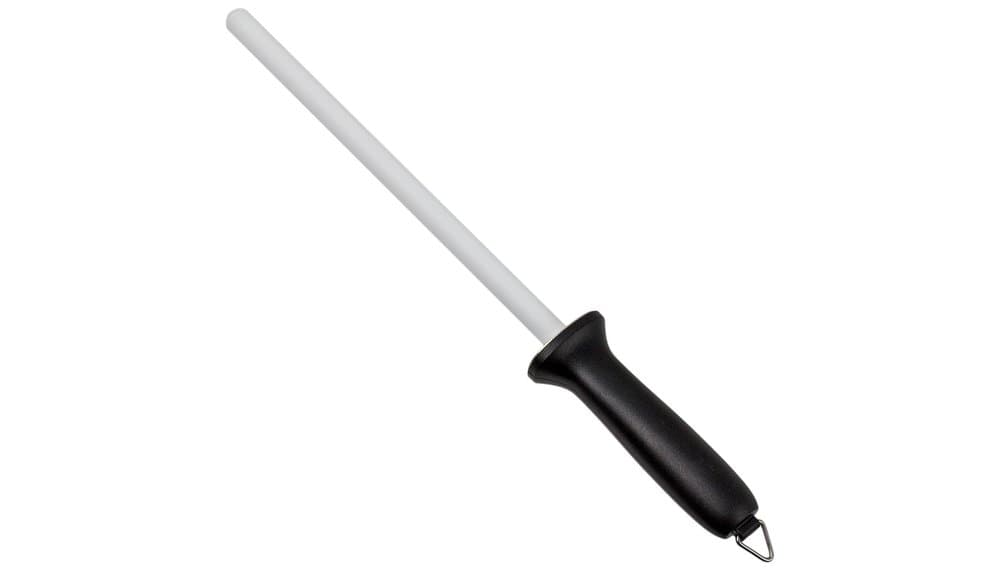
- Moderate edge retention: It will not rival that of a knife in VG-10 (60+ HRC) or Japanese white steel (61+ HRC). The user will likely need to hone it regularly on a ceramic steel or sharpen it more frequently than a harder knife to maintain its original aggressive edge.
- Regained ease of sharpening: This is the hidden advantage. A steel at 56 HRC is significantly easier and faster to restore on a sharpening stone for an amateur. Its maintenance over the very long term is therefore more accessible.
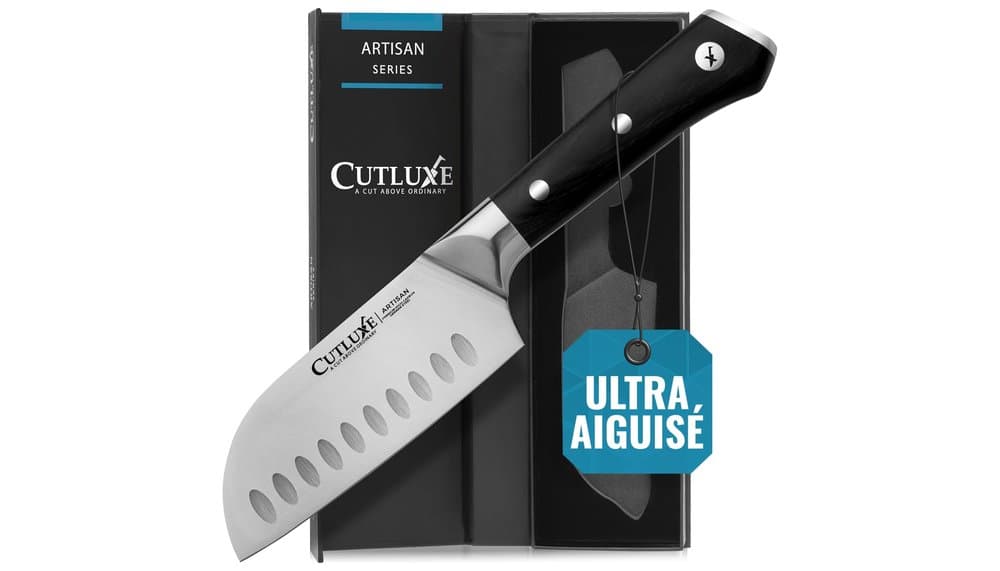
The grooves (Kullenschliff or hollow edge) on the sides of the blade primarily serve to reduce food sticking, a practical detail confirmed by users when cutting wet or sticky products like potatoes.
See priceConstruction and Ergonomics: Solid, But Not for All Hands
The forged and full tang construction is the guarantee of excellent structural robustness. The handle has no risk of coming loose over time. Pakkawood, a composite of wood and resin, is an intelligent choice: it offers the warm touch and look of wood, without the porosity and sensitivity to humidity of a solid wood handle. It is a durable and hygienic material.
Regarding ergonomics, feedback is very positive on grip security and weight distribution. However, some testers point out that the thickness of the handle may require an adaptation period, especially for smaller hands. This is not a flaw, but a characteristic to be aware of.
Versatility and Target Audience
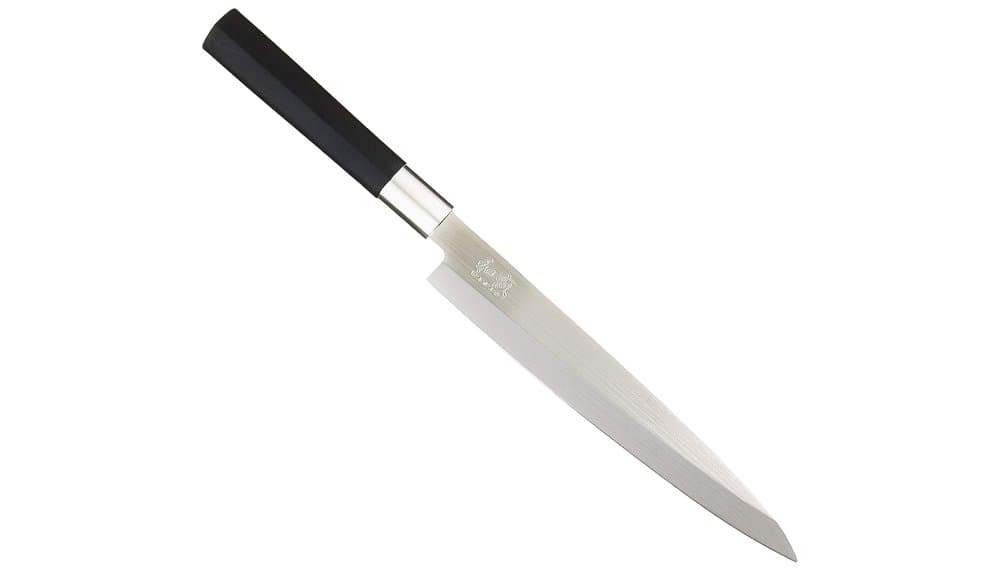
The 13cm santoku (approximately 5 inches) is by nature a versatile knife. Its size makes it an agile tool for slicing onions, chopping herbs, dicing vegetables, and even slicing small pieces of meat or fish. It excels in push-pull cutting motions. However, its limited length and weight make it less suitable than a large chef's knife for slicing large cuts of meat or breaking down very large vegetables like squash.
The Cutluxe 13cm Santoku Knife perfectly targets the serious home cook who wants a performant, safe, and durable tool, without necessarily wanting to enter the complexity and fragility of high-end Japanese steels. It is an excellent daily workhorse knife, even a formidable second knife for someone who already owns a large chef's knife.
Technical Specifications
| Characteristic | Detail |
|---|---|
| Model | Cutluxe 13cm Santoku Knife |
| Blade Length | 13 cm (approx. 5 inches) |
| Blade Material | German High-Carbon Stainless Steel |
| Hardness (Rockwell) | 56+ HRC |
| Sharpening Angle | 14-16° per side (28-32° total) |
| Blade Profile | Santoku, with anti-stick grooves (Hollow Edge) |
| Construction | Forged, Full Tang |
| Handle Material | Pakkawood (wood/resin composite) |
| Handle Attachment | 3 rivets |
| Maintenance | Hand wash only. Immediate drying. |
| Warranty | Lifetime against manufacturing defects |
What Users Say: A Summary of Reviews
The average rating of 4.6/5 from over 770 reviews is telling. Overall satisfaction is very high. Cross-referencing customer feedback and expert analyses, here is what emerges:
Recurrent Praises (Positives):
- Exceptional sharpness upon receipt: This is the number one point. Words like "razor", "sharp", "cuts perfectly" recur in the vast majority of 5-star reviews.
- Comfort and balance: The "feel in hand", "balance", and the fact that it is "not tiring" are very frequently mentioned.
- Perceived build quality: Users mention its "solidity", "clean finish", and the feeling of owning a "real pro tool".
- Value for money: Even without mentioning price, reviews indicate users feel "more than happy with the investment" and consider it an "excellent value".
Criticisms and Caveats (Negatives / Mixed Reviews):
- The weight: Several reviews note the knife is "a bit heavy" or "heavier than expected". One user even specifies returning it for this reason after a shoulder operation.
- Mandatory maintenance: The community and product sheets vigorously remind users of the dishwasher ban. It is a non-negotiable condition for its longevity.
- Expectations on hardness: For a minority of knowledgeable users, the 56+ HRC hardness is perceived as a weakness for long-term edge retention, forcing them to sharpen more often than with harder steels.
Conclusion
The Cutluxe 13cm Santoku Knife positions itself as a serious contender in the category of durable home knives. Its analysis reveals a coherent product that owns its compromises.
It is an excellent choice for the cook looking for a versatile knife, immediately performant, with robust construction (full tang, riveted handle), and ready to last for decades... provided it is given the maintenance it deserves. Its moderate Rockwell hardness is both its limitation in terms of edge retention and its strength in terms of ease of repair and shock resistance.
However, it is probably not the ideal tool for those seeking the ultimate finesse and long-term edge retention of Japanese steels hardened above 60 HRC, or for people sensitive to the weight of a kitchen instrument.
In summary, the Cutluxe 13cm Santoku is a sensible and durable investment. It brings much of the pleasure and efficiency of a professional knife, with a manageable learning curve and maintenance for the enlightened amateur. It honors the "buy-it-for-life" mindset through its solid construction and repairability, while demanding from its owner the respect and care due to any good tool.