Cxxtkcxxlc 180 & 240 Grit Sharpening Stone Set Review
Introduction
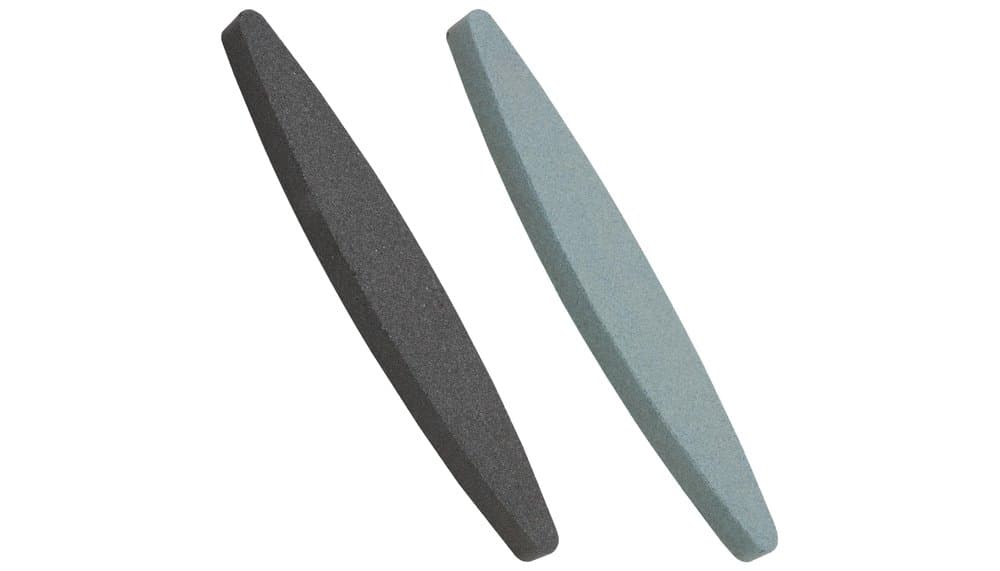
In the world of sustainable kitchen tools, sharpening is not just a maintenance step; it's an essential ritual for preserving blade performance over the long term. The Cxxtkcxxlc 180 & 240 Grit Sharpening Stone Set presents itself as an accessible solution for edge maintenance. Here, we will dissect this product from the demanding perspective of "buy-it-for-life," evaluating whether it can meet the needs of a serious cook or if it remains confined to a utilitarian role. Our analysis is based on its technical specifications, user community feedback, and the consensus of sharpening experts.
Strengths
- Simplicity and Accessibility: A set of two grits (180 and 240) covering the basics of repair and coarse sharpening.
- Advertised Versatility: Designed for a wide range of tools, from kitchen knives to gardening tools.
- Compact Dimensions: Easy to store and potentially suitable for a travel or camping kit.
Weaknesses
- Notorious Fragility upon Delivery: An alarming trend of stones arriving broken during delivery is noted by many buyers.
- Limited and Low-End Grit Range: The 180/240 grits are insufficient for achieving a finished, razor-sharp edge on quality kitchen knives.
- Medium-Quality Abrasive: Testers and the community note relatively quick wear and dishing compared to brand-name stones.
- Incomplete User Experience: Lack of a non-slip base or flattening stone, and a reduced size that hinders sharpening large blades.
Detailed Analysis
Construction and Materials: A utilitarian set, far from "buy-it-for-life"
The specifications indicate that these stones are composed of a mixture of Aluminum and Silicon Carbide. This is a common synthetic abrasive, known for its hardness and ability to cut quickly. On paper, this promises good heat and corrosion resistance. However, the true marker of quality for a durable sharpening stone lies in the density and bonding of the abrasive, parameters rarely detailed on entry-level products.
According to expert feedback and community testing, it is precisely on this point that the Cxxtkcxxlc set shows its limitations. Users report that the stone tends to wear and dish more quickly than established models. This directly calls into question its long-term durability. The overall construction is considered basic, and the recurring problem of pieces arriving broken, despite intact outer packaging, points to inherent fragility or inadequate packaging. For a "for life" investment, this uncertainty about physical robustness is a serious handicap.
See priceSharpening Performance: Suitable for repair, unsuitable for finishing
This is the heart of the matter. The 180 (coarse) and 240 (medium-coarse) grits define a very specific scope of action.
- The 180 grit is designed for quick repair: removing large chips, reprofiling a very dull edge, or working on robust tools (axes, machetes).
- The 240 grit allows for basic sharpening and removal of the coarse marks left by the 180 grit.
For the knife enthusiast community, these grits are considered the very beginning of the process. They are completely unsuitable for imparting a razor-sharp and durable edge to a kitchen knife, whether it's made of carbon steel (White Steel), Japanese stainless steel (VG-10, AUS-10), or Western steel. Achieving a sharp edge requires going through a sequence of progressively finer grits (1000, 3000, 6000+). Stopping the process at 240 grit will leave a jagged, coarse cutting edge that degrades very quickly and damages food fibers.
The compact size of the stones (230 x 35 mm) is another hindrance for a professional experience. Sharpening a large chef's knife (often 200 mm blade or more) on such a narrow surface is not very ergonomic and can compromise angle consistency. The absence of an included non-slip base forces the user to improvise a stable solution, adding difficulty for beginners.
Use and Target Audience: Who is it really for?
The marketing touts versatility for "most cutting tools." Our analysis confirms this versatility, but with crucial nuances.
- For garden and DIY tools: Axes, machetes, lawnmower blades, secateurs. This is likely where this set finds its best utility. Finish requirements are lower, and speed of material removal is paramount.
- For complete beginners in sharpening: As a first, very low-cost purchase, it allows one to learn the motions without fear of damaging an expensive tool. However, the poor experience due to fragility and lack of accessories can be discouraging.
- For the serious cook or knife enthusiast: This is a poor choice. It does not allow for proper maintenance of blades with high Rockwell hardness (HRC 58-63+). These hard steels, which offer excellent edge retention, require quality stones offering precise "feedback" and a fine grit progression. The Cxxtkcxxlc set is not part of that category. At best, it could serve as a preliminary repair step on a very damaged knife, before moving on to higher-grit stones from another brand.
Technical Specifications
| Feature | Detail |
|---|---|
| Product Name | Cxxtkcxxlc 180 & 240 Grit Sharpening Stone Set |
| Composition | Aluminum & Silicon Carbide |
| Number of Stones | 2 |
| Grit | 180 grit (coarse) / 240 grit (medium-coarse) |
| Dimensions (L x W x H) | 230 mm x 35 mm x 15 mm (per stone) |
| Total Weight | 200 g (according to listing), 360 g (according to technical details) |
| Recommended Use | With water (wet or soaked) |
| Advertised Applications | Kitchen knives, axes, scissors, lawnmower blades, garden tools |
| Manufacturing Origin | China |
What Users and Experts Say
The synthesis of 66 customer reviews (average rating 3.8/5) and online expert analyses reveals a contrasting but telling picture.
The recurring positive points mainly concern occasional users or those with modest expectations. They note a good price-performance ratio for basic use, effectiveness in restoring a functional edge to very dull domestic knives or garden tools. The simplicity of the "two stone" formula is also appreciated.
The negative points are much more specific and concerning:
- Fragility upon delivery: This is the major problem. A significant proportion of negative reviews (and even some positive ones) report that one or both stones arrived broken in two or several pieces. Users blame insufficient packaging.
- Limitation for a quality edge: Many experienced users emphasize that these grits are too coarse for finished sharpening. They advise considering them only as a first repair step.
- Medium abrasive quality: Expert feedback corroborates the impression of a stone that wears and dishes faster than a professional stone, limiting its longevity and result consistency.
- Lack of accessories: The absence of a stable base is frequently mentioned as a practical drawback.
Web experts summarize the situation well: this is an entry-level set, ideal for beginners or occasional use on robust tools, but which quickly shows its limitations when faced with quality kitchen knives.
Conclusion
The Cxxtkcxxlc 180 & 240 Grit Sharpening Stone Set occupies a very specific and limited niche. It is a utilitarian and economical tool that can be useful for the repair and coarse maintenance of garden, DIY tools, or heavily damaged low-end kitchen knives. Its main asset is its simplicity.
However, as soon as one adopts the lens of "buy-it-for-life" and serious culinary performance, this set does not meet the criteria. The observed fragility upon receipt contradicts durability. The 180/240 grits are insufficient for obtaining and maintaining the razor-sharp edge required by quality Japanese or Western steel knives. The lack of accessories and reduced size harm the experience.
Our verdict is clear: this set can be a very low financial risk entry point for discovering manual sharpening on non-critical tools. On the other hand, for the passionate cook who invests in professional knives, it is much wiser to allocate one's budget towards a quality dual-grit stone (e.g., 1000/3000) from a reputable brand, even starting with a single grit. This approach will ensure durability, finish, and long-term satisfaction incomparable with the product analyzed here.