Jobin Carbon Steel Wok with Iron Lid Review
Introduction: Returning to Fundamentals with Carbon Steel
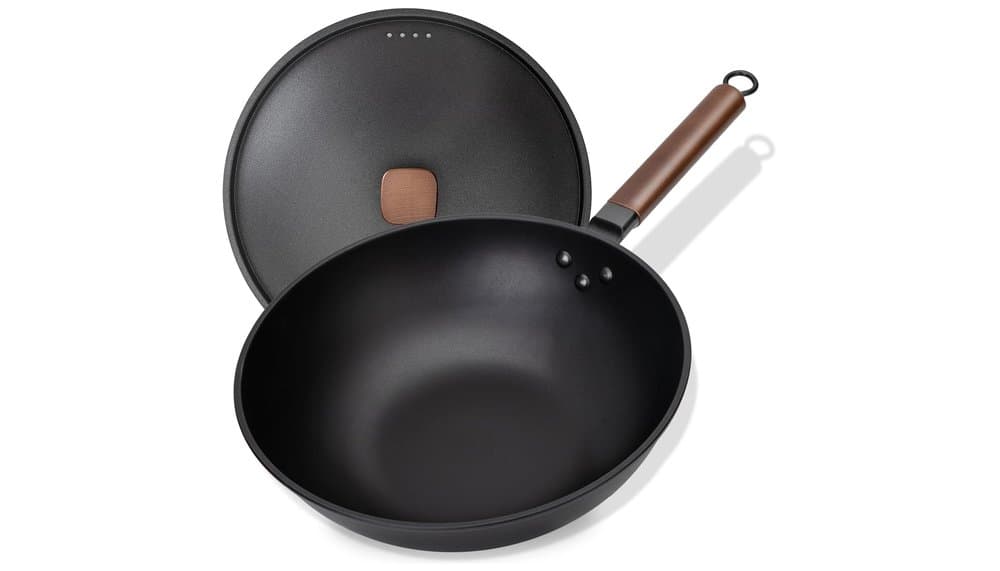
In a culinary world often dominated by non-stick coatings with limited lifespans, the Jobin 33cm-5.6L Carbon Steel Wok with Iron Lid represents a return to basics. It embodies a "buy it for life" philosophy: a simple, robust tool that improves with time and use, provided you understand and accept its language. This wok is not a disposable or planned-obsolescence utensil; it's an investment in a long-term relationship with your kitchen. Here, we will dissect its characteristics, confront its promises with real-world feedback, and determine if it constitutes the professional and durable tool sought by passionate cooks.
Key Strengths
- Healthy and High-Performance Material: Bare carbon steel, without any chemical coating, guarantees healthy cooking and excellent heat conduction. It's the material of choice for traditional woks and professionals for its reactivity.
- Factory Seasoning: The wok is thermally treated with nitrogen at very high temperature, giving it a pre-protected surface, initial rust-resistant and partially non-stick, facilitating the initial handling.
- Versatility and Compatibility: The flat bottom makes it compatible with all stovetops, including induction and electric plates, expanding its use beyond traditional gas. Its 33 cm (5.6L) size is suitable for preparations for 4 to 6 people.
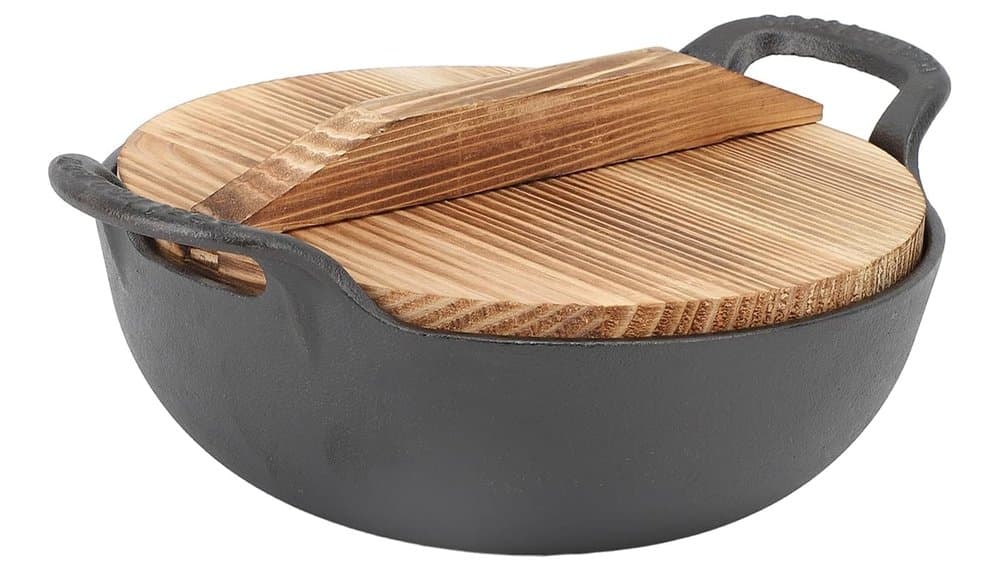
- Complete and Practical Set: The inclusion of an iron lid is a major asset for steaming, braising, or keeping food warm, offering notable added value compared to a separate purchase.
- Claimed Maneuverability: Weighing approximately 2 kg with a wooden handle, the wok promises a good compromise between stability and ease of handling, particularly for stir-frying movements.
Weaknesses
- Demanding Maintenance: Like any uncoated carbon steel, it requires regular seasoning and immediate drying after washing to prevent rust. It is not a "no worries" utensil.
- Sensitivity to Mistreatment: Soaking the wok, using abrasive metal utensils, or cleaning in the dishwasher is strictly prohibited and will lead to its rapid deterioration.
- Risk of Warping: Some user feedback reports that the bottom can bulge at very high temperatures on certain stovetops, affecting heat distribution. This is an inherent risk with thin carbon steel sheets.
- Non-Stick Surface to be Built: The initial surface treatment is only a base. Optimal and durable non-stick performance is only achieved with "home" seasoning and repeated use, which may disappoint those expecting immediate "Teflon-like" performance.
- Potentially Fragile Lid: Isolated but recurring reviews mention a glass lid (for some versions) that can break, suggesting increased care during its use.
Detailed Analysis
The Material Philosophy: Carbon Steel, the Wok's Backbone
The heart of this product is its material: carbon steel. For us, enthusiasts of durable tools, it's a meaningful choice. Thinner and lighter than cast iron, carbon steel has excellent thermal conductivity and an ability to heat up very quickly. This is crucial for wok cooking, where "wok hei" (the breath of the wok) depends on intense and controlled heat. On paper, the specs indicate a thickness of 2 mm. This is a standard and correct thickness for a domestic wok, offering a good balance between reactivity and heat retention without being excessively heavy.
Unlike a knife where we would talk about Rockwell (HRC) for steel, here, performance comes from the material's own structure and the patina you will build on it. This patina, the result of seasoning, is a polymerization of oil that creates a natural, non-toxic, self-regenerating non-stick surface. This is the essence of "buy it for life": an object that evolves and improves through your use, rather than degrading.
See priceHandling and Ergonomics: A Tool for High Heat
According to user feedback, the handling is generally appreciated. The wooden handle is described as comfortable and insulating, preventing burns even during prolonged cooking. Its ergonomic design allows for a good grip, including for energetic tossing movements. The weight of 1.97 kg for a wok of this size is considered light by many, an advantage for the wrists and for everyday cooking. The community notes that its relative lightness makes it very maneuverable for stir-frying.
However, some testers point out that this lightness, coupled with a thin sheet, can sometimes give a less "premium" or less stable feel than a very thick cast iron wok. It's a design choice: priority is given to reactivity and maneuverability over thermal inertia.
Culinary Performance and Durability: Where Theory Meets Practice
The heat distribution is a highlighted strength. Thanks to its deep curved shape, heat climbs up the sides, allowing for even cooking of ingredients. Users who confirm proper seasoning report excellent searing performance and true professional wok behavior.
Long-term durability is the real topic. The material is inherently robust and resistant to thermal shock. Its weakness lies not in its strength, but in its vulnerability to rust. All negative reviews converge on the same point: inadequate maintenance. One user explicitly mentions: "the Wok comes out rusty after soaking overnight". This is not a product defect, but the direct consequence of violating carbon steel care rules. This is where the selection happens between the occasional user and the committed cook.
The seasoning potential is immense. The factory preparation (nitrogen treatment at 1000°F+) provides an excellent base that prevents rust during transport and facilitates first use. But, as a detailed expert review (web context) explains very well, the final, perfect black patina is for you to build. The feedback is unanimous: those who take the time to season it properly and maintain it (drying over heat after washing, light oiling) are fully satisfied and see its performance improve over the years.
Comparison with Other Types of Woks
- Vs. Non-Stick Wok (Teflon etc.): The Jobin wins on durability, health (absence of PFOA/PFAS), and resistance to high temperatures. It loses on initial ease of use and effortless maintenance.
- Vs. Cast Iron Wok: The Jobin is lighter, more reactive (heats faster), and often cheaper. Cast iron, heavier and with superior thermal inertia, excels at braising and deep frying, but is less agile for typical stir-frying.
- Vs. Stainless Steel Wok: Stainless steel is more corrosion-resistant and often easier to maintain, but it has a much lower natural non-stick quality and can lead to more sticking, especially with proteins.
Technical Specifications
| Characteristic | Detail |
|---|---|
| Product Name | Jobin 33cm-5.6L Carbon Steel Wok with Iron Lid |
| Diameter | 33 cm |
| Capacity | 5.6 Litres |
| Main Material | Carbon Steel |
| Thickness | 2 mm (according to technical sheet) |
| Coating | None. High-temperature nitrogen heat treatment (1000°F+) |
| Bottom | Flat |
| Compatibility | Induction, Gas, Electric, Ceramic |
| Handle | Wood |
| Weight | 1.97 kg |
| Included Accessory | Cast iron lid (or glass depending on version) |
| Maintenance | Hand wash only. Immediate drying mandatory. |
What Users Say: An Instructive Polarization
The synthesis of over 1,400 reviews (average rating of 4.2/5) and expert feedback is very revealing. It outlines two distinct user profiles.
Satisfied Users (majority) praise:
- The cooking quality: "heats up quickly and evenly", "perfect for searing".
- The generous size ideal for families.
- The absence of chemicals and the "healthy" aspect.
- The maneuverability due to its contained weight.
- The performance after seasoning: once the patina is established, the non-stick performance is judged very effective.
Disappointed Users almost systematically point out problems related to lack of material knowledge:
- Appearance of rust: always linked to improper drying or soaking the utensil.
- Bottom warping: a few reports indicate bulging at high power on induction, which experts confirm as a possible risk with thin sheets on concentrated heat sources.
- Failing non-stick performance: among those who did not perform or maintain the seasoning.
- Lid fragility: cases of broken glass lids are mentioned, advising careful handling.
A detailed expert review (web context) perfectly summarizes the situation: it is not a "perfect wok" but a "functional compromise". The thin sheet explains the reactivity but also the risk of warping. The black factory finish is not an immutable coating but a starting point. Those who understand and accept these principles are generally delighted with it.
Conclusion: A Demanding but Rewarding Companion
The Jobin 33cm-5.6L Carbon Steel Wok with Iron Lid is not a universal product. It is a specialized tool that rewards commitment and punishes neglect.
Who is it for? It is made for the passionate cook, the knowledgeable amateur or semi-professional, who seeks the authenticity of raw materials, who is willing to invest a few minutes after each use to dry and oil their tool, and who sees in the building patina a point of pride and the promise of superior culinary performance. It is a "buy it for life" purchase in the sense that, well-treated, it will likely outlast you.
Who is it not for? You should avoid it if you seek the absolute simplicity of a modern non-stick coating, if you don't have the time or desire to follow specific maintenance rules, or if your main heat source is a very powerful induction cooktop and the risk of slight warping is a deal-breaker.
Ultimately, this wok delivers on its technical promises: good quality carbon steel, universal compatibility, a size suitable for families, and a useful lid. Its success in your kitchen will entirely depend on the relationship you establish with it. If you accept the "dialogue" that carbon steel requires, you will obtain a tool of formidable efficiency, healthy, and which will become, over the years, literally unique.