KAI Seki Magoroku Redwood Santoku Knife Review
Comprehensive Analysis: KAI Seki Magoroku Redwood Santoku Knife
Introduction
Today, we are examining a knife that generates significant interest among serious cooking enthusiasts: the KAI Seki Magoroku Redwood Santoku Knife. This 17 cm Japanese knife embodies a philosophy where tradition meets modern materials. On paper, it promises exceptional sharpness and refined ergonomics, essential attributes for a tool designed to last. In this analysis, we will dissect its specifications, compare its promises with community feedback, and determine if this santoku deserves its place in a "buy-it-for-life" oriented kitchen.
Strengths and Weaknesses
Strengths
- Remarkable Out-of-the-Box Sharpness: Users and testers agree on immediate and high-performance cutting acuity.
- Ergonomics and Balance: The traditional shape of the pakkawood redwood handle is consistently praised for its comfort and secure grip.
- Full-Tang Construction: A full-tang blade that guarantees strength, balance, and long-term durability.
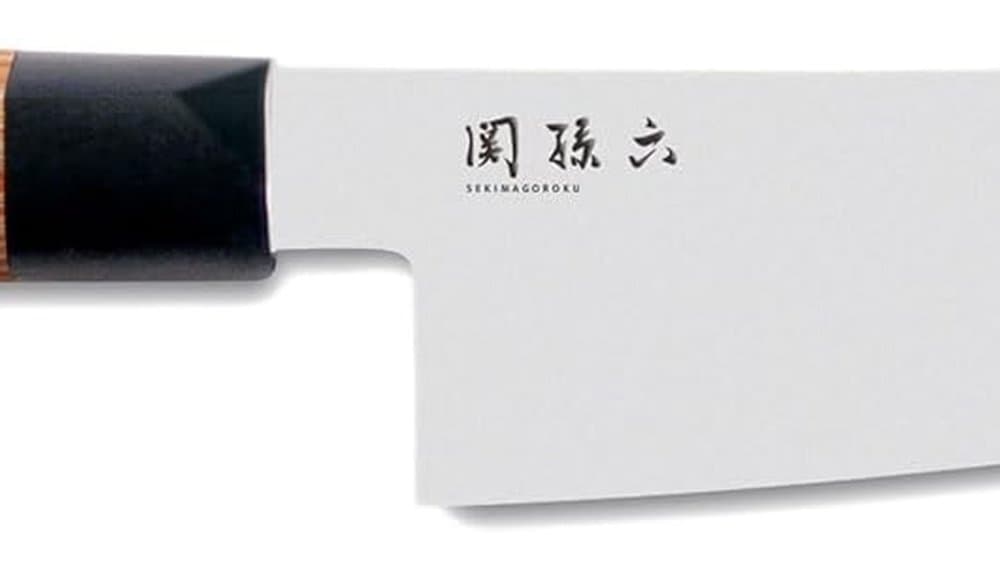
- Refined Aesthetics: The mirror-polished blade and red wood handle offer a appreciated traditional Japanese look.
- Balanced Material: The 1K6 steel with a hardness of 57 HRC represents a good compromise between edge retention and ease of sharpening.
Weaknesses
- Inconsistent Out-of-the-Box Sharpness: Several reports mention deliveries with a lacking edge, requiring immediate sharpening to reach its full potential.
- Tip Fragility: The thin, hard blade is not designed for twisting or shocks; the tip is reported as a weak point in case of a fall.
- Demanding Maintenance: Like any quality Japanese knife, it requires hand washing, immediate drying, and regular sharpening using suitable stones.
- Limited Use: It is a precision tool, not suited for cutting bones, frozen foods, or any forceful use.
Detailed Analysis
See priceConstruction and Materials: The Foundation of Durability
The heart of this knife lies in its forged blade made of high-carbon stainless steel 1K6. This choice is deliberate. According to the specifications, this steel offers an excellent balance between corrosion resistance (thanks to the stainless properties) and the ability to take and hold a fine edge (thanks to the carbon). With an advertised Rockwell hardness of 57 (±1) HRC, we are in interesting territory. This value is significantly higher than that of many mainstream Western knives (often around 52-54 HRC), which suggests superior edge retention. However, it remains below harder Japanese "super steels" (like VG-10 or pure carbon steels which can exceed 60 HRC), which, in return, should make subsequent sharpening more accessible for the informed amateur.
The pakkawood redwood handle is an ergonomic strong point. Pakkawood, a composite of wood and resin, offers the warmth and feel of wood while being much more resistant to moisture and temperature variations than solid wood. Its so-called "chestnut shape" is a traditional Japanese form designed to fit the palm of the hand and offer precise control. The full-tang construction (the blade runs through the entire handle) is a guarantee of long-term strength, distributing forces across the entire tool.
Performance in Use: What Users Say
The user community is unanimous on one point: when the knife is properly sharpened, its cutting performance is excellent. Feedback describes a knife that "cuts so well," with an "excellent edge" that makes food preparation a pleasure. The santoku shape, with its ample belly and raised tip, lends itself well to the "rocking" technique for chopping herbs and the push-pull motion for slicing vegetables.
Balance is frequently cited as a major asset. The weight of 234 grams is well distributed, which reduces fatigue during prolonged use. The pakkawood handle receives praise for its comfort and non-slip nature, even with wet hands.
However, a significant caveat emerges from the feedback: the quality of the out-of-the-box edge is not consistent. While some units are perfect, others arrive with a disappointing edge, as noted by an experienced user: "Hey guys! Don't you mind selling knives that don't cut?". This means the buyer must be prepared to perform an initial sharpening on a stone to reveal the steel's full potential. This is not necessarily a flaw for a knife in this category, but it is a reality to anticipate.
Maintenance and Longevity: A Relationship to Cultivate
This knife is not a "plug and play" utensil. Its "buy-it-for-life" character is intimately tied to how it is maintained. The 1K6 steel, although resistant, requires care to avoid corrosion and maintain its performance.
- Cleaning: Mandatory hand washing, followed by immediate drying. The dishwasher is prohibited, both for the blade and the wooden handle.
- Sharpening: The hardness of 57 HRC allows for good edge retention, but wear is inevitable. Experts recommend regular re-sharpening using a Japanese whetstone (e.g., 1000/3000 grit). This is where the choice of 1K6 steel becomes judicious: it is hard enough to hold an edge but not to the point of making sharpening excessively difficult for a novice.
- Storage: Storing in a block, on a magnetic strip, or in a sheath protects the edge from shocks that could cause chipping.
Robustness is the compromise of this high-performing blade. As one user notes, the blade is "brittle" and the tip is vulnerable in case of a drop. This knife is designed for cutting, not for prying, twisting, or slicing hard elements. Respecting its intended use is the key to its longevity.
Technical Specifications
| Characteristic | Detail |
|---|---|
| Knife Type | Santoku |
| Blade Length | 17 cm |
| Blade Material | 1K6 Stainless Steel (High Carbon) |
| Hardness (HRC) | 57 (±1) |
| Edge Type | Double-bevel |
| Manufacture | Forged |
| Handle Material | Pakkawood Redwood |
| Construction | Full-tang |
| Weight | 234 grams |
| Maintenance | Hand wash only |
What Users Say: Summary of Feedback
Customer reviews paint a consistent and nuanced portrait of the product.
Recurring positive points revolve around the cutting experience once the knife is properly prepared: exceptional sharpness, excellent ergonomics, and perfect balance. The aesthetics are also highly appreciated. One user summarizes the general feeling after proper sharpening: "It's a pleasure to work with."
Points of caution or negatives are instructive:
- Variable Out-of-the-Box Edge: This is the most frequent criticism. Several buyers had to sharpen the knife upon receipt to achieve the expected performance.
- Fragility: The thin, hard nature of the blade makes it sensitive to shocks and twisting. It is not designed for brutal tasks.
- Doubt About Handle Durability: One user raises a concern, although pakkawood is precisely chosen for its resistance.
A professional user provides valuable insight: he confirms that the blade "sharpens well, very well even," transforming a decent tool into an excellent one. He also attests to long-term durability by mentioning a santoku from the same brand that served in a professional kitchen for 8 years.
Conclusion
The KAI Seki Magoroku Redwood Santoku Knife positions itself as a serious contender for the demanding amateur cook looking to invest in a first quality Japanese knife. Its assets are tangible: a solid full-tang construction, well-balanced 1K6 steel that combines good edge retention and sharpenability, and successful ergonomics with its pakkawood handle.
However, it does not work miracles. Its "buy-it-for-life" status is conditional. It requires commitment in terms of maintenance (sharpening stone, hand washing) and a strict usage discipline (no bones, no frozen foods, no twisting). The possibility of receiving a unit with a perfectible factory edge must also be factored into the purchasing process.
Ultimately, this knife is not a universal tool but a specialist in precise cutting. For those willing to care for it and respect its vocation, it offers a very convincing performance/price ratio in the world of forged Japanese knives. It represents an accessible entry point into the demands of Japanese cutlery, with a sufficiently honest material foundation to last for years, even decades, if one cultivates a relationship of care and respect with it.