KAI Shun Classic Japanese Utility Knife Review & Test
Introduction
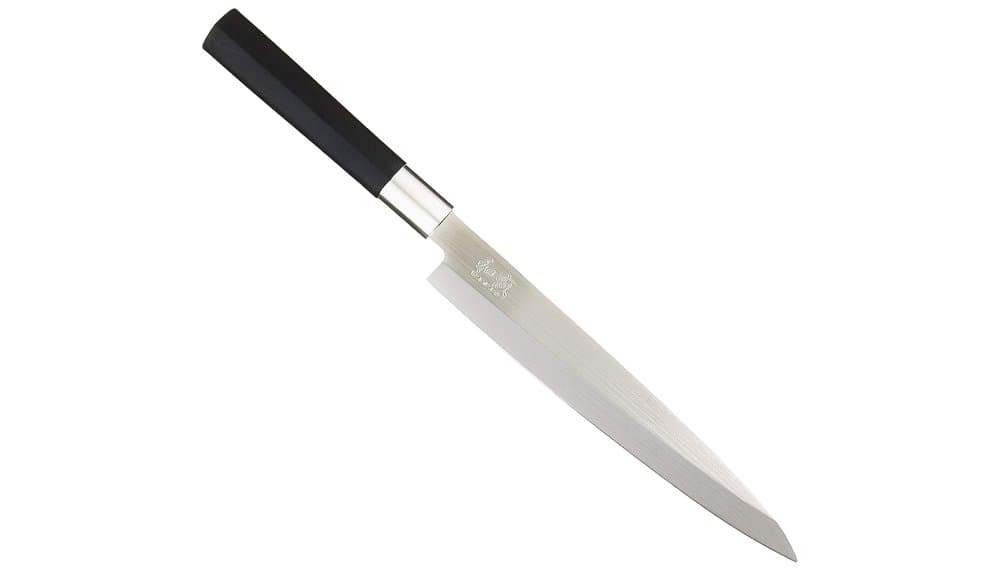
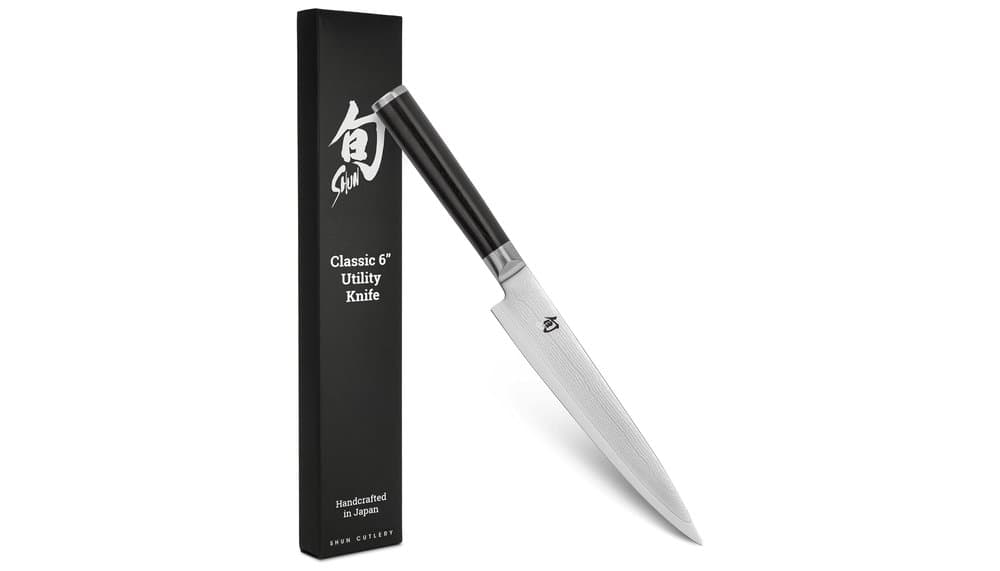
In the world of high-performance kitchen knives, Japanese blades hold a special place, often synonymous with extreme sharpness and ancestral craftsmanship. The KAI Shun Classic Japanese Utility Knife at 15 cm fits into this lineage, presenting itself as a versatile tool designed for precision tasks. On our site, dedicated to durable culinary tools designed to last a lifetime, a central question arises: is this knife a "buy-it-for-life" investment for the passionate cook demanding professional performance? We will dissect its technical characteristics, compare the specifications to community feedback and expert analyses, to determine if this Shun Classic deserves its place in a demanding kitchen arsenal.
Strengths
- Exceptional sharpness right out of the box: The blade, sharpened to a 16° angle, is described by users as a "razor," offering clean, effortless cutting.
- Precision and versatility of the format: The 15 cm (6-inch) blade is considered ideal for delicate tasks like mincing herbs, preparing vegetables and fruits, or deboning small poultry, filling a gap between a paring knife and a chef's knife.
- Remarkable comfort and ergonomics: The Pakkawood handle (compressed and resin-impregnated wood) receives unanimous praise for its natural grip, excellent adhesion even when wet, and comfort during prolonged work sessions.
- Quality construction and finish: The cladding damascus technique (VG-MAX steel core surrounded by 32 layers) and the hardening to 61 HRC promise a good balance between edge retention and robustness, with a refined aesthetic.
- Overall appreciated balance: Testers and users highlight its perfect balance between the weight of the blade and that of the handle, contributing to a feeling of increased control and maneuverability.
Weaknesses
- Inherent fragility of the thin, hard blade: Its high hardness and very acute sharpening angle make it susceptible to chipping (micro-chips) if it comes into contact with hard materials (bones, pits, glass or ceramic cutting boards) or is subjected to twisting use.
- Demanding and non-negotiable maintenance: It requires meticulous care: strictly hand-washing, immediate drying to prevent rust, and sharpening on quality whetstones suited to hard Japanese steels. It is absolutely not suitable for the dishwasher.
- Investment in time and skill: This is not a "plug and play" tool. To last a lifetime, it demands that its owner learn proper usage and maintenance practices.
- Price of excellence and missing accessories: Some users note that for a knife at this level, the absence of a protective sheath in the box is regrettable, making secure storage in a drawer less straightforward.
Detailed Analysis
Materials and Manufacturing: The Japanese Art of Compromise
The KAI Shun Classic is the result of a manufacturing philosophy that prioritizes sharpness above all. At the heart of the blade lies VG-MAX steel, a stainless steel specially developed by KAI. It is an evolution of the well-known VG-10 steel, enriched with carbon, cobalt, and vanadium. These alloys aim to increase the fineness of the steel's grain, thus improving its ability to achieve and retain an extremely sharp edge. The blade is forged according to traditional Japanese methods, which aligns the steel's molecular structure for better strength.
The choice of a hardness of 61 (±1) HRC on the Rockwell scale is significant. This is a high level, typical of quality Japanese knives. This translates to excellent edge retention: the knife will stay sharp longer between sharpenings than a Western knife at ~55-58 HRC. However, this hardness has a downside. It makes the blade more brittle and less tolerant of twisting or impacts. Sharpening is also longer and must be done with appropriate tools (fine-grit water stones), as hard steels are difficult to "bite." Therefore, it is not a knife to be entrusted to a classic sharpening steel.
The 32-layer damascus cladding is not just aesthetic. It protects the VG-MAX core, improves corrosion resistance, and, above all, significantly reduces food sticking to the blade during cutting.
See priceErgonomics and Grip: A Precision Tool
This is the point where feedback is most laudatory. The Pakkawood handle is an intelligent solution. It combines the warmth and natural grip of wood with the water resistance and durability of synthetic resins. Its so-called "D-shaped" form is asymmetrical, offering ergonomic comfort suited for both right-handed and left-handed users. Users consistently describe a secure, balanced grip with no pressure points, even during prolonged use. This balance is crucial for minimizing fatigue and allowing maximum control during precise cuts, which perfectly matches the vocation of this utility knife.
Durability and the "Buy-It-For-Life" Vision
Can this Shun Classic be considered a lifetime purchase? The answer is conditional.
Yes, if one considers its intrinsic construction. The materials are top quality, Japanese manufacturing is renowned for its quality control, and there are no parts that will inevitably wear out over time. The VG-MAX core is very corrosion-resistant, and the Pakkawood handle will not crack with normal care.
However, its durability depends entirely on the user. This knife is a precision tool, not an all-rounder. Its Achilles' heel is its thin, hard blade. A shock against a bone, a fall on a hard floor, or repeated dishwasher washing can damage it irreparably. Its longevity is therefore directly linked to the owner's willingness to follow strict rules: exclusive use on soft wood or polyethylene cutting boards, hand washing, immediate drying, and secure storage (preferably on a magnetic rack or in a sheath).
For the serious cook willing to adopt these practices, this knife can be a companion for a lifetime that will only require regular sharpening sessions on a stone to regain its legendary edge. For someone looking for an indestructible tool that can chop chicken bones or survive a hectic family life, a Western knife made of softer steel with a thicker blade will be a more appropriate choice.
Technical Specifications
| Characteristic | Detail |
|---|---|
| Model | KAI Shun Classic Japanese Utility Knife |
| Blade Length | 15 cm (6 inches) |
| Blade Type | Utility Knife / Short Santoku |
| Blade Material | VG-MAX steel core, surrounded by 32 layers of stainless damascus cladding steel |
| Rockwell Hardness (HRC) | 61 (±1) - Very High |
| Sharpening Angle | ~16° per side (double-bevel edge) |
| Manufacturing | Forged blade |
| Handle Material | Black Pakkawood (stabilized wood) with metal bolster (collar) |
| Handle Shape | Asymmetrical "D" shape, suited for right/left-handed users |
| Balance | Balanced at the bolster (blade/handle junction) |
| Maintenance | Hand wash mandatory. Sharpening recommended on water stones. |
| Origin | Made in Japan (Seki) |
What Users and Experts Say
The synthesis of several thousand customer reviews and expert analyses available online paints a very clear consensus.
Praise is overwhelming and focuses on the cutting experience:
- The vast majority of users use terms like "razor," "exceptional sharpness," "effortless cut" to describe the immediate performance. Many talk about a new "joy of cutting."
- The handle ergonomics and the overall balance of the knife are constantly praised. Feedback indicates it "fits perfectly in the hand" and remains comfortable during long prep sessions.
- The aesthetic finish (damascus pattern, satin finish) is a plus that adds to the pleasure of use, transforming it into a beautiful tool-object.
Warnings and criticisms are recurring and revolve around fragility and maintenance:
- Experts and experienced users unanimously emphasize the fragile nature of the blade. Testimonials report micro-chipping on the edge after accidentally hitting an avocado pit or a board that is too hard.
- The need for meticulous maintenance is the leitmotif of all comments. The dishwasher ban is hammered home, and the importance of proper sharpening (water stones, not classic steels) is strongly recommended.
- A few users regret the absence of an included protective sheath, considering it a lack for a product of this caliber.
- An important point raised by experts: this knife is not designed for tasks requiring force (breaking down carcasses, cutting through bones). Its role is precision and finesse.
Conclusion
The KAI Shun Classic Japanese Utility Knife is much more than a simple knife; it is a precision instrument that demands respect and attention. Its spectacular sharpness, refined ergonomics, and quality construction make it a remarkably high-performing tool for the serious cook who values cutting finesse and the pleasure of the gesture.
However, its evaluation from a "buy-it-for-life" angle must be nuanced. Its durability is not absolute; it is conditional on the adoption of good practices. It will not survive neglect. It is not the universal, indestructible knife for the whole family, but rather the dedicated companion of an enthusiast who understands and accepts the constraints that come with high-level performance.
In summary, if you are ready to treat this knife with the care of a master's tool – using it on suitable surfaces, washing and storing it attentively, and learning to sharpen it properly – then the Shun Classic can be a lifetime investment that will transform your cooking experience. If you are looking for an all-purpose, hassle-free knife, Western alternatives with softer steels will likely be more suited to your use.