KAI Wasabi Black Nakiri Knife Review
Introduction
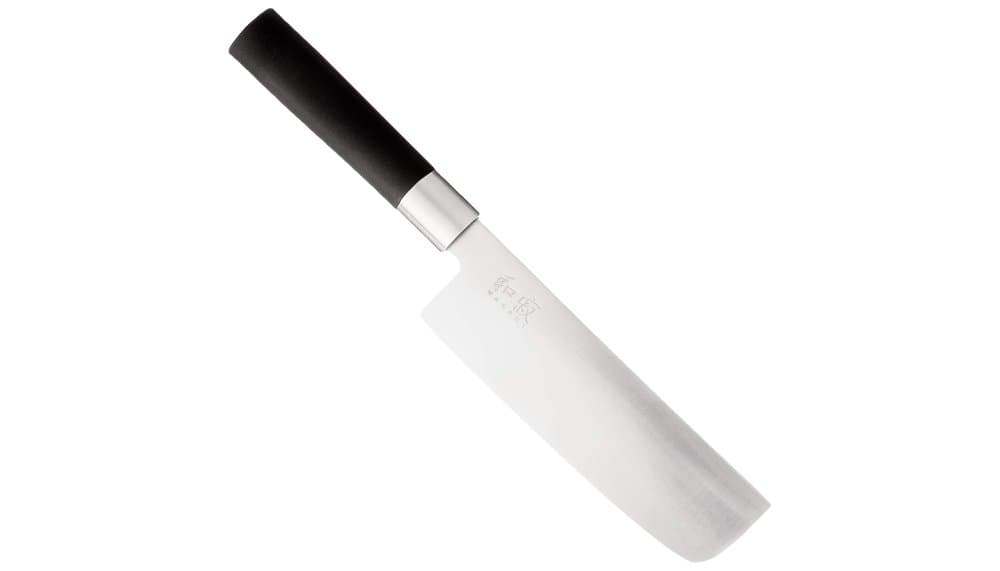
In the demanding world of Japanese kitchen knives, where premium steels and artisanal finishes reign supreme, the KAI Wasabi Black line presents itself as a pragmatic proposition. The KAI Wasabi Black Nakiri embodies this philosophy: a specialized tool, born in professional Japanese kitchens, designed to offer serious performance without reaching price peaks. For the passionate enthusiast or the demanding cook looking for a durable and effective tool, this blade deserves a thorough analysis. We will dissect its specifications, its user feel as reported by the community, and evaluate its legitimacy as a "buy-it-for-life" investment for vegetable preparation.
Key Strengths
- Exceptional Factory Sharpness: The point unanimously praised, whether by expert testers or hundreds of customer reviews. The knife arrives extremely sharp, "like a razor," allowing clean and precise cuts straight out of the box.
- Remarkable Value for Money: This is the central argument. For a knife forged in Japan, the performance is considered excellent for its cost. It is often cited as the best entry-level option to discover a true Nakiri.
- Handling and Balance: Its design, with a 16.5 cm blade and a weight of 220g, is described as agile, well-balanced, and comfortable. The grip is intuitive, even for those accustomed to Western knives.
- Effective Specialization: As a Nakiri, it excels in its primary function. The straight blade and heel height facilitate chopping, slicing, and dicing vegetables with great precision.
- Easy Maintenance: The so-called encapsulated "full-tang" construction means the resin handle completely envelops the blade's tang. This prevents dirt infiltration and facilitates hygienic hand cleaning.
Weaknesses
- Average Edge Retention: The steel, with a hardness of 58 HRC, requires more frequent sharpening than harder steels (like VG-10 at 60-61 HRC or carbons). It will not keep its original edge as long.
- Limited Versatility: It's a specialist. Its thin, straight blade is not designed for meat with bones, poultry, or bony fish. Any attempt at shearing or cutting hard elements risks damaging it.
- Handle Finish and Durability: Although comfortable, the polypropylene handle loaded with bamboo powder can, according to feedback, show scratches easily and some users note it has a "tendency to whiten over time", affecting the aesthetics.
- Standard Steel: The 6A/1K6 is a good quality stainless steel but without the high-end properties of other alloys. It represents a compromise to reach this price point.
Detailed Analysis of the KAI Wasabi Black Nakiri
Materials and Manufacturing: The Smart Compromise
The KAI Wasabi Black Nakiri is made in Japan, in the historic city of Seki, renowned for its cutlery. This is a mark of seriousness. The blade is made of stainless steel 6A/1K6, a medium-quality carbon steel. Its particularity is offering a good balance between corrosion resistance, ease of sharpening, and controlled cost. With a Rockwell hardness of 58 (±1) HRC, it sits in the lower range of high-performance Japanese knives.
What interests us here is the interpretation of this figure. An HRC of 58 means the steel is relatively "soft" compared to its premium counterparts. The direct consequence is twofold: on one hand, edge retention (the duration it stays sharp) will be lower than that of a 62-63 HRC steel. On the other hand, and this is an advantage for many, it is much easier and quicker to resharpen on a whetstone. One user summarized it this way: "The steel is soft (HRC 58) which from my point of view is an advantage for a knife in the long term: it limits the risk of breakage and allows for easy sharpening." For a "buy-it-for-life" philosophy, this ease of maintenance is a major asset, provided you accept sharpening it more often.
The blade is of stamped construction (cut from a sheet of steel), not forged. This influences the price and weight, generally in favor of increased lightness. The polished finish is appreciated for its ease of cleaning.
Ergonomics and Grip: Comfort for Daily Use
Feedback on ergonomics is extremely positive. The "Western" style handle (symmetrical, unlike traditional Japanese D-shaped handles) is designed for immediate adaptation. The addition of bamboo powder in the black polypropylene aims to give a less plastic and more natural feel. The community confirms this impression, describing a "very good grip" and a "well-balanced" knife.
The Nakiri shape, with its slightly curved spine, provides a contact point for the index finger, improving control during cutting. For prolonged vegetable prep sessions, this careful ergonomics is a key factor for satisfaction and reduced fatigue.
See priceCutting Performance: The Vegetable Specialist
This is where the Wasabi Black Nakiri justifies its existence. The tall, straight blade (guillotine style) allows for a vertical piston movement perfect for finely slicing herbs, chopping onions without crushing them, or cutting root vegetables into regular dice. Expert testers emphasize its "great efficiency for slicing, chopping, and dicing vegetables."
The very fine factory edge facilitates these tasks. However, as mentioned, this fineness and the steel's hardness dictate a strictly dedicated use. One must not twist the blade or attempt to debone. It is a tool of precision, not force.
Long-Term Durability and Maintenance
The durability of the KAI Wasabi Black must be evaluated from two angles.
- Construction: The encapsulated full-tang construction is solid and hygienic. The resin handle is water-resistant and is unlikely to crack or rot. It is built to last.
- Blade and Edge: This is the point of vigilance. The 58 HRC steel will become dull relatively quickly with intensive use. The "buy-it-for-life" philosophy therefore applies provided you integrate a regular sharpening cycle (on a stone, ideally). The knife is designed to be maintained and revived, not to stay perfectly sharp for years without intervention. One user puts it well: "I sharpen them once a month because their edge is phenomenal."
The fact that it is not dishwasher safe is a given for any quality knife. Hand washing and immediate drying are mandatory to prevent any corrosion (although the steel is stainless) and protect the edge.
Target Audience: For Whom is This the Right Choice?
The KAI Wasabi Black Nakiri is the ideal tool for the serious home cook who wants to add a specialized vegetable cleaver to their arsenal without breaking the bank. It's an excellent first Nakiri or a perfect complement to a versatile chef's knife. It suits those who are ready to learn the basics of sharpening to keep their tool in perfect condition.
It is less suited for those looking for an "all-in-one" knife, who never want to sharpen, or who are in search of exceptional materials (Damascus steel, pure carbon, etc.). It represents a smart compromise where money is invested in functionality and effective geometry rather than in the prestige of materials.
Technical Specifications
| Characteristic | Detail |
|---|---|
| Model | KAI Wasabi Black Nakiri |
| Blade Length | 16.5 cm (6.5") |
| Blade Material | Stainless Steel 6A/1K6 (High Carbon Stainless Steel) |
| Rockwell Hardness (HRC) | 58 (±1) |
| Edge Type | Double Bevel (Plain) |
| Manufacturing Type | Stamped |
| Handle Material | Black polypropylene with bamboo powder |
| Handle Construction | Encapsulated full-tang |
| Weight | 220 grams |
| Manufacturing Origin | Japan (Seki) |
| Maintenance | Hand wash only. Regular sharpening on a stone recommended. |
What Users and Testers Say
An analysis of over 2,800 customer reviews (with an overall rating of 4.6/5) and expert feedback allows us to identify very clear trends.
The recurring praise revolves around three axes:
- Immediate Sharpness: Words like "razor," "top sharpness," "phenomenal" come up constantly. Users are impressed by the performance from the first use.
- Comfort and Balance: The grip is described as "pleasant," "natural," and "secure." Balance is often cited as a strong point.
- Perceived Value: It is frequently called an "excellent value for money", "affordable reference," and "best choice for a first nakiri." The Japanese manufacturing is an appreciated mark of trust.
Criticisms and remarks focus on:
- The Need for Sharpening: Several emphasize that to maintain performance, it needs to be sharpened regularly. One user notes: "It is therefore an excellent choice if you have the necessary tools to restore its edge."
- Handle Finish: Remarks about easily visible scratches on the matte black handle, and its color change (whitening) over time, are present. This is an aesthetic rather than functional point.
- Potential Blade Fragility: Some reviews, notably on other models in the range, mention that the blades scratch more easily than other steels. This corroborates the softer nature of the 6A/1K6 steel.
Expert testers summarize the product well: it's an excellent entry-level nakiri, very effective in its specialty, but which requires respecting its use (vegetables only) and accepting more frequent maintenance (sharpening) than with high-end steels. They position it as a pragmatic and intelligent choice before venturing into more expensive purchases.
Conclusion
The KAI Wasabi Black Nakiri Knife is much more than a simple cheap vegetable knife. It's a serious and thoughtful gateway into the world of specialized Japanese knives. Its analysis reveals an honest product that owns its compromises: a 58 HRC steel that sharpens easily but loses its edge relatively quickly, a stamped construction that lightens the price and weight, and a resin handle that is durable but prone to marking.
For the passionate cook looking for a high-performance, maneuverable, and reliable tool dedicated to cutting vegetables, and who is ready to maintain its edge regularly, this nakiri represents an extremely judicious investment. It offers the essence of the experience of a real Japanese Nakiri – the geometry, balance, and cutting feel – without the cost of exceptional finishes and steels.
In summary, if you accept the maintenance contract it proposes, the KAI Wasabi Black Nakiri has all the strengths to become a durable and appreciated kitchen companion. It may not be a "buy-it-for-life" in the sense that it won't survive 50 years without care, but it is undoubtedly a "buy-it-to-use-and-maintain-for-life", which, in the world of kitchen tools, is often the mark of the most loved and useful objects.