KICHLY EU0309 Cast Iron Skillet Review & Test
Introduction
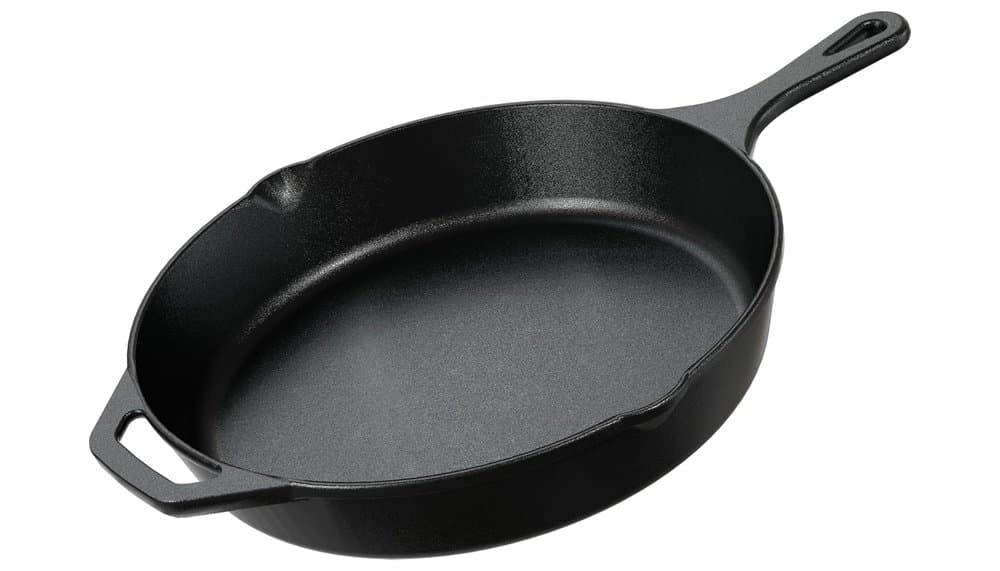
In the world of durable kitchenware, the cast iron skillet holds a special place. A cult object, it promises to last for decades if properly cared for. The KICHLY EU0309 Pre-Seasoned Cast Iron Skillet positions itself as an affordable option for those who want to integrate the benefits of cast iron without a significant initial investment. Our analysis focuses on its suitability for a "buy-it-for-life" philosophy: is this product a reliable tool for the demanding cook, or a compromise with uncertain durability? By cross-referencing its technical specifications, community feedback, and expert analyses, we paint a complete picture of this 12-inch (30.5 cm) skillet.
Key Strengths
Based on all the data analyzed, the strengths of the KICHLY EU0309 are clear and recurring.
- Perceived excellent value for money: This is the most cited argument. Compared to established brands, its entry cost is significantly lower, making it an attractive gateway to cast iron cooking.
- Thermal versatility and performance: Its compatibility with all heat sources (gas, electric, ceramic glass, induction) and the oven (up to 650°C) is a real plus. Users confirm even heat distribution and excellent heat retention, ideal for searing and keeping dishes warm.
- Practical factory pre-seasoning: The product arrives with an initial seasoning of soybean oil, saving about ten initial manual seasoning cycles. For many, this makes it easier to get started.
- Functional design: The presence of two pouring spouts is praised for drip-free pouring. The hanging hole at the end of the handle facilitates storage.
Weaknesses
Feedback also highlights limitations inherent to the model or its manufacturing.
- Uneven quality control and risk of major defect: This is the most serious issue. A significant fraction of negative reviews report cracks appearing in the cast logo on the cooking surface, especially during first uses on induction. This defect, potentially dangerous, points to internal stresses in the cast iron.
- Weight and handle ergonomics: At 3.25 kg, it is in line with the standard for large cast iron skillets, but its short stainless steel handle limits leverage. It gets very hot and always requires a towel or potholder, a point confirmed by all testers.
- A "pre-seasoning" that requires self-reinforcement: Most experienced users emphasize that the factory seasoning is insufficient for true non-stick performance. Several additional seasoning cycles are almost essential, especially for cooking eggs or delicate foods without sticking.
- Demanding maintenance: Like all cast iron, it requires a strict protocol: hand washing only, immediate and thorough drying (often over heat for a few minutes), and occasional light oiling to prevent rust. The engravings on the bottom of the pan can trap water.
Detailed Analysis
Materials and Construction: Iron, but with what guarantees?
The advertised material is cast iron. This is the standard for this type of cookware, known for its robustness and heat retention capacity. The central question for a "buy-it-for-life" approach is not the composition, but the quality of the casting and the control of internal stresses. The reports of cracks, while likely not affecting the majority of units, indicate variability in production. Quality cast iron must withstand thermal shock without cracking. Here, absolute durability cannot therefore be guaranteed for 100% of units, which distinguishes this product from brands with a long heritage of know-how.
Unlike a knife where one would analyze the steel (VG-10, AUS-10) and its Rockwell hardness (HRC), the analysis of cast iron focuses on its mass, surface finish, and resistance. The weight of 3.25 kg is a sign of stability and thermal inertia, but also a manual inconvenience.
See priceCulinary Performance and Maintenance
On paper, the specs promise a high-performing skillet, and user feedback confirms this when it is well maintained. Once properly seasoned (a process the community deems necessary beyond the factory pre-seasoning), it develops a natural black polished non-stick finish. Its large surface area allows cooking for several people, and its oven performance makes it a tool for roasting or finishing a steak.
Maintenance is the key to its longevity. The official instructions (no dishwasher, careful drying, occasional oiling) are standard and must be followed to the letter. The community notes that the logo engravings are a weak point for moisture retention, requiring meticulous drying in that area.
For Which Type of Cook?
The KICHLY EU0309 appeals to two main profiles:
- The curious or budget-limited cook wishing to discover cast iron cooking without breaking the bank. It is a learning tool for the material, with potentially very good performance after a time investment (seasoning).
- The already-equipped cook looking for a large, versatile, oven-safe skillet for specific uses (pan pizza, large roasts, family cooking), without paying a premium brand price.
For the exacting cook seeking a professional and reliably inheritable tool, the reports of cracks and the absence of a lifetime guarantee (unlike brands like Lodge) are prohibitive drawbacks. The construction does not seem to offer the safety margin and consistency that define a true "buy-it-for-life" item.
Technical Specifications
| Characteristic | Detail |
|---|---|
| Model | KICHLY EU0309 |
| Diameter | 31.75 cm (12.5 inches) / Cooking surface ~30.5 cm (12 inches) |
| Body Material | Cast Iron |
| Handle Material | Stainless Steel (secured by rivets) |
| Weight | 3.25 Kilograms |
| Capacity | 3.2 quarts (approximately 3 liters) |
| Seasoning | Factory pre-seasoning with soybean oil |
| Compatibilities | Gas, electric, ceramic glass, induction, oven |
| Max Temperature | 650°C |
| Maintenance | Hand wash only. Immediate drying imperative. |
| Warranty | Information not provided by the brand. Subject to legal warranties and seller's return policy. |
What Users Say
A synthesis of nearly 6,200 reviews (average rating 4/5) and expert web analyses reveals clear trends.
The praise focuses on perceived value. Phrases like "unbeatable value for money," "very good quality for the price," and "excellent heat distribution" are legion. Satisfied users describe a skillet that, after a few personal seasoning cycles, becomes high-performing, non-stick, and pleasant to use. Versatility (stovetop + oven) and large size are also frequently cited as major assets.
The criticisms and warnings are equally instructive:
- Manufacturing defects: One-star reviews are often associated with catastrophic cracks appearing during the first heating, particularly on induction cooktops. These reports, sometimes accompanied by photos or videos, describe a dangerous and failed product.
- Insufficient seasoning: A majority of users, even satisfied ones, specify having had to re-season the skillet several times before obtaining a properly non-stick surface. The "ready-to-use" claim is therefore to be qualified.
- Ergonomics and maintenance: The weight and the heat of the handle are systematically mentioned as drawbacks to anticipate. The need for perfect drying to avoid rust is also a recurring theme in user advice.
Expert testers confirm these points, presenting it as an economical alternative to Lodge, with good features (pouring spouts) but less robust quality control and warranty.
Conclusion
The KICHLY EU0309 Pre-Seasoned Cast Iron Skillet is an ambivalent product. On one hand, it offers at an attractive price the essential advantages of cast iron: remarkable thermal inertia, total versatility, and a theoretically unlimited longevity potential. For a cook willing to invest time in seasoning it and rigorous in its maintenance, it can become a high-performing and faithful tool.
However, from a strict "buy-it-for-life" perspective, its main flaw is a quality control that does not seem infallible. The presence, even if a minority, of reports of structural cracks is a signal that manufacturing consistency does not reach the level of segment benchmarks. It thus represents a budget gamble: an excellent deal if you get a flawless unit, but a risk, albeit statistically low, of receiving a defective and potentially dangerous product.
In summary, it is a skillet that can be perfectly suitable as an introductory tool or a secondary large skillet, provided you carefully inspect the product upon receipt and test its solidity during the first heating sessions. For the exacting cook seeking the absolutely reliable and transmissible tool, investing in a brand with proven quality control and a lifetime guarantee remains, according to our analysis, the safest choice.