King Sharpening Stone Set Test for Woodworking Tools
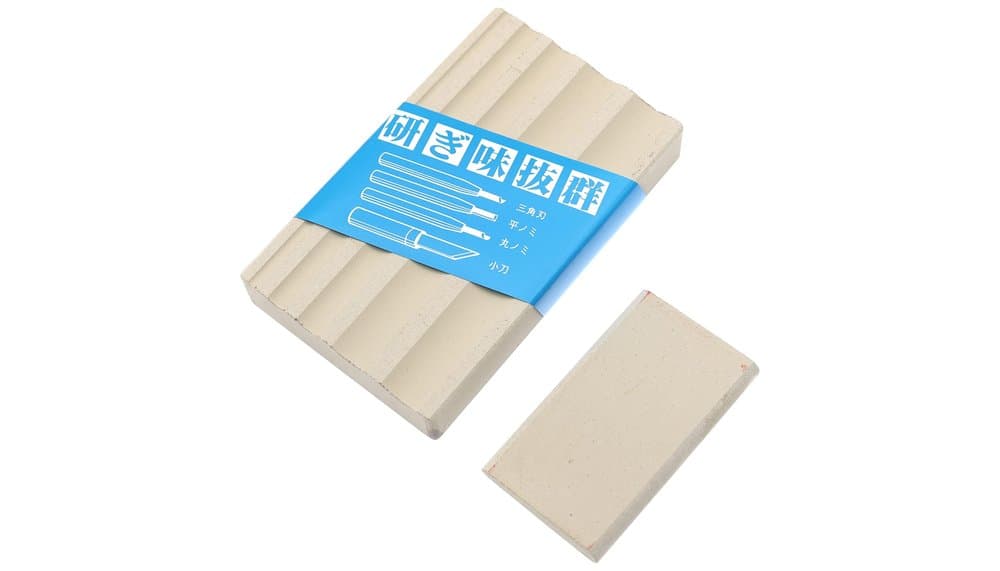
Analysis Article: The King #4000 Sharpening Stone Set for Woodworking Tools
We dedicate this site to kitchen tools built to last: Japanese knives, steel woks, cast iron cookware. The ability to maintain them, and especially to sharpen them, is at the heart of the buy-it-for-life philosophy. Today, we examine a tool that, although dedicated to woodworking, captures the attention of many knife enthusiasts: the King #4000 Sharpening Stone Set for Woodworking Tools. This is a double-grit Japanese waterstone, offered by the historic brand King (Matsunaga). Its name indicates a professional target, but its reputation extends beyond that. Is it a lasting investment for the serious cook? Complete analysis.
Strengths
The Proven Effectiveness of the #4000 Grit
The main stone in this set, with a #4000 grit, is its main asset. According to feedback from experts and users, this grit consistently produces a mirror edge and a razor-sharp cutting edge. For us knife users, it's the ideal finishing step after sharpening on a coarser grit: it polishes the edge, refines the burr, and provides a clean, precise cut on vegetables and fine proteins. The community emphasizes that this grit is perfect for the regular maintenance of an edge that is already in good condition.
Ease of Use and Accessibility
Unlike complex systems, King stones are renowned for their simple approach. A 5 to 10 minute soak in water is sufficient before use. This accessibility makes it, according to specialized forums, a popular choice for beginners who want to get started with Japanese water sharpening without an excessive investment. The presence of a second grit (generally coarser, around #800 or #1000 depending on the model) in the set offers an all-in-one solution for reshaping and polishing.
Heritage and Reliability of the King Brand
King (Matsunaga) is an established Japanese brand, synonymous with tradition and consistent quality. On paper, this reassures us about the product's consistency. The stones are made in Japan, a guarantee for many demanding users. The fact that this model is specifically designed for woodworking gouges and chisels indicates robustness against tool steels, which are often softer than high-end knife steels but demanding in terms of abrasive bite.
Weaknesses
A Moderate Cutting Speed
This is the most recurrent criticism among experienced testers. Compared to high-end stones like Shapton Pro or Naniwa Super Stone, King stones are described as slower. Their softer abrasive gives way more easily, which can make working on very hard steels (like VG-10 or ZDP-189) somewhat time-consuming. The set's coarse grit stone is particularly singled out for its limited cutting speed on a heavily damaged edge.
Mandatory Maintenance and Flattening
The trade-off for their softness and effectiveness is more demanding maintenance. These stones are described as "soft": they dish (lose flatness) with use. To maintain a perfectly flat surface – essential for precise sharpening – they must be flattened regularly with a flattening stone or a diamond plate. Furthermore, they should not be left soaking indefinitely in water, at the risk of cracking. They therefore require more care and knowledge than a harder, splash-and-go stone.
See priceA Format Optimized for Tools, Not Necessarily for Large Knives
The set is designed for woodworking, sometimes with grooves for gouges. Its dimensions (approximately 11 x 6.5 cm) are perfect for a chisel, but can be a bit tight for sharpening a large 20 cm Western chef's knife. The operation is still possible, but it requires more strokes and a more controlled motion than on a 21 cm long stone. For mixed use (tools and kitchen knives), this is a limitation to consider.
Detailed Analysis and "Buy It For Life" Perspectives
Materials and Construction: The Controlled Compromise
King stones are synthetic waterstones. Their binder is relatively soft, which allows the abrasive to wear and renew itself, constantly releasing sharp particles. This mechanism explains both their pleasant sharpening feel and their faster wear. From a buy-it-for-life perspective, this is not a fatal flaw, but a characteristic that defines the product's lifecycle. The stone does not wear "down to disappearance", it is consumed. Its long-term durability depends entirely on frequency of use and the rigor of maintenance. With regular flattening, a King stone can serve for years, even a decade, for regular domestic use.
Performance with Knife Steels
Our core analysis: how does it perform with our knives?
- Carbon steels (Aogami/Shirogami type, "Blue/White Steel"): It's an excellent partner. The #4000 stone gives a sublime finish and sharpness on these pure, relatively easy-to-sharpen steels. Its moderate speed is not a problem here.
- Modern stainless steels (VG-10, AUS-10, SG2): It works, but testers note that it can lack bite on the coarser grit if the edge is very dull. The #4000 grit, however, perfectly performs its final polishing job.
- Very hard steels (>62 HRC) or those with large carbides: This is where its limited cutting speed is most felt. It is not ideal for reprofiling this type of blade. It remains usable for maintenance, but the operation will be longer.
Water Management, Drying, and Flatness
The necessity for pre-soaking and air drying makes it a product that requires a bit of planning. You can't just take it out and use it in 30 seconds like a splash-and-go stone. You need to anticipate the sharpening session. This is not necessarily a disadvantage, but it frames its use within an organized routine. The loss of flatness, as mentioned, is the main point of vigilance for longevity. The parallel acquisition of a flattening tool (an inexpensive small diamond plate suffices) is almost mandatory for anyone wanting to get the best out of this stone in the long run.
Technical Specifications
| Characteristic | Detail |
|---|---|
| Brand | King (Matsunaga) |
| Manufacturing Origin | Japan |
| Stone Type | Synthetic waterstone |
| Included Grits | #4000 (main stone) and #800 or #1000 (varies by batch) |
| Dimensions (L x W x H) | Approximately 11 x 6.5 x 1.5 cm |
| Net Weight | 280 g |
| Lubrication | Water only (no oil) |
| Preparation | 5-10 minute soaking required |
| Recommended Use | Wood carving tools (gouges, chisels), knives, scissors |
What Users and Experts Say
The synthesis of customer reviews and online discussions paints a clear consensus.
Praise is unanimous on several points:
- The quality of the edge obtained with the #4000 grit is very frequently cited as "perfect", "razor", or "mirror".
- The ease of use for beginners is praised.
- The Japanese manufacturing quality and finish are appreciated.
- Several users have successfully repurposed it for sharpening kitchen knives, reportedly even saving old knives according to one testimony.
Criticism and warnings focus on practical aspects:
- The size is considered a bit small for the widest gouges (over 22mm), requiring a side-to-side sliding motion.
- The need for maintenance (flattening) is emphasized by advanced users.
- Some note some confusion about the exact grit of the second stone (marked as #4000 on the product, but sometimes perceived as coarser, around #800/#1000 in use), although this does not seem to harm its overall functionality.
The overall feeling is one of excellent value for money for a quality entry-level product, often described as "expensive but works well". It is perceived as a durable purchase, provided one accepts and masters its maintenance requirements.
Conclusion: A Judicious Choice, With Awareness of Its Limits
The King #4000 Sharpening Stone Set for Woodworking Tools is much more than a sculptor's tool. It is a serious and effective gateway into the world of Japanese water sharpening. For the passionate cook looking to maintain their carbon steel or standard Japanese knives, the #4000 grit is a real asset.
Its main merit is delivering professional results – a polished, ultra-fine edge – with a reasonable learning curve. However, the buy-it-for-life approach requires considering the entire ecosystem. This set is not a "set it and forget it" solution. It is a living tool that requires attention: soaking, flattening, careful drying.
We therefore warmly recommend it to two profiles:
- The beginner enthusiast who wants to learn the fundamentals on authentic and effective equipment without breaking the bank.
- The experienced user specifically seeking the finishing qualities and "bite" of a soft Japanese waterstone for their traditional steel knives, and who is prepared to maintain it.
For intensive, daily use on very hard steels, or for those who prioritize speed and low maintenance, harder and faster alternatives (like Shapton Pro) may be more suitable. But in its niche, the King set remains a safe bet, a classic whose reputation is well-deserved. It's an investment for the long term, provided you also invest a bit of know-how.