Le Creuset Signature Dutch Oven Review
Introduction
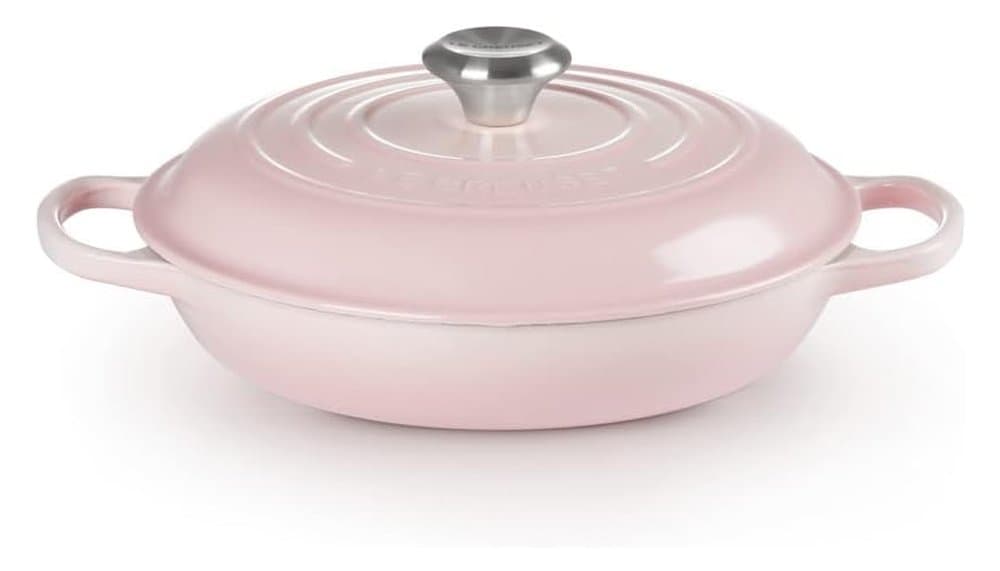
In the world of durable cookware, few names resonate with as much authority as Le Creuset. The Le Creuset Signature Dutch Oven in enameled cast iron embodies this reputation. On a site dedicated to high-performance kitchen tools designed to last, this Dutch oven deserves an in-depth analysis from a buy-it-for-life perspective. We will dissect its technical specifications, evaluate its potential for the serious cook, and synthesize what the community and experts say about it. It is not a simple utensil, but a potential heirloom for your kitchen.
Strengths
- Durability and Heritage: A thick enameled cast iron construction and French craftsmanship promise exceptional longevity, often measured in decades.
- Supreme Thermal Performance: The cast iron provides extremely uniform heat distribution and remarkable heat retention, ideal for stews and slow cooking.
- Total Versatility: Compatible with all stovetops (induction included) and oven-safe, it's a true all-in-one tool for the stovetop and oven.
- Ease of Maintenance: The smooth interior enamel is non-porous, acid-resistant, and does not require seasoning. It is renowned for easy cleaning.
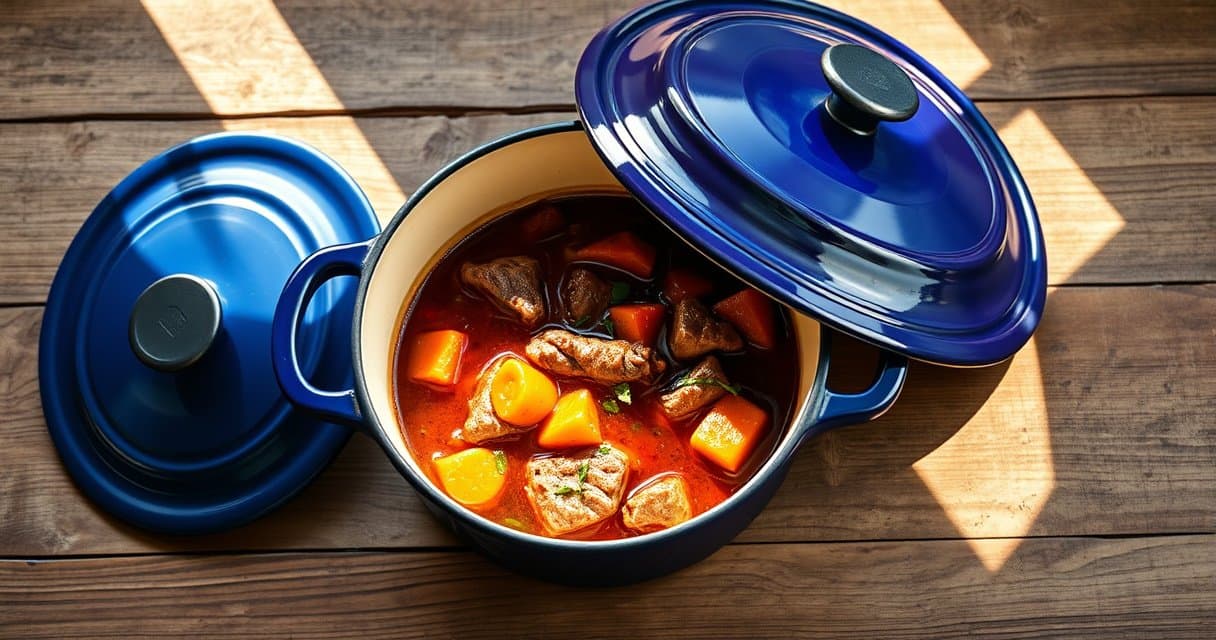
- Ergonomics and Finish: The wide, hollow handles are designed for a secure grip, even with oven mitts. The refined aesthetic finish allows for serving at the table.
Weaknesses
- Significant Weight: The density of cast iron translates into a heavy pot (4.2 kg empty for the 26 cm model), which can hinder maneuverability, especially when full.
- Learning Curve: Cast iron retains heat extremely well, requiring the use of medium-low heat to avoid burning food. An adjustment period is necessary.
- Usage Precautions: Although robust, the enamel can be susceptible to violent thermal shock (going from very hot to very cold) or physical impacts. A certain level of care is required.
- Initial Investment: The product is positioned in the premium segment, representing a significant investment, though users justify it by its longevity.
Detailed Analysis
Construction: A Brute Force Material
The heart of this product is cast iron. Unlike carbon steel which can be thin and requires seasoning, or knife steels (VG-10, AUS-10) which are alloyed for hardness, cast iron is prized for its mass and heat capacity. No Rockwell Hardness (HRC) data is relevant here; the metrics are weight and thickness. Le Creuset uses quality cast iron, coated with a high-temperature vitrified enamel. This dual layer is fundamental: the cast iron ensures thermal performance, while the enamel creates a non-porous, non-stick, and maintenance-free surface compared to raw cast iron. It's a material choice that focuses on ease and durability without compromising heat retention.
Cooking Performance: Inertia and Uniformity
On paper, the specifications announce compatibility with all stovetops. In practice, the community and testers emphasize that this Dutch oven excels at slow and medium cooking. The heat distribution is exceptionally uniform, eliminating hot spots that could burn the bottom of a dish. Its thermal inertia allows it to maintain a constant simmer with minimal energy expenditure once up to temperature. Based on feedback, it excels at braising, stews, soups, and even bread baking. For searing, it is capable, but its significant mass means it takes longer to heat up than a carbon steel skillet.
See priceErgonomics and Handling
The handles of the Signature line are a frequently cited strength. They are wide, hollow, and designed to be grasped even with gloved hands. For a tool of this weight, good ergonomics are critical for safety. Testers note that they remain relatively cool during stovetop cooking thanks to their design. The main ergonomic challenge remains the total weight of the pot once filled, which can be prohibitive for some. This is the price to pay for thermal mass.
Long-Term Durability: A Lifetime Investment
The buy-it-for-life promise is central to Le Creuset's argument. The enamel is designed to resist common scratches, food acids (tomatoes, wine), and does not chip with normal use. Unlike a traditional non-stick coating which inevitably degrades, this enamel is meant to last as long as the cast iron itself. Expert reviews confirm this robustness, provided a few rules are followed: avoid thermal shock and do not use abrasive metal utensils. The brand's warranty, often mentioned, reinforces this perspective of very long-term durability.
For the Serious and Demanding Cook
This product perfectly matches the profile of the serious home cook or the aspiring home-professional. It is not an everyday utensil for reheating a sauce, but the reference tool for dishes that matter, those that require time and thermal precision. Its versatility (stovetop, oven, table) and reliability make it a cornerstone. However, its weight and the need to moderate heat power require some experience and adaptation.
Technical Specifications
| Feature | Detail |
|---|---|
| Model | Le Creuset Signature Dutch Oven, Round |
| Diameter | 26 cm |
| Capacity | 2.2 Liters |
| Main Material | Enameled cast iron |
| Weight | 4.21 kg |
| Stovetop Compatibility | All (Gas, Electric, Halogen, Induction) |
| Oven Safe | Yes (Max temperature not specified, generally very high) |
| Care | Dishwasher possible (according to manufacturer), hand washing recommended |
| Country of Manufacture | France |
| Interior Enamel | Smooth, light (color varies by model) |
| Handles | Hollow, wide, fixed with rivets |
What Users and Experts Say
The synthesis of available customer reviews and expert tests reveals an extremely strong consensus, with an average rating of 4.7/5 stars.
Recurring praise focuses on:
- Perceived quality and durability: Phrases like "for life," "heirloom," "extraordinary quality" constantly reappear. Users trust the product's longevity.
- Cooking performance: Many note the even cooking, lack of burned spots, and excellence for stews. "A joy to use" is a frequent sentiment.
- Ease of cleaning: Even with stuck-on food, users report that soaking in hot water with detergent is usually enough to release everything without aggressive scrubbing.
- Versatility: Its daily use for a variety of dishes (pasta, soups, stews, bread) is widely highlighted.
Constructive criticism or remarks highlight:
- Weight: This is the most frequently cited drawback. "A bit heavy, but you get used to it" summarizes the general opinion well.
- The need to control heat: Several reviews warn: "Do not use too high heat," "you need to use low heat." The beginning can be tricky, with risks of sticking or overcooking.
- An investment: Even though the majority believes the purchase is justified, the cost is acknowledged.
- Sticking of specific foods: A few users mention that eggs or low-liquid foods can stick to the light enamel if technique or temperature is not mastered.
Experts, meanwhile, often compare the Signature to competing models like Staub. They note that the choice between Le Creuset's light interior enamel (better visibility of food browning) and Staub's black enamel (reputed to be slightly more non-stick) is often a matter of personal preference rather than a major performance difference.
Conclusion
The Le Creuset Signature Dutch Oven in enameled cast iron is not an ordinary kitchen utensil. It is a tangible investment in the art of cooking. Its analysis reveals an object whose construction, centered on the intrinsic thermal performance of cast iron and the durability of the enamel, fully justifies its reputation.
It requires its user to approach it with respect: respect for its weight, respect for its thermal inertia which commands the use of gentler heat. In return, it offers reliability, even cooking, and versatility that make it a first-rate kitchen companion for decades. Feedback from the community and experts converges: for the serious cook who values quality, precision, and tools designed to withstand the test of time, this Dutch oven is not simply a purchase, it is the acquisition of a pillar for one's cookware collection.