Magnus Blades Damascus Santoku Knife Review
Introduction
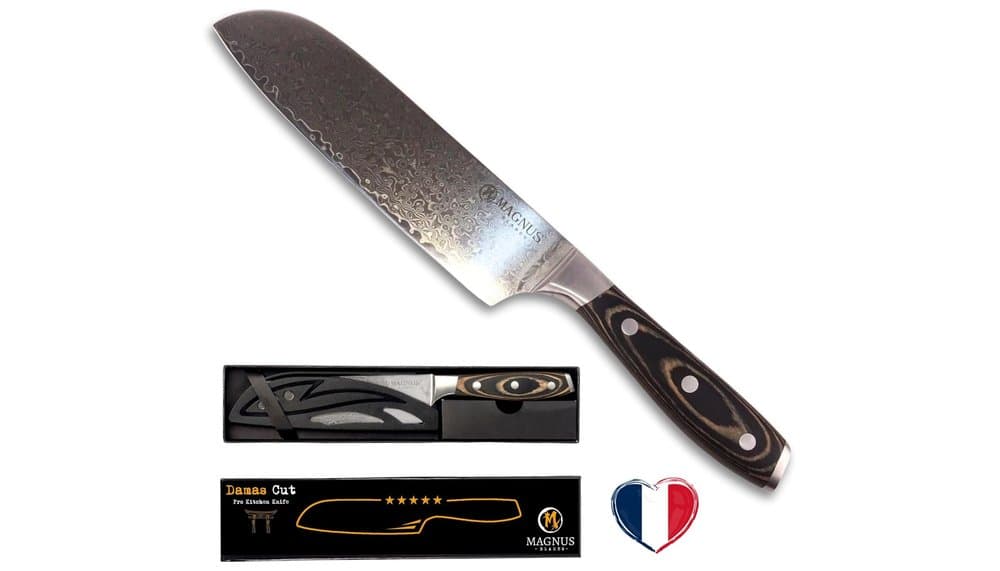
In the world of chef's knives, the Japanese Santoku occupies a special place, celebrated for its versatility and precision. The Magnus Blades Damascus Cut Santoku Chef's Knife presents itself as an accessible interpretation of this classic, claiming the use of genuine Damascus steel and a refined design. On our site dedicated to durable culinary tools, we are less interested in gift packaging than in substance: is this knife designed to last and meet the demands of a serious cook? Here we analyze its technical specifications, community feedback, and the intrinsic characteristics of a Santoku to determine if it deserves its place in a kitchen arsenal designed for life.
Strengths and Weaknesses: An Honest Summary
Before delving into details, here is what immediately stands out from examining the available data.
Strengths:
- Remarkable Factory Edge: Almost all user feedback praises an exceptional out-of-the-box sharpening, enabling precise, effortless cuts.
- Appreciated Ergonomics and Balance: The full tang "recycled wood" handle and the knife's overall balance receive unanimous praise for comfort, even during prolonged use.
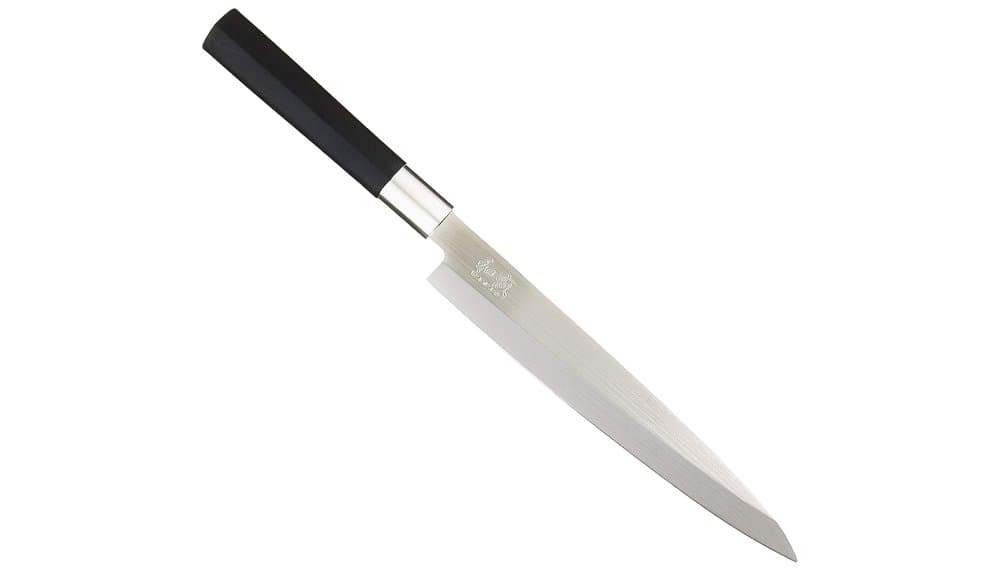
- Aesthetics and Finish: The authentic Damascus pattern (and not just an etching) and the overall finish make it an object perceived as quality and elegant.
- Versatility of the Santoku Format: Its 18 cm (7-inch) size makes it an agile tool, excellent for mincing, slicing, and chopping vegetables, as experts point out.
Weaknesses:
- Opacity Regarding Core Steel: The technical sheet mentions "High Carbon Stainless Steel" without specifying the grade (VG-10, AUS-10, etc.). This lack of information is a hindrance to fine analysis of edge retention and ease of sharpening.
- Unknown Rockwell Hardness: The HRC value, which is crucial for assessing the blade's durability and its behavior during sharpening, is not communicated. This is a notable lack for a "buy-it-for-life" evaluation.
- Edge Retention to be Confirmed: A few user reviews note a need for sharpening more frequently than expected, a trend to monitor that could be related to the previous point.
- Unspecified Manufacturing Origin: As one user notes, the absence of an indication of the country of manufacture is a lack of transparency for a product in this range.
Detailed Analysis: Beyond the Damascus Pattern
The Blade: Between Damascus Tradition and Technical Mystery
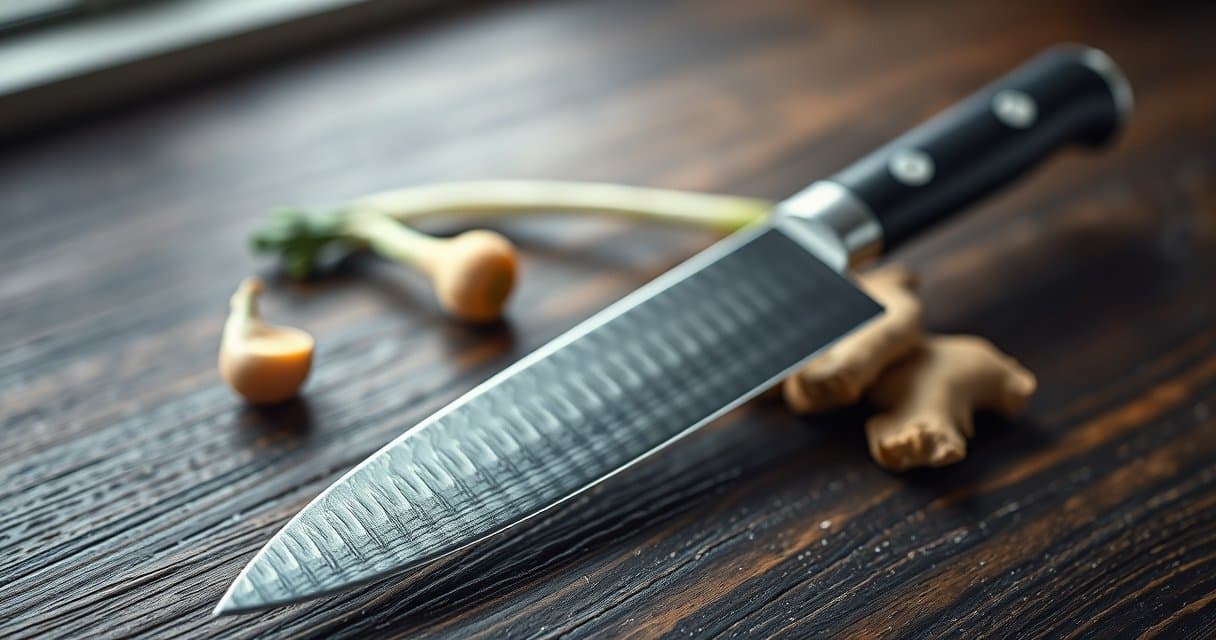
The main selling point of the Magnus Blades is its blade made of genuine Damascus steel, composed of 67 layers. According to experts, this forging process, which layers and hammers different steels, not only creates the characteristic wavy pattern but can also improve the blade's resistance and durability by dissipating vibrations. On paper, it's an asset.
However, what truly interests us is the steel of the blade's core, the one that forms the cutting edge. The specs announce "High Carbon Stainless Steel," a broad category. "Buy-it-for-life" type knives typically rely on identifiable grades like VG-10 (excellent sharpness/durability/corrosion balance) or AUS-10. The lack of precision here prevents us from predicting its long-term performance with certainty. A medium-quality steel will show decent edge retention but will require more frequent sharpening than a premium steel.
The Rockwell Hardness (HRC) is the other major unknown. A high-performance Japanese knife often sits between 58 and 62 HRC. Below that, the edge will deform faster; above, it will be very durable but potentially more brittle and harder for an amateur to sharpen. Without this data, the analysis of its durability relies on user feedback.
The Santoku Geometry: A Precision Tool
The context from web experts is clear: a Santoku is designed for precision. Its shorter blade (18 cm / 7 inches here), with a relatively flat edge and a less pronounced belly, favors a vertical, "push-cut" motion. It's ideal for thinly slicing vegetables, chopping herbs, or slicing cooked meat. Conversely, it is less suited than a Western chef's knife for cutting large pieces of raw meat or the "rocking" motion. It is a tool specialized in finesse, and user feedback confirms this agility and versatility for daily tasks.
See priceThe Handle and Balance: Comfort as a Legacy
This is one of the most praised points. The handle made of "full tang" recycled wood composite (the blade runs through the entire handle) is a guarantee of long-term solidity. The so-called "full tang" construction better distributes forces and is less likely to loosen or break. Users unanimously describe a "very comfortable," "pleasant," and "secure" grip. The balance point towards the front of the blade, typical of good Santokus, seems well executed, reducing wrist fatigue. These are essential characteristics for a tool intended for intensive use.
Maintenance and Durability: The Right Practices
The manufacturer indicates corrosion resistance and dishwasher compatibility. However, the knife enthusiast community is categorical: to guarantee the longevity of a knife, especially one with wood and a potentially reactive steel, hand washing and immediate drying are imperative. The dishwasher, with its thermal shocks, aggressive detergents, and prolonged moisture, is the enemy of the edge and the handle. Testers emphasize that for a "buy-it-for-life" maintenance routine, a simple practice is needed: use, hand wash, dry, store in its sheath (included).
Technical Specifications
| Characteristic | Detail |
|---|---|
| Model | Magnus Blades Damascus Cut Santoku Chef's Knife |
| Blade Length | 18 cm (7 inches) |
| Blade Material | Damascus Steel (67 layers) with a core of "High Carbon Stainless Steel" (grade not specified) |
| Rockwell Hardness (HRC) | Not communicated |
| Edge Type | Smooth (plain edge) |
| Construction Type | Forged blade, full tang mounting |
| Handle Material | Recycled wood composite |
| Total Weight | 310 grams |
| Accessories Included | Protective sheath |
| Recommended Care | Hand washing recommended (dishwasher compatible according to the manufacturer) |
What Users Say: Trends and Realities
The synthesis of customer reviews and expert analyses reveals a strong consensus, tinged with some reservations.
The recurring praise revolves around three axes:
- The Initial Sharpness: Terms like "ultra-sharp," "impeccable cut," "super sharp" constantly reappear. Users are impressed by the cutting performance right out of the box.
- Comfort of Use: "Very good grip," "perfectly balanced," "pleasant handle" are almost systematic comments. The ergonomics are validated in practice.
- Aesthetics and Finish: The Damascus pattern and overall look are perceived as signs of quality, elevating it from a mere tool to an appreciated kitchen object.
The criticisms and questions concern:
- Edge Retention: One user explicitly notes that it "needs to be sharpened very often." This signal, although isolated in the provided reviews, alerts to the need to verify the quality of the core steel. An exceptional edge that doesn't last is not a guarantee of durability.
- Lack of Transparency: Several comments raise the absence of information on the manufacturing origin ("impossible to know where it was made"). For a demanding audience, this opacity is a negative point.
- Absolute Versatility: One user rightly reminds us that an 18 cm Santoku, however good it may be, does not replace a small paring knife for fine peeling. This confirms the specialized nature of the Santoku form.
Conclusion: A Seductive Santoku, with Reservations About the Very Long Term
The Magnus Blades Damascus Cut Santoku Chef's Knife is undoubtedly a product that scores points where it matters for the immediate user: it arrives extremely sharp, it is pleasant and comfortable to use during long sessions, and its aesthetics are appealing. For a serious cook looking for a high-performance Santoku for vegetable work and precision cuts, it represents an attractive option, especially as presented.
However, the "buy-it-for-life" evaluation hits a major obstacle: technical opacity. The lack of information on the exact grade of the core steel and its Rockwell hardness prevents us from definitively judging its proven durability and the ease with which it can be resharpened in ten years. Truly heirloom knives communicate these key data clearly.
Our verdict is therefore nuanced. It is an excellent introductory knife to the world of Japanese and Damascus blades, offering pro-level sensations for daily use. But for the purist, the professional, or the one seeking the ultimate, perfectly transparent tool they will pass on, the doubts about the internal specifications justify continuing research towards brands that unambiguously display their steel composition (VG-10, Blue Steel #2, etc.) and their HRC. The Magnus Blades seduces with the immediate experience but leaves a question hanging over its very long-term story.