Matakumi Damask 4-Piece Japanese Knife Set Review
Introduction
In the world of kitchen knives, the Japanese damascus aesthetic holds a particular fascination, promising a marriage between the art of forging and pure performance. The Matakumi Damask Japanese Kitchen Knife Set 4-Piece embodies this promise, presenting itself as a comprehensive set to cover the fundamental needs of a serious cook. On our site, dedicated to durable and high-performance culinary tools, we systematically evaluate products from a "buy-it-for-life" perspective. Here, our analysis is not based on personal testing, but on a meticulous examination of technical specifications, a synthesis of user feedback, and a contextualization with available expert observations. The objective is clear: to determine whether this Matakumi set constitutes a durable investment for the demanding cook or if it is primarily a beautiful object with performance that is limited over time.
Key Strengths
Based on the available data, the strengths of the Matakumi Damask set are immediately perceptible and widely praised.
- Exceptional Out-of-the-Box Sharpness: This is the unanimously praised point. Users and testers emphasize that the knives arrive "ready to use" with a remarkable edge, allowing for precise, clean cuts with minimal effort. Terms like "exceptional," "cuts perfectly," and "excellent cutting quality" consistently recur.
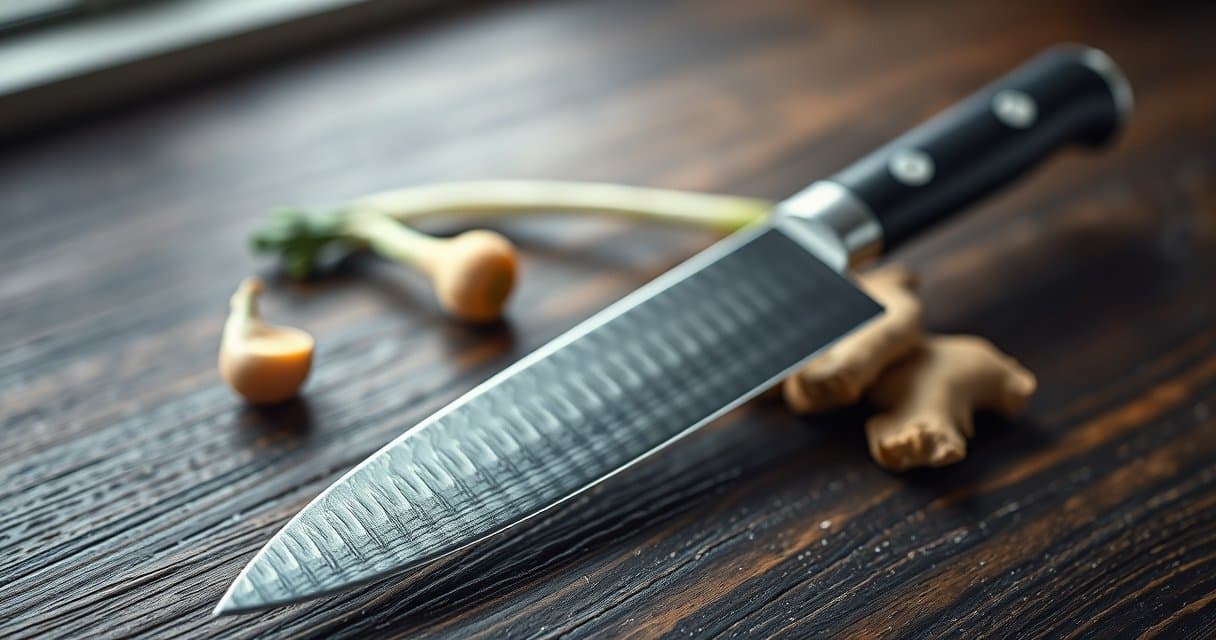
- High-End Aesthetics and Finish: The etched damascus (Damask) pattern on the blade gives the set a very refined, traditional Japanese look. Customer reviews describe the knives as "magnificent," "splendid," and "elegant," noting that the visual finish is polished.
- Balance and Handling: The majority of feedback indicates good handling and satisfactory balance. The knives are described as "well-balanced," offering a feeling of control during cutting.
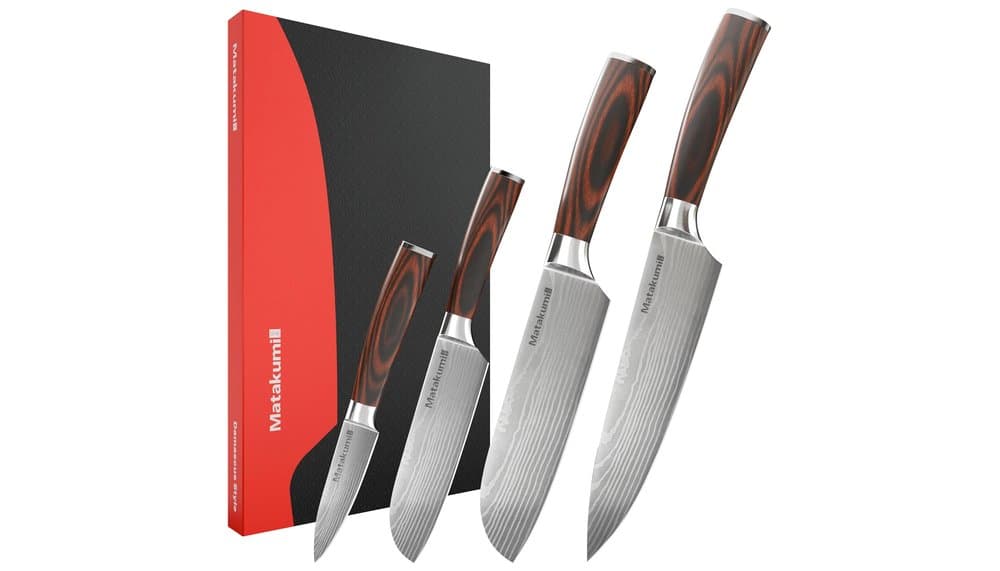
- Versatility of the Set: The set's composition (20 cm Chef's Knife, 18 cm Santoku, 13 cm Santoku, and 9 cm Utility Knife) is relevant. It covers a wide range of tasks, from peeling to finely chopping vegetables and slicing meats and fish, making it a complete starter kit.
Weak Points
Some aspects, drawn from user experiences and expert warnings, deserve particular attention before purchase.
- Long-Term Durability and Edge Retention: This is the main point of concern. Expert analyses caution: while the initial sharpening is excellent, edge retention may not match that of artisanal Japanese knives or renowned brands using very specific steels (like VG-10, SG2, or white steel). Under intensive use, regular sharpening will be needed more quickly than with harder steels.
- Potential Blade Fragility: Damascus blades, often very hard, are designed for slicing and not for resisting twisting or impacts. The community is unanimous: these knives must under no circumstances be used to cut bones, frozen foods, or for prying or levering motions. They require proper cutting technique.
- Demanding Maintenance: Like any quality knife, they require care. All sources agree that the dishwasher is absolutely prohibited. Hand washing and immediate drying are mandatory to preserve the blades and avoid corrosion, despite their designation as "stainless steel" in some descriptions.
- Handle Ergonomics for All Hands: Some user feedback reports that the handle may feel a bit thin for large hands, and notes the absence of a prominent bolster or guard to prevent fingers from slipping onto the blade.
Detailed Analysis
The Blade: Between Damascus Aesthetics and Steel Reality
This is the heart of the analysis. The product specifications sometimes mention "Carbon Steel" and "Stainless Steel" contradictorily. Cross-referencing information suggests it is very likely a damascus-type stainless steel, where layers of steel are forged to create the decorative pattern and improve certain properties. However, the blade core (the cutting edge) is not specified. This is a major difference compared to reference Japanese knives that clearly state the nature of their steel (AUS-10, VG-10, etc.).
The lack of information on Rockwell Hardness (HRC) is a crucial omission for a technical analysis. On paper, one can extrapolate that, to offer such an initial edge, the hardness is likely high (probably above 58 HRC). High hardness promotes excellent initial edge retention, as observed, but also makes the steel more brittle and slightly more difficult for a novice to resharpen. The ease of sharpening promised by steels like VG-10 or AUS-8 is therefore not guaranteed here. Long-term durability will depend on the precise quality of this steel and its heat treatment, information not provided by the manufacturer.
See priceConstruction and Ergonomics: The Feel in the Kitchen
The construction is forged, generally synonymous with better density, balance, and durability compared to stamped blades. The wooden handle (likely laminated or stabilized) with brass details offers a traditional look and good thermal inertia, remaining pleasant to the touch.
Community feedback confirms that the balance is well executed, with the weight of the blade sufficient for performing cuts by inertia without tiring the wrist. However, the remarks about handle thinness for certain hand sizes should be considered, especially for prolonged prep sessions. The absence of a pronounced guard, typical of many Japanese-style knives (Santoku, Gyuto), requires particular attention to finger positioning.
Versatility and Usage Limitations
The set is intelligently composed. The large Chef's Knife (20 cm) and the Santoku (18 cm) share heavy-duty cutting work. The small Santoku (13 cm) is perfect for vegetables, while the Utility Knife (9 cm) handles peeling and precision tasks. This selection covers 95% of the needs of a demanding home kitchen.
However, versatility has technical limits. As mentioned, these blades are "princesses": they excel on fresh produce (vegetables, fruits, boneless meats and fish) but are unsuited for brutal tasks. A Western chef's knife in more flexible steel or a dedicated boning knife remain essential for a complete kitchen arsenal.
"Buy-It-For-Life" Perspective
This is where the analysis becomes nuanced. The Matakumi Damask Set presents characteristics that could make it a long-term companion: forged construction, timeless aesthetics, and remarkable initial cutting performance. However, the lack of transparency regarding the exact nature of the steel and its heat treatment casts a shadow on its absolute longevity under intensive use.
For the serious amateur cook who will care for it (hand wash, dry, regular sharpening on stone, no abuse), this set will very likely provide years of satisfaction. For the professional in a restaurant using it 8 hours a day, every day, edge retention and wear resistance may not be at the level of higher investments. It is therefore more of an excellent "buy-for-many-years" tool for the home than an unquestionable professional "buy-it-for-a-lifetime" tool.
Technical Specifications
| Feature | Matakumi Damask 4-Piece Set Detail |
|---|---|
| Set Composition | 1 Chef's Knife 20 cm (8''), 1 Santoku 18 cm (7''), 1 Santoku 13 cm (5''), 1 Utility Knife 9 cm (3.5'') |
| Blade Material | Damascus Steel (layered steel). Core not specified. Referred to as "Carbon Steel" and "Stainless Steel" depending on sources. |
| Rockwell Hardness (HRC) | Not disclosed by the manufacturer. Estimated high (>58 HRC) based on reported cutting performance. |
| Construction Type | Forged |
| Edge | Hollow Edge (granton) on the Santokus likely, to reduce food sticking. |
| Handle Material | Wood with brass inserts/inlays |
| Balance | Reported as well-balanced by users |
| Maintenance | Hand wash mandatory. Immediate drying. Regular sharpening on stone recommended. Dishwasher prohibited. |
| Recommended Use | Vegetables, fruits, boneless meats and fish, herbs. |
| Not Recommended Use | Bones, frozen foods, defrosting, twisting or prying motions. |
What Users Say
The synthesis of 160 customer reviews (average rating 4.5/5) and expert analyses reveals very clear trends.
Praise is concentrated on three aspects:
- Cutting Performance: This is the key argument. Terms like "exceptional," "perfect," "cut magnificently" are omnipresent. Users are visibly impressed by the immediate performance.
- Aesthetic Value for Money: Many highlight the beauty of the knives for their price, calling them "splendid" and noting the careful damascus finish.
- Overall Satisfaction: For domestic use, the majority report being very satisfied, finding the set complete, effective, and pleasant to use.
Recurring reservations and criticisms focus on:
- Safety and Ergonomics: At least one detailed review mentions a risk of the hand slipping towards the blade due to the lack of a guard, advising great vigilance, even wearing gloves.
- Doubts About Longevity: Some experts, as well as knowledgeable users, express reservations about the blade's ability to hold its edge as long as established brands, pointing to the unspecified material.
- Need for Rigorous Maintenance: The community agrees on the absolute necessity for meticulous care, which can be a downside for those seeking a tool without constraints.
An interesting point raised by one user is the possible presence of a "mark on the edge," i.e., a defect on the cutting edge, although this seems isolated.
Conclusion
The Matakumi Damask Japanese Kitchen Knife Set 4-Piece is a product that knows how to make an excellent first impression. Its striking aesthetics, impressive out-of-the-box sharpness, and overall balance make it a very attractive set, particularly for the passionate home cook looking to equip their kitchen with beautiful, high-performing tools.
Our technical analysis, informed by community feedback, clearly positions it as a good choice in the upper entry-level segment. It offers a near high-end experience upon unboxing. However, the lack of transparency regarding the exact steel and the warnings about its fragility under misuse temper the enthusiasm.
In summary: If you are a home cook, willing to respect the maintenance rules (hand wash, dry, sharpen) and to use these blades for what they are designed for (slicing, not chopping), this Matakumi set will very likely bring you great satisfaction and excellent performance for many years. If you are looking for a professional-grade, heavy-duty tool for daily intensive use, or if the exact steel specification (VG-10, AUS-10, etc.) is a non-negotiable purchase criterion, you should probably look towards brands that communicate these technical specifications precisely. The Matakumi Damask is less a "for-life" knife and more of a very good kitchen companion for those who value performance/aesthetics ratio and accept the need to care for it.