SHAN ZU Gyuto Chef's Knife Review & Performance Test
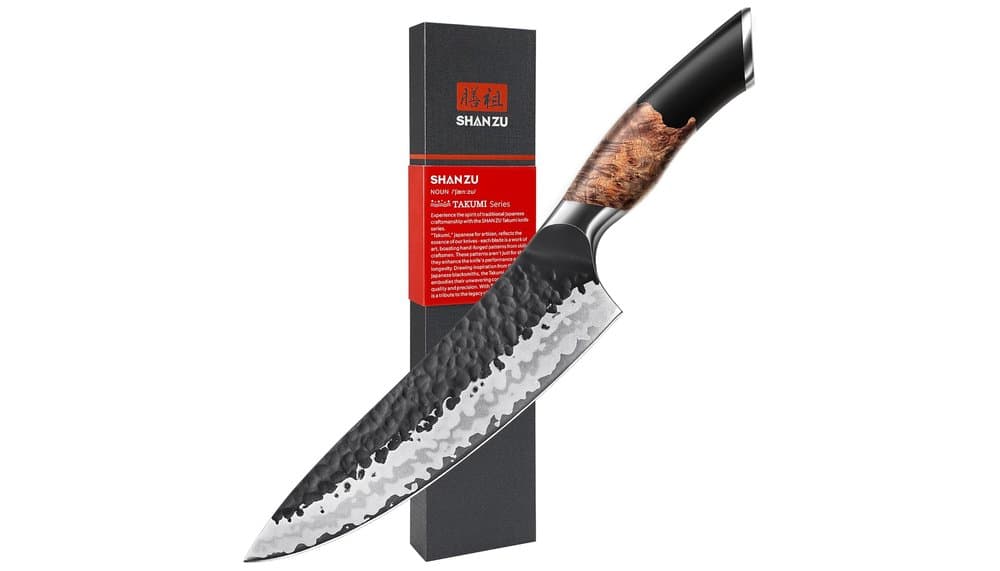
Comprehensive Analysis: SHAN ZU SZES-2022-001 Japanese Chef's Gyuto Knife
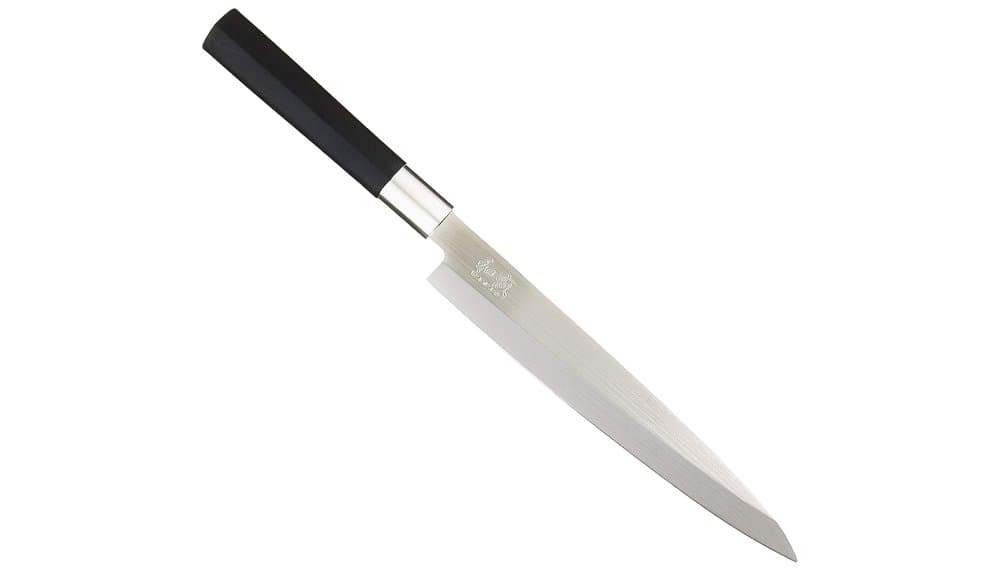
In the world of kitchen knives, the Japanese Gyuto represents the quintessence of a versatile chef's knife, combining finesse and performance. The SHAN ZU SZES-2022-001 falls into this category, promising a blend of traditional craftsmanship and modern techniques. On paper, it directly targets the demanding chef looking for a durable and high-performance tool. But does its technical sheet deliver on its promises from a "buy-it-for-life" perspective? Let's dive into a detailed analysis based on its specifications, community feedback, and expert evaluations.
Key Strengths
The characteristics that place this knife in the category of serious tools are clear and well-defined.
Exceptional Factory Edge
According to specifications and user feedback, the initial sharpness is a major selling point. The blade, sharpened to a 15-degree angle on each side, is described as extremely aggressive. Testers emphasize that it cuts with surgical precision, gliding through ingredients with minimal effort. For a passionate home cook, this sensation of clean, easy cutting is often the trigger for immediate love of the tool.
San Mai (Clad) Construction and Optimized Hardness
The technical sheet announces a 7-layer construction around a core of 10CR15MOV steel. This process, inspired by traditional Japanese techniques, allows for combining the advantages of different steels. The high-carbon core is protected by more resilient outer layers. The announced Rockwell hardness of 60±2 HRC is a crucial point. This value sits in a technical "sweet spot": it promises edge retention far superior to mass-market kitchen knives (generally around 52-56 HRC), while remaining accessible for user resharpening with a whetstone, without the extreme difficulty of steels hardened above 63-64 HRC.
Balance and Handle Ergonomics
The maple wood handle is consistently praised. The community notes that it offers a comfortable and secure grip, even during prolonged sessions. Its ergonomic design, combined with a total weight of 256g for a 20cm blade, contributes to a balance often described as perfect, located slightly forward of the handle. This balance promotes controlled and natural cutting motion, reducing wrist fatigue.
Weaknesses
No tool is universal, and the SHAN ZU Gyuto imposes compromises related to its nature as a fine Japanese blade.
Inherent Fragility and Restricted Use
This is the major point of caution. Experts and seasoned users repeat it: this is not an all-purpose knife. Its thin 2mm blade and extreme edge make it vulnerable. It is unanimously advised against for any forceful work: cutting through bones, joints, or frozen foods, or chopping through hard foods like squash without precautions. Improper use can lead to chipping of the edge. It is an instrument of precision, not a crusher.
Demanding Maintenance
The trade-off for performance is rigor in maintenance. The steel, although presented as corrosion-resistant, requires immediate drying after each use. Putting it in the dishwasher is strictly forbidden, as it would irreparably damage the wooden handle and risk corroding the blade. Furthermore, maintaining this level of sharpness requires regular resharpening on a water stone. The user must be ready to adopt this routine to preserve the knife's long-term performance.
See priceReported Inconsistencies in Finishing
Some user feedback, although a minority, reports slight variability in finishing. Some mention that the wood of the handle may have a color or grain slightly different from the photos, and in rare cases, minor finishing defects on the wood or glue are reported. This suggests that perfect quality control on every unit can be a challenge.
Detailed Feature Analysis
Materials and Manufacturing: Between Marketing and Reality
SHAN ZU highlights a hand-forged manufacturing. While forging processes do indeed give a denser and more performant steel structure than stamping, this term must be understood in the context of modern production. It is most likely mechanized forging with manual finishing. The core in 10CR15MOV (equivalent to 9Cr18MoV often cited in expert reviews) is a good-quality chromium-molybdenum-vanadium stainless steel. It offers a good compromise between hardness, corrosion resistance, and ease of sharpening. It does not reach the purity and sharpness potential of traditional Japanese carbon steels (like Blue Steel #2 or White Steel), but it is much more forgiving regarding rust, a major point for a non-expert home cook.
Hardness (60±2 HRC): The Perfect Balance?
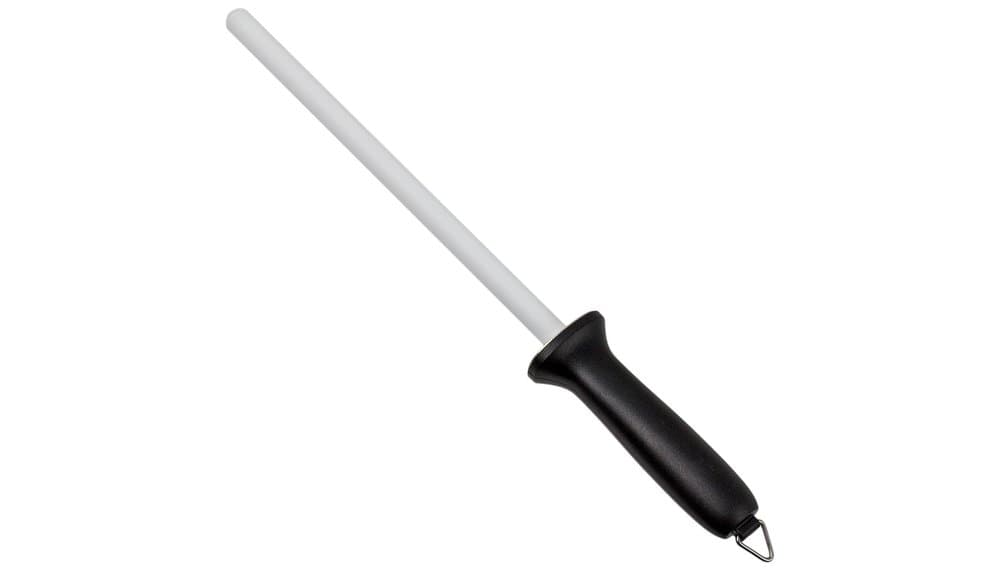
The value of 60 HRC is strategic. It is above supermarket knives (~55 HRC) for much better retention, but below high-end Japanese lasers (>63 HRC). Concretely, this means you should be able to go several weeks, even months, of regular home use before feeling the need for a touch-up on a steel rod. A full sharpening will remain within reach of a motivated amateur after learning basic techniques. It is this balance that makes it a serious candidate for "buy-it-for-life": it is performant without being impractical to maintain over decades.
Handle and Balance: Long-Term Comfort
Maple is a hard, stable, and relatively light wood. Its main asset, highlighted by users, is that it does not become slippery when wet, unlike some plastics or overly smooth woods. The ergonomic shape, often described as a "D" or oval, fits the palm well. For prolonged use, during the preparation of full meals, this comfort is a durability factor: a tiring tool to use is a tool that gets neglected. The weight of 256g indicates solid construction without being excessive, favoring precision over brute force.
Versatility and Limits of the 20cm Gyuto
The 20cm (approximately 8 inches) format is the ideal size for a first Gyuto or a main versatile knife at home. It is long enough to cleanly slice a salmon fillet or a roast, and sufficiently maneuverable to mince onions or chop herbs. However, its versatility stops where force begins. Its role is slicing/gliding cuts, not pressing or levering. Understanding and respecting this philosophy of use is the sine qua non condition for this knife to last a lifetime.
Recap of Technical Specifications
| Characteristic | Detail |
|---|---|
| Model | SHAN ZU SZES-2022-001 Chef's Gyuto Knife |
| Blade Length | 20 cm |
| Blade Type | Gyuto (Japanese chef's knife) |
| Blade Material | 10CR15MOV stainless steel (core) in 7-layer (San Mai) construction |
| Rockwell Hardness (HRC) | 60 ± 2 |
| Blade Thickness | Approximately 2 mm at the spine |
| Sharpening Angle | ~15° per side (double bevel) |
| Handle Material | Natural maple wood |
| Manufacturing Method | Forged |
| Total Weight | 256 grams |
| Maintenance | Hand wash mandatory. Immediate drying. Sharpening on a stone. |
What Users and Experts Say
The synthesis of hundreds of customer reviews and available technical analyses online paints a fairly clear consensus.
Praise is concentrated on a few points:
- Immediate Sharpness: Words like "razor," "exceptional sharpness," "perfect cut" come up obsessively. Users are visibly impressed by the cutting performance right out of the box.
- Confidence in the Handle: The comfort and sense of security provided by the maple handle are widely acclaimed. The overall balance is also frequently cited as a strong point.
- Perceived Value for Money: In its category, the knife is considered to offer an excellent level of finish and performance for its positioning.
- Packaging and Presentation: Its case often makes it perceived as a quality gift item, ideal for a cooking enthusiast.
Criticisms and warnings follow predictable trends:
- Understood/Accepted Fragility: Informed users repeat the usage advice: no bones, no frozen foods, no dishwasher. Those who have chipped the blade often did so following inappropriate use.
- Finishing Variability: A few notes mention differences in wood color or minor aesthetic defects compared to marketing photos.
- Non-Negotiable Maintenance: The need for care (hand-wash, drying) is emphasized as the price to pay for performance. This is not a knife you leave soaking in the sink.
Experts confirm this profile: it is an excellent entry-level premium gyuto, offering a genuine Japanese cutting experience. It serves as an accessible bridge between the world of standard Western knives and the more demanding world of Japanese knives.
Conclusion: Who is this "Buy-It-For-Life" Knife For?
The SHAN ZU SZES-2022-001 Japanese Chef's Gyuto Knife is not a collector's piece for purists, but it is indeed a serious and durable professional tool for the demanding home cook.
It constitutes a long-term investment if and only if its owner is ready to respect its implicit contract. This contract stipulates that you get remarkable sharpness, superior comfort of use, and robust construction (forged, 60 HRC steel), in exchange for reasoned use (only for cutting fresh, soft to medium-hard foods) and meticulous maintenance (hand-wash, drying, periodic sharpening).
It is therefore the ideal tool for the passionate home cook who aspires to level up, who is ready to learn the basics of sharpening on a stone, and who is looking for a main versatile knife for 90% of their kitchen tasks. Its lifespan can easily be counted in decades. Conversely, for someone looking for a single do-it-all, indestructible, dishwasher-safe knife, this Gyuto, despite all its qualities, would be an unsuitable and likely ultimately disappointing choice. Its durability is directly proportional to the care you give it.