YOSUKATA Carbon Steel Wok Pan Review & Test
Analysis of the YOSUKATA Traditional Chinese Carbon Steel Wok Pan: A "Buy It For Life" Tool?
For the serious cook looking to equip their kitchen with durable, high-performance tools, the wok is a staple. Among the available options, the YOSUKATA Traditional Chinese Carbon Steel Wok Pan frequently comes up as a popular model. On paper, it promises authenticity, robustness, and versatility. But how does it perform in the reality of a demanding kitchen, and can it claim a place in a "buy it for life" collection? Here we analyze its specifications, community feedback, and expert opinions to paint a complete picture.
Strengths
- Robust Carbon Steel Construction: A 16-gauge thickness (approximately 1.5 mm) that promises durability and excellent heat retention.
- Maximum Versatility: Compatible with all heat sources, including induction (flat-bottom model), gas, and open flames.
- Effective Pre-Seasoning: An initial factory treatment facilitates getting started and provides a non-stick base.
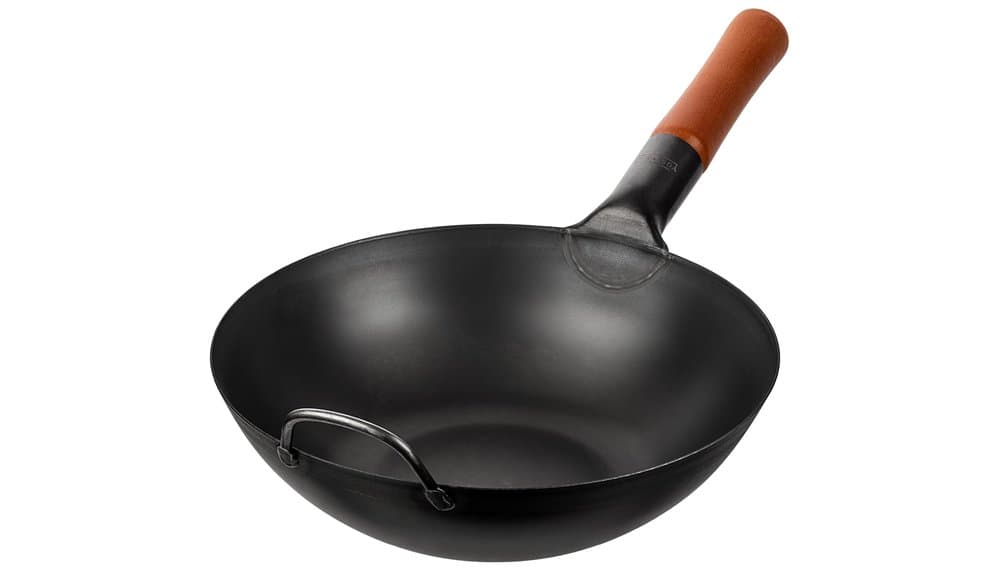
- Balance and Ergonomics: A manageable weight (1.36 kg) and a riveted wooden handle designed for prolonged comfort of use.
- Optimized Traditional Design: The classic Chinese shape with a flat bottom adapted to modern kitchens.
Weaknesses
- Demanding Maintenance: Like any uncoated carbon steel, it is very susceptible to rust if not dried completely.
- Learning Curve: Requires understanding and applying the principles of seasoning (curing) to perform well.
- Behavior on Induction: Although compatible, the absence of a thick diffusion base can lead to hot spots on some cooktops.
- Bulky Storage: The fixed main handle and size can be problematic in small kitchens.
Detailed Analysis
Materials and Manufacturing: The Heart of Durability
What interests us here is the promise of "for life." The YOSUKATA wok is made from black carbon steel, a material favored by professionals. Unlike stainless steel, it is more reactive, conducts heat quickly and evenly, and, most importantly, allows for the development of a natural seasoning (or curing). This seasoning is a polymerization of oil that creates a natural non-stick surface that improves over time. The stated thickness of 1.5 mm (16 gauge) is a good compromise. It is sufficient to avoid thermal warping on powerful flames and to ensure proper thermal inertia, while remaining light enough to truly allow food to be "tossed." Testers emphasize that this thickness contributes to uniform heat distribution, essential for quick searing.
The handle attachment is a critical point. According to feedback, the wooden handle is fixed with solid rivets, a construction superior to screws which can loosen with heat/cold cycles. One user specifically notes that "the handle remains firmly attached to the wok, which isn't always the case with cheaper models." This is a strong indicator of manufacturing quality.
See priceCulinary Performance: Heat and Reactivity
Carbon steel excels in rapid heat conduction. Users confirm this quality: "Heat conduction is excellent. Ingredients jump quietly, nothing sticks." This reactivity allows for precise cooking control, a characteristic of professional tools. The factory pre-seasoning is a real plus for getting started. However, the community is unanimous: it's only a base. To achieve optimal non-stick performance and protect the wok, additional user seasoning is necessary and recommended from the first use. This process, although simple (heat, oil, smoke), is an essential step in the relationship with this type of utensil.
Versatility is a major argument. Designed for gas, induction, electric, and even camping, this wok covers all scenarios. Caution is advised on induction, however: some users warn. As the wok does not have a thick multilayer base, it must be heated gradually to avoid warping, and one must be aware that the heating zone is limited to the diameter of the cooktop's burner. "At high power it burns food in the center," notes one review. On gas, however, it performs to its full potential.
Ergonomics and Handling
At 1.36 kg for a 30 cm diameter, the wok has a well-regarded weight/resistance balance. It is light enough to be handled with one hand for tossing, but heavy enough to feel its solidity. The wooden handle is appreciated for staying relatively cool during cooking and for its secure grip, even with wet or oily hands. The presence of a small secondary steel handle on the other side facilitates two-handed handling for heavy dishes. This is a detail that shows thoughtful design for intensive use.
Durability and Maintenance: The Test of Time
This is where the "buy it for life" aspect is determined. The intrinsic durability of carbon steel is excellent. It has no coating to chip, is not afraid of metal utensils, and withstands extreme temperatures. One user reports using it "frequently for a year now and it is still like new."
However, this durability is conditional on impeccable maintenance. The material is prone to oxidation. Negative reviews all converge on one point: rust. "It started to rust despite the fact that I never let it air dry after hand washing," reports a disappointed buyer. Maintenance is simple but non-negotiable: cleaning with hot water (without abrasive detergent), immediate and thorough drying over heat, and sometimes a thin protective layer of oil before storage. This is the price to pay for performance. This wok is not a "no-worry" utensil; it is a tool that requires a minimum ritualization.
Technical Specifications
| Characteristic | Detail |
|---|---|
| Main Material | Black Carbon Steel |
| Thickness / Gauge | 1.5 mm / Gauge 16 |
| Diameter | 30 cm (model analyzed) |
| Bottom | Flat (for induction and electric) |
| Weight | 1.36 kg |
| Finish | Factory Pre-Seasoned |
| Handles | Long Riveted Wooden Handle + Small Steel Handle |
| Compatibility | Induction, Gas, Electric, Ceramic, Open Flame |
| Maintenance | Hand wash only. Immediate drying imperative. |
| Capacity | Approximately 1 gallon (3.8L) |
What Users and Experts Say
A synthesis of over 6,000 reviews and expert web analyses paints a clear consensus.
The praise focuses on:
- The perceived build quality: Users describe it as "solid," "well made," "excellent quality."
- Cooking performance: Once well seasoned, the non-stick properties and heat reactivity are very often praised. "Nothing sticks, cooking is top-notch!"
- The value for money: It is regularly described as a serious and more accessible alternative to high-end brands, offering very similar performance for a lower investment.
- Versatility: Induction compatibility is a major asset for modern kitchens, even with the mentioned caveats.
The recurring criticisms concern:
- Rust management: This is the main point of friction. A significant minority of users report oxidation problems, indicating a learning curve on maintenance. This is not a product defect per se, but a characteristic of the material that not all buyers initially master.
- Behavior on induction: Some find it heats too concentratedly in the center on this type of cooktop, requiring an adaptation of cooking technique.
- Seasoning: Although pre-seasoned, the necessity to re-season it yourself for an optimal result surprises or disappoints a few buyers who expected a "ready-to-use" product like a Teflon coating.
Web experts confirm this analysis, presenting it as an excellent choice for enlightened amateurs and serious cooks willing to maintain their equipment, and often place it at the top of recommendations in its price category.
Conclusion
Is the YOSUKATA Traditional Chinese Carbon Steel Wok Pan a "for life" purchase? The answer is a conditional yes.
From a construction and materials standpoint, it ticks all the boxes: professional thickness carbon steel, robust fixation, efficient design. Its potential lifespan is unlimited if properly maintained. It is undoubtedly a serious and high-performance tool that can compete with more expensive professional models, particularly on a gas heat source.
However, it does not offer the "no-worry" durability of an enameled cast iron wok or the initial ease of a non-stick wok (whose lifespan is inherently limited). Its "buy it for life" heritage is a shared responsibility: the manufacturer provides a well-designed tool, and the user must provide the proper maintenance.
Therefore, we highly recommend it to the passionate cook who understands and accepts the small maintenance ritual of carbon steel, who seeks cooking reactivity and authenticity, and who wants a kitchen companion for the decades to come. For those seeking absolute simplicity and fearing rust, it may be necessary to look at other materials. But for those willing to invest a little time in its maintenance, the YOSUKATA represents a remarkable investment and a quality entry point into the world of professional and durable kitchen utensils.