FeTeck Damascus Chef's Knife Test & Review
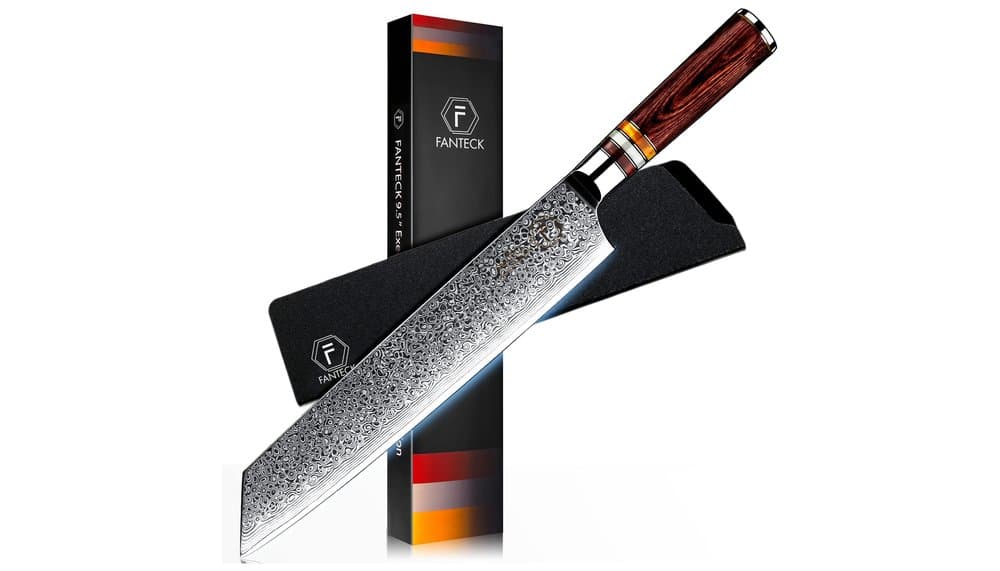
Analysis of the FeTeck Damascus 24 cm Chef's Knife: A "buy-it-for-life" Knife?
In the world of chef's knives, the combination of captivating damascus design and promises of professional performance is a magnet for attention. The FeTeck Damascus 24 cm Chef's Knife fits squarely into this category. On paper, it presents all the characteristics of a serious tool: VG-10 steel, high hardness, careful finish. But beyond the specifications and gift packaging, does it deserve a lasting place in the kitchen of a demanding enthusiast? Here we analyze this product from the perspective of durability, materials, and reported user experience, to determine if it is a lifelong investment or a beautiful object with limited performance.
Strengths
Based on feedback and technical specifications, the FeTeck Damascus presents several convincing strengths for a serious home cook.
- Out-of-the-box Sharpness and Cutting Finesse: This is the most unanimously praised point. Testers highlight that the knife arrives with an exceptional razor sharpness. The manual sharpening at a fine angle (between 10 and 15 degrees per side) allows for precise slices and effortless passage through food, whether for firm vegetables, meat, or fish.
- Promising Core Material: The advertised VG-10 steel core is a strong argument. This Japanese stainless steel is renowned for its excellent edge retention and corrosion resistance. Combined with vacuum heat treatment and cryogenic quenching in nitrogen, it promises a fine microstructure and increased durability.
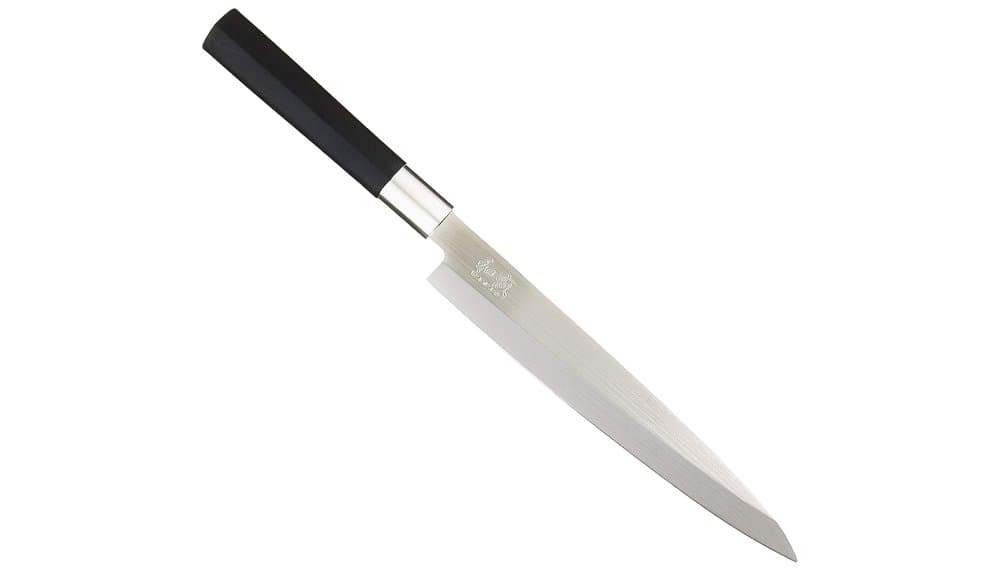
- Aesthetics and Careful Finish: The 67-layer damascus blade offers an attractive visual pattern that is immediately appealing. The whole set, accompanied by a sheath and often a gift box, has a luxurious side that makes it an appreciated gift.
- Ergonomics and Balance: The majority of users report a comfortable and secure grip. The Pakkawood handle (stabilized composite wood) offers good resistance to moisture. The balance between the blade and the handle is frequently described as well distributed, which reduces wrist fatigue during prolonged use.
Weaknesses
Despite its apparent qualities, certain aspects, noted by the community, call for caution regarding an absolute "buy-it-for-life" qualification.
- Variability in Quality Control: Several reports mention sometimes uneven finishing, particularly on the handle. Misalignment between the blade and the handle or imperfect sanding of the wood are mentioned. This raises questions about production consistency and the level of final inspection.
- The Question of Material Authenticity: While the manufacturer announces VG-10, some knowledgeable users and online analyses express doubts. It is suggested that the core could be a steel of the AUS-8 or AUS-10 type, a common and slightly less performative alternative, particularly in edge retention. The mention "V-Gold 10" is often an indicator of this ambiguity.
- A Potentially Substantial Weight: At 350 grams for 24 cm, this knife is substantial. While this weight contributes to cutting power, it can be perceived as too heavy or less maneuverable by those who prioritize dexterity and speed, typical of lighter Japanese knives.
- Damascus Mainly Decorative: The 67-layer damascus is primarily aesthetic here. It is a cladding around the cutting steel core. It does not provide a direct functional advantage for cutting, unlike a forge-welded integral damascus blade.
Detailed Analysis
Construction and Materials: The Heart of Durability
What interests us here is the knife's ability to maintain its performance over the very long term. The construction is of the "San Mai" or sandwich type: a core of hard steel (announced as VG-10) is sandwiched between two layers of softer damascus steel. This technique protects the fragile cutting edge and allows for decorative patterns.
The key to longevity lies in the core. VG-10 is a stainless steel containing cobalt, known for its good ability to take and hold a very fine edge. However, its high hardness (HRC 60+) also makes it more difficult to sharpen for a beginner. It requires quality stones. Doubts about the authenticity of the VG-10 are therefore legitimate: an AUS-10 steel, although very decent, will have slightly inferior edge retention and will be a bit easier to sharpen.
The heat treatment (vacuum quenching and nitrogen cooling) is a good practice aimed at maximizing the steel's characteristics. On paper, this promises a blade that is both hard and resilient, less prone to micro-cracks.
See priceHandling and Balance: Ergonomics Over Time
The Pakkawood handle is a judicious choice. This composite material, made of layers of wood and resin, combines the warmth and feel of wood with excellent resistance to water and humidity variations, making it very suitable for a kitchen environment. It is much more durable than a non-stabilized solid wood handle.
The reported balance is often located at the choil (the junction between the blade and the handle). This "neutral" configuration suits a variety of grips and techniques (including the "pinch" grip). For a 24 cm knife, this balance is crucial to avoid fatigue during long work sessions. The positive feedback on this point is therefore a good indicator for serious home cooks.
Maintenance and Sharpening: The Owner's Commitment
No knife, however good, is truly "buy-it-for-life" without proper maintenance. The FeTeck Damascus requires rigorous maintenance:
- Strictly hand wash only to preserve the blade and handle.
- Immediate drying to avoid water spots on the damascus (although stainless) and any degradation of the handle.
- Regular sharpening on a stone. The original fine edge does not last forever. The user must be ready to learn how to use a sharpening stone (ideally 1000/3000 grit) to restore the edge. This is where the potentially hard nature of the steel (if it is indeed VG-10) can represent a difficulty for novices.
Technical Specifications
| Characteristic | Detail |
|---|---|
| Blade Type | Chef's Knife |
| Blade Length | 24 cm (approx. 9.5 inches) |
| Blade Material | 67-layer Damascus steel with VG-10 steel core (or equivalent) |
| Hardness (Rockwell) | Advertised as HRC 62+ |
| Sharpening Angle | 10-15° per side (manual V-edge) |
| Construction Type | Forged / Laminated (San Mai) |
| Handle Material | Pakkawood with acrylic inserts |
| Weight | 350 grams |
| Maintenance | Hand wash only. Not dishwasher safe. |
| Included | Protective sheath, cleaning cloth, gift box (depending on the offer). |
What Users Say
The synthesis of customer reviews and online discussions reveals clear trends:
Praise is concentrated on:
- The exceptional sharpness right out of the box: "razor sharp", "effortless" are recurring terms.
- The perceived excellent value for money for a damascus-look knife.
- The beauty of the object and its "perfect gift" aspect.
- The balance and comfort of the handle during use.
Criticisms and reservations concern:
- A sometimes random finishing quality: misalignment or imperfect sanding of the handle are reported.
- Doubts about the true nature of the steel (authentic VG-10 or not?).
- For a few, the weight is considered a bit high for very dynamic daily use.
- A minority expected even better cutting performance given the price and appearance.
An online expert review sums up the ambivalence well: "It of course cannot compete with real handmade forged Japanese knives. [...] But for what it is, it does its job extremely well. [...] The sharpness is extreme." This positions the FeTeck as an excellent introduction to the world of performance steels and fine edges, without reaching the artisanal high-end.
Conclusion
The FeTeck Damascus 24 cm Chef's Knife is a product that cleverly plays on two fronts: the undeniable aesthetic appeal of damascus and technical specifications that border on serious mid-range. For a demanding home cook looking to move away from low-end knives, it represents a significant step up.
Its out-of-the-box sharpness, its generally successful ergonomics, and the use of materials like Pakkawood make it a tool far more performant and durable than most of the mainstream offer. The promise of VG-10 steel at HRC 62+, if proven, makes it a credible candidate for long-term use with proper maintenance.
However, the variability in finishing and the questions about the exact authenticity of the steel prevent it from being classified without reservation in the "buy-it-for-life" category in the purist sense. It is rather an excellent "buy-it-for-a-very-long-time" provided you are willing to maintain it. It is an exciting gateway to quality knives: if you learn to sharpen it and take care of it, it will serve you well for many years and may make you want, later, to invest in even higher-end pieces.